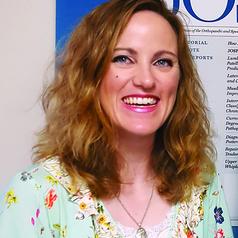
Professor, Department of Family Practice and the School of Kinesiology, University of British Columbia I'm a UBC Professor (on faculty since 2000, Professor since 2008). My area of research is in health sciences with a focus on sports injuries and physical activity promotion--I'm MD and PhD trained. I'm also a CIHR Scientific Director (one of 13).
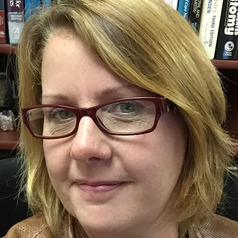
Assistant Professor in Physiotherapy, University of British Columbia Clare is an Australian-trained physiotherapist. Her research work brings researchers, patients, clinicians and health policy makers together to find and build new solutions to challenging problems in musculoskeletal health. Clare’s expertise in sports medicine, rehabilitation and meta-research has been honed over more than a decade working in clinical and research environments in Australia, Qatar, Sweden and Canada. She is interested in (i) using everyday technology in clever ways to break down barriers to people accessing quality musculoskeletal health care, (ii) measuring the impact of health research on public policy, the economy and society, and (iii) equity in research funding and health care.
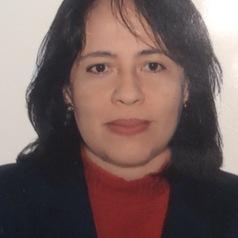
Senior Researcher, Department of Family Practice, University of British Columbia Sabeena is a medical doctor and researcher working at the University of British Columbia. In her role as a Senior Researcher, she focuses on understanding disparities linked to sex and gender across diverse academic fields. She has written more than 55 articles in scientific journals. Sabeena serves as an academic editor for PLOS One and is part of the editorial board teams for the BMC series and npj Digital Medicine. Previously, Sabeena also secured funding from the prestigious "Stars in Global Health" competition organized by Grand Challenges Canada. When not working, she loves cycling outdoors.
Senior Lecturer, Global Economic and Social History, University of Glasgow I am a global historian of economic and social history. I study the global dynamics of health and social welfare, cross-cultural translations of knowledge and professional categories, historical discrimination in health professions, and epidemics. My past, current and future research focuses on Africa in its Islamic, European, and global contexts between 1800 and the present, with a particular focus on Algeria. I hold PhD and MA degrees in History/History of Science from Princeton University (2014 and 2010), a diploma in Arabic language and culture from the American University in Cairo (2008), an AM degree in Regional Studies-Middle East from Harvard University (2005), and a BA Honours in Modern History from the University of Oxford (2002). I have been fortunate to live and study in Algeria, Egypt, France, Lebanon, Morocco, the UK, and the United States. I've worked at Harvard as an administrator, Oxford as a fixed-term lecturer, and at Glasgow in History and now in Economic and Social History. At Glasgow, I teach courses on innovation and the history of science, technology, and medicine in the modern Middle East and North Africa. I enjoy collaborating with students and colleagues in Glasgow's Archives & Special Collections to run "global history hackathons". I am currently writing a book about hygienic surveillance in colonized Algeria. The book is based on study of handwritten and typed documents in Arabic and French used by Algerian medical auxiliaries. These sources reveal how racialized religious categories and managerial processes shaped the delivery of public health in Algeria. My other full-time jobs are being a Type 1 diabetic and a parent.
Associate Director/Associate Professor of Nursing, Queen's University, Ontario I am a Registered Nurse in the Extended Class/Nurse Practitioner and Associate Professor at Queen's University. My research is focused on pain care and knowledge translation. My ORCID is https://orcid.org/0000-0003-3262-243X
Associate Professor, Queen's University, Ontario Pilar Camargo-Plazas, RN, PhD, is an Associate Professor at the School of Nursing, Queen’s University. Under the umbrella of interpretive inquiry and emancipatory approaches, Dr. Camargo-Plazas’s program of research strives to describe and understand how societies organize and distribute resources and address attention toward economic, political, environmental and social factors and their effects on health outcomes, promotion and disease prevention for equity-deserving groups (e.g., older persons, women, families living on a low income, immigrants, refugees, etc.). By focusing on health equity, her research program aims not only to identify research needs but also to develop strategies for sustainable change and action that promote equity in nursing practices for these groups.