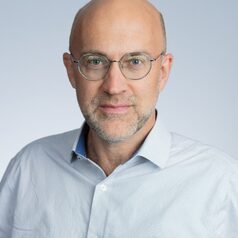
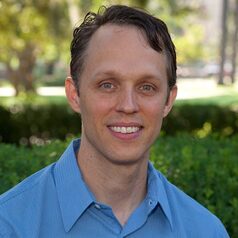
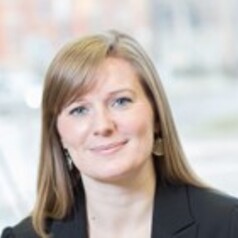
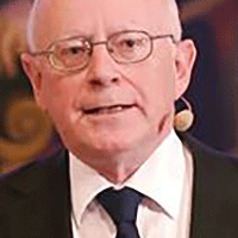
Professor of Political Science, University of Michigan Andrew Murphy joins the Political Science Department after appointments at Virginia Commonwealth University, Rutgers University, Valparaiso University, and the University of Chicago. His research takes up the intersections between politics and religion, in both historical and contemporary contexts. He is particularly interested in the emergence of religious liberty and liberty of conscience in early modern England and America, and the ongoing ramifications of these debates as they continue to unsettle American politics. In recent years, Murphy has focused on the life, career and political thought of William Penn, a figure who brought political theory and practice together in the early modern British Atlantic. He is the author of William Penn: A Life (Oxford, 2019) and Liberty, Conscience, and Toleration: The Political Thought of William Penn (Oxford, 2016); and co-editor (with John Smolenski) of The Worlds of William Penn (Rutgers, 2019). An edition of Penn's political writings, for the Cambridge Texts in the History of Political Thought series, appeared in 2021. His work on Penn continues the exploration of these topics begun in his first book, Conscience and Community: Revisiting Toleration and Religious Dissent in Early Modern England and America (Penn State, 2001). His more contemporary interests are reflected in his co-authored book (with David S. Gutterman, of Willamette University) Political Religion and Religious Politics: Navigating Identities in the United States (Routledge, 2015), and his Prodigal Nation: Moral Decline and Divine Punishment from New England to 9/11 (Oxford, 2008). He brings together historical and contemporary political reflection in “The Past and Present (and Future?) Politics of Religious Liberty,” The Forum 17 (2019): 45-67. Murphy's current research continues to bring together the political and the religious. His next project explores the concept of political martyrdom and the ways in which studying politically-charged deaths can help us make sense of the complex interplay of death, religion, politics, collective memory, and symbolic power.
Assistant Professor of Chemistry, Michigan State University At the Facility for Rare Isotope Beams (FRIB) a plethora of by-product radionuclides will be created that are of immense societal value for a number of disciplines, viz. nuclear medicine, plant biology, material science, astrophysics and stockpile stewardship science. It is an ambitious endeavor to collect these rare radionuclides at sub-nanomolar levels from the vast amount of cooling water, radiochemically purify them, and finally transfer them into a chemical form that is required for the specific applications. So far, the feasibility of ‘isotope harvesting’ was already probed at the National Superconducting Cyclotron Laboratory (NSCL). The next step will involve a translation towards the conditions at FRIB, where challenges like considerably increased levels of radioactivity, diluted in a greatly larger water volume will be met.
Associate Professor of Urban and Regional Planning, Florida State University My teaching and research are primarily in the field of collaborative environmental planning and management. I teach courses in environmental planning, food systems planning, collaborative governance, and planning theory. My research explores how to enhance social-ecological resilience of human-natural systems through collaborative governance. In the realm of natural resources, I have focused on how to engage in collaborative planning and management at multiple spatial scales and levels of governance to enhance social-ecological resilience through ecological restoration. Since my arrival in Florida, I have been examining planning responses to climate adaptation in the face of sea level rise. Finally, I seek to identify effective ways to navigate transitions toward more locally oriented food systems and to explore how such systems contribute to community resilience.
Associate Professor of Urban and Regional Planning, Florida State University I am committed to seeking sustainable pathways to reducing risk and building socio-ecological resilience to natural and industrial hazards. My research intends to promote grassroots level capacities through community outreach and participatory engagement. I work to build new bridges between scholarship and practice to uncover the intricacy of issues facing highly vulnerable localities while engaging and empowering communities to identify and direct their pathways towards shaping more resilient places. My teaching philosophy is guided by a desire to expand critical thinking, technical competence and hands-on engagement in order to advance inclusive and socially just solutions to environmental problems faced by marginalized and vulnerable groups.
Professor of Reading and Literacy, The Ohio State University Shayne Piasta is Professor of Reading and Literacy in Early and Middle Childhood in the Department of Teaching and Learning at The Ohio State University. She also is a faculty associate for the Crane Center for Early Childhood Research and Policy. Her research focuses on early literacy development and how it is best supported during preschool and elementary years. Her work emphasizes the use of rigorous empirical methods to identify and validate educational programs and practices, such as experimental evaluation of specific curricula and professional development opportunities. She also identifies teacher, classroom, and other factors associated with children’s literacy gains. Dr. Piasta has received the Presidential Early Career Award for Scientists and Engineers, the Outstanding Pre-Doctoral Fellow Award from the Institute of Education Sciences, and the Dina Feitelson Research Award from the International Reading Association. Her research has been funded by the Institute of Education Sciences, Eunice Kennedy Shriver National Institute of Child Health and Human Development, and National Institute on Deafness and Other Communication Disorders.
Professor of molecular physics, Stockholm University Mats Larsson is Professor of Physics at Stockholm University and director of the AlbaNova University Center in Stockholm, which is a joint scientific center between the Royal Institute of Technology (KTH) and Stockholm University. He serves on the Nobel Committee for physics since 2016. His research interests are laboratory astrophysics and its importance to astrochemistry, free electron laser research targeting small molecules, and, more recently, molecular chirality and chiral interaction. He chairs a Nobel Symposium on Chiral Matter during 2020, with Dmitri Kharzeev as one of the co-chairs.