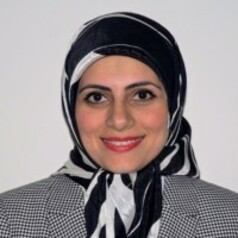
Sara Vihaji
Lecturer, School of Engineering, RMIT University
Lecturer, School of Engineering, RMIT University
0 articlesOur contributors
Meet the researchers, writers and practitioners bringing perspective to the global conversation.
Join the conversation14545 contributors
Lecturer, School of Engineering, RMIT University
Lecturer, School of Engineering, RMIT University
0 articles
Dean, Queen's Health Sciences, Queen's University, Ontario
Dean, Queen's Health Sciences, Queen's University, Ontario Dr. Jane Philpott is the Dean of the Faculty of Health Sciences, Director of the School of Medicine at Queen's University, and CEO of the Southeastern Ontario Academic Medical Organization based in Kingston, Ontario. She is a medical doctor, a Professor of Family Medicine, and former Member of Parliament. Prior to politics, Jane spent the first decade of her medical career in Niger, West Africa. She was a family doctor in Markham-Stouffville, Ontario for 17 years and became Chief of Family Medicine at Markham Stouffville Hospital in 2008. From 2015 to 2019 she served as Canada’s Minister of Health, Minister of Indigenous Services, President of the Treasury Board and Minister of Digital Government. She played a lead role in policies that shaped Canada: bringing Syrian refugees to Canada; legislating Medical Assistance in Dying; negotiating a health accord with resources for mental health and home care; improving infrastructure for First Nations to provide clean water on reserve; and reforming child welfare to reduce the over-apprehension of Indigenous children. She is currently the Chair of the Ontario Health Data Council, Vice-Chair of the Ontario Life Sciences Council and was recently appointed as a Commissioner to the Global Commission on Drug Policy.
1 articles
Professor of Medicine (Cardiology), Queen's University, Ontario
Professor of Medicine (Cardiology), Queen's University, Ontario Professor of Medicine (Cardiology) Associate Dean, Undergraduate Medical Education
1 articles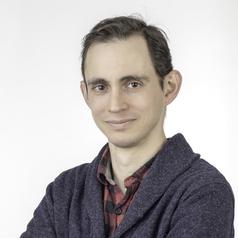
Assistant Professor of Psychology/Neuroscience/Behavior, McMaster University
Assistant Professor of Psychology/Neuroscience/Behavior, McMaster University Wrote dissertation on mathematical models of brain oscillations, did postdoctoral work in both models of neuronal homeostasis and cognitive neuroscience of autism, currently researching rhythmic timing in the brain and mind. Moonlights as a semi-professional violinist and guitarist in various folk traditions.
1 articles
PhD Candidate, Management of Organizational Behaviour and Human Resources, McMaster University
PhD Candidate, Management of Organizational Behaviour and Human Resources, McMaster University Ali Lefcoe’s research focuses on barriers to work (i.e., major obstacles to quality employment) and barriers at work (i.e., difficulties experienced in carrying out work) and how workers cope with these barriers. These research areas overlap in the sense that some workers (e.g., individuals with disabilities, precarious workers) face both barriers to quality employment, and barriers in the completion of their work with deleterious consequences. Ali has an interest in both qualitative and quantitative research methods, and applies these approaches in her current projects. She has defended her thesis proposal and is scheduled to complete her PhD in early 2024.
1 articles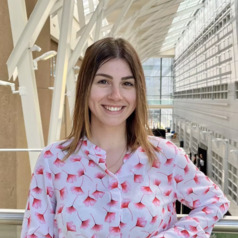
Medical Science and Imaging PhD Candidate, University of Calgary
Medical Science and Imaging PhD Candidate, University of Calgary I am a PhD Medical Science and Imaging student with a significant interest in dementia prevention, prediction, and progression. The objective of my research is to develop a deeper understanding of mild behavioural impairment-apathy in dementia-free older adults by implementing a research framework that focuses on epidemiological and pathological biomarker differences among those with and without apathy, which may explain disparate Alzheimer Disease (AD) outcomes and ultimately reduce symptom burden. Identifying those with apathy prior to AD onset may provide an earlier opportunity for intervention and improve patient outcomes. Both my research and clinically relevant experience have allowed me to gain an appreciation for the mutually beneficial relationship that each contributes to theory and practical work.
1 articles