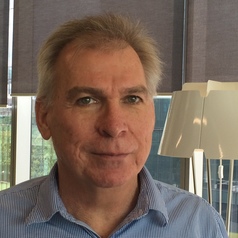
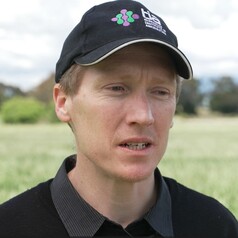
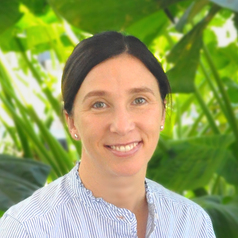
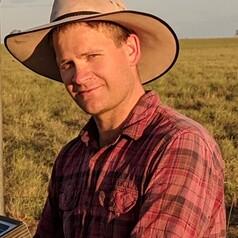
Research Leader Pastures an Rangelands, The University of Melbourne Dr Warwick Badgery is a research leader with NSW Department of Primary Industries (DPI) with over 15 years’ research experience improving the profitability and sustainability of grazing systems and mitigating greenhouse gas emissions under a changing climate. He is currently the Program Leader for the Feedbase Theme of the national Livestock Productivity Partnership, is a board member of Monaro Farming Systems and has adjunct positions with Melbourne University and China Agriculture University.
Professor of Soil & Landscape Science, Curtin University I am a soil scientist interested in understanding and predicting how soil functions respond to environmental and anthropogenic change. I am particularly interested in questions around climate change and carbon sequestration, the preservation of biodiversity, nutrient cycling and food production.
Professor of Global Change, Queensland University of Technology Peter Grace is Professor of Global Change within the Science and Engineering Faculty and a Theme Leader at the Institute for Future Environments at QUT. He is a terrestrial ecosystems scientist specialising in the interaction of carbon, nitrogen and water in soils. He is currently the national coordinator of a major research network funded by the Australian government developing innovative soil and water management strategies which will reduce our national greenhouse gas footprint without impacting on agricultural production. Peter has worked throughout the Americas, Asia and Africa in developing sustainable food production systems. He holds adjunct positions at the Earth Institute of Columbia University (New York) and Michigan State University.
Associate Professor of Sustainable Agriculture, University of Tasmania Associate Professor Matthew Harrison is an award-winning scientist based at the Tasmanian Institute of Agriculture in Launceston, Australia. Matt is internationally renowned for his work in improving the sustainability of agricultural and land-use systems through innovative economic, environmental and social solutions to demand-driven problems. His team uses systems thinking to develop skills, technologies and practices aimed at improving food production, enterprise profitability, social licence to operate and long-term agri-food sustainability. The impact of his work on carbon removals, greenhouse gas emissions, the climate crisis and food security will have enduring benefits for decades to come. Matt is the Director of the Carbon Storage Partnership, a multi-million-dollar transdisciplinary initiative that is developing environmentally-contextualised and socially-acceptable pathways aimed at profitably progressing the entire Australia livestock sector to net-zero greenhouse gas emissions by 2030. Matt has long engendered a culture of research excellence, as shown by his mentoring and supervision of colleagues, his training of the next generation of scientists, and his inclusive approach to leading diverse teams of people. He has supervised numerous Honours, Masters and PhD scholars through to successful completion, and he welcomes enquiries relating to research supervision or collaboration. As an egalitarian, he regularly advocates for social equality of people he works with. The knowledge, skills and technologies developed by Matt and his co-workers have contributed significantly to the University of Tasmania’s ‘well-above world standard’ Excellence in Research Australia (ERA) rankings in ‘Agriculture, Land and Farm Management’ and ‘Crop and Pasture Production’. *Career biography* After completing undergraduate degrees in Applied Science, Plant Science (Hons) and Civil Engineering (Hons), Matt conducted a PhD with the Australian National University while based at the Commonwealth Scientific Industrial Research Organisation (CSIRO) in Canberra, Australia. From 2009, he conducted post-doctoral fellowships at the CSIRO in Canberra, Australia, working with various stakeholders to develop fit-for-purpose, legitimate and sustainable livestock production systems. Matt later worked at the ‘Institut Nationale de la Recherche Agronomique’ (INRA) in Montpellier, France, and during this period he spent extensive time at Pioneer Hi-Bred International in Des Moines, USA, and the University of Queensland in Brisbane, Australia. Since completing his undergraduate degrees, Matt worked with- and was tutored by preeminent scientists in crop breeding, systems modelling, agronomy, computer-, plant- and animal-science. His post-doctoral research integrated the physics, maths and computer science from his engineering background into agricultural science. It was truly a multi-disciplinary training pathway. Matt joined the Tasmanian Institute of Agriculture in 2012 at the Cradle Coast Campus in Burnie, Australia. In 2022, he relocated to Launceston in support of the University’s strategic plan to grow a critical mass of world-class plant scientists in the north of the State.
Professor, Queensland University of Technology Professor David Rowlings is a soil scientist in the Sustainable Agriculture program at the Centre for Agriculture and Bioeconomy. His research sits at the nexus of the environmental and agricultural science, enabling high impact research outcomes that benefit both fields for positive global change and food security. He specializes in the development and utilization of improved sensing and monitoring technologies for mitigating environmental greenhouse gases, improving crop fertiliser-use efficiency and monitoring soil carbon, reactive nitrogen and biogeochemical processes. His work spans the Australian beef, dairy, grains, sugar and horticulture industries and he has worked internationally in cropping and rice systems.