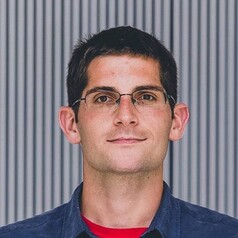
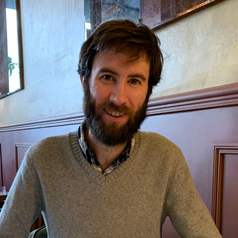
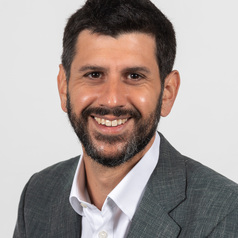
Associate Professor of Journalism, University of Galway Tom Felle is an Associate Professor of Journalism at the University of Galway, Ireland. He has a diverse background in journalism, having worked as a journalist and foreign correspondent for various media organisations in Ireland, the UK, Brussels, Sydney and Beirut for more than a decade before transitioning into academia. He was formerly based at City, University of London, and from 2018 to 2023 was Head of the Department of Media at the University of Galway. His research interests encompass digital news, verification, data-driven journalism, so-called “fake news” and disinformation, and democracy-related topics such as trust, transparency, and accountability. He has provided advice and testimony to national governments and the EU, and collaborated with the United Nations migration agency, IOM, as the lead academic partner for the Global Migration Media Academy from 2020-2022. He has authored or edited five books on journalism and democracy issues. He is currently a Fulbright Scholar based in Los Angeles for the 2023/24 academic year.
Postdoctoral Research Associate at the School of Biosciences, Cardiff University I am a Post-doctoral Research Associate working at Cardiff University with an interest in data analysis, freshwater ecology and anthropogenic pressures. My background is in molecular ecology, and I have previously worked in a variety of study systems, including Atlantic salmon aquaculture, environmental DNA and wastewater monitoring for health.
Assistant Professor of Political Science, University of North Carolina at Chapel Hill I am an Assistant Professor of Political Science at the University of North Carolina, Chapel Hill. My research is on international/comparative political economy, with a special focus on the politics of migration, labor market, and globalization. In my work, I use a diverse set of methods including causal inference with observational data, and computational tools such as text analysis and machine learning. My work has been published or is forthcoming in Comparative Political Studies, Electoral Studies, and Nature Communication among others. Previously I was a postdoctoral fellow at Perry World House’s Borders and Boundaries Project at University of Pennsylvania (2022-2023), and Princeton University’s Niehaus Center for Globalization & Governance (2021-2022). I completed my Ph.D. in Political Science at the University of Pittsburgh in 2021.
Assistant Professor of Informatics, University of Pittsburgh Morgan Frank, Ph.D., is an Assistant Professor in the Department of Informatics and Networked Systems in the School of Computing and Information at the University of Pittsburgh. His research agenda is to embrace the complexity of artificial intelligence (AI), the future of work, and the socio-economic consequences of technological change. This goal is inherently multi-disciplinary and collaborative as it builds broadly on advances in the fields of labor economics, sociology, computational social science, network science, data science, political science, and complex systems.
Assistant Professor, School of Computing and Department of Zoology and Physiology, University of Wyoming Ben Koger trained as an electrical engineer and a biologist. His work focuses on using imaging and computer vision to record and study the natural world.
Associate Professor of Development Studies, University of Oxford Maxim Bolt is also a research associate at the Wits Institute for Social and Economic Research (WISER), University of the Witwatersrand. He is an anthropologist working largely on questions of economy in southern Africa. Maxim's earlier research was on South Africa’s border with Zimbabwe, between 2006 and 2008, during acute economic and political troubles in Zimbabwe. It focused on the border farms, their black workforces and their white landowners in this context of crisis, upheaval and displacement. The monograph that emerged from this research - Zimbabwe's Migrants and South Africa's Border Farms: The Roots of Impermanence (Cambridge University Press and Wits University Press) - won the 2016 British Sociological Association / BBC Thinking Allowed Ethnography Award. Maxim now researches property inheritance, the state and class reproduction in Johannesburg, South Africa. In the post-apartheid era, making wills has taken on new significance amidst middle-class expansion and the rapid proliferation of financial services. Meanwhile, most people die intestate, their relatives confronted with unfamiliar rules about which relatives officially matter. The project explores the institutions and disputes surrounding urban inheritance, connecting socio-economic position to kinship, property, and legal and bureaucratic processes. As more South Africans accumulate substantial property, its disbursement becomes a new terrain on which battles of kinship obligation are fought.