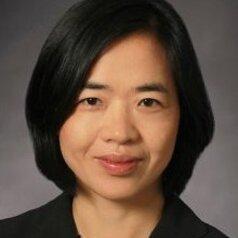
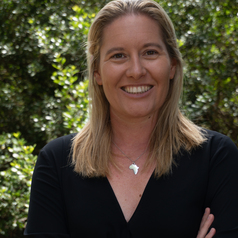
Professor of Civil and Environmental Engineering, Penn State My group works at the interface of hydrology, biogeochemistry, and environmental engineering. In particular, we are interested in understanding reactive transport processes where flow, transport, and biogeochemical reactions interact in natural systems. These processes dictate water quality and determine how natural systems respond to changing climate and human perturbations. We are particularly interested in understanding general principles that have prediction power across diverse climate and earth system conditions. We have worked on multiple topics at the nexus of water, environment, and energy, including, for example, water and biogeochemical cycling, contaminant reactive transport and bioremediation, and geological carbon sequestration, from as small as pore scale to as large as river basins.
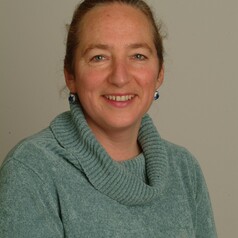
Research Fellow in Social Science and Geography, University of Nottingham Olivia is an anthropologist and an artist specialising in visual methodologies, gender, and health related fields. Her work in Kenya and Tanzania has covered livelihoods, indigenous medicines, informal alcohol brewing, WASH and One Health. Olivia uses and explores novel and visual methods in her work, which is primarily ethnographically informed, as well as working with transdisciplinary study design and reflexive techniques. At Nottingham, Olivia is a Research Fellow on the Invisible Women, Invisible Workers project with Dr Sabina Lawreniuk, where she is the in-country lead for Ethiopia. Olivia has supervised a number of postgraduate students, taught masterclasses on social science study design, methodologies and analysis, created and curated visual art exhibitions based on research findings, and is passionate about the use of art in social science both as method and as public engagement.
Professor of Russian Literature (Emerita), University of Oxford I retired in September 2021 after a 30-year career teaching and researching Russian literature and culture at the University of Oxford. Most of my publications have related to banned satirical authors of the pre-WWII Stalin era (Bulgakov and Zamiatin), but more recently I led a project and edited a volume on protest theatre in Russia, Ukraine and Belarus during the Putin era. _____ Professor Curtis’s published research has largely been focused on subversive writers of the early Stalin Period (1920s and 1930s). She has spent a great deal of time working in archives in Russia and abroad, and this has enabled her to publish a range of analytical and biographical studies of the life and works of the satirical novelist and playwright Mikhail Bulgakov (1891-1940). She has also explored the life and works of Bulgakov’s friend and contemporary Evgeny Zamiatin (1884-1937), an anti-utopian writer much admired by George Orwell. In 2013 she published the first full biography of Zamiatin to appear in any language; she has also co-edited (with a St Petersburg colleague) a scholarly edition in Russian of his most famous novel, We / Мы, based on a unique typescript she discovered in an American archive. After publishing a new biography of Mikhail Bulgakov in 2017 ((Reaktion Books and University of Chicago Press: Critical Lives, 2017), she is currently completing a Companion to ‘The Master and Margarita’, Bulgakov’s most famous novel, for Academic Studies Press (Boston, USA), which will be published in 2018 or 2019. Professor Curtis has developed a particular interest in Russian drama, and runs a specialist option for students which involves the study of plays from the 1820s right up to the present day. Over the last few years she has been involved in helping with productions of Russian plays in several British theatres (the RSC at Stratford, the Barbican and National Theatres in London, the Belgrade Theatre in Coventry) by providing cast workshops, writing programme features, working on translations, and advising directors and design staff. She is currently undertaking research on 21st-century drama written in Russian in Russia, Ukraine and Belarus, which has been notably bold in its challenges to the political establishment and to socially conservative values. This research is being developed in association with two parallel research projects (2016-2020) funded by the AHRC Open World Research Initiative (OWRI) at the Universities of Oxford (https://www.creativeml.ox.ac.uk) and Manchester (http://projects.alc.manchester.ac.uk/cross-language-dynamics/). She will be editing a volume of essays and interviews on this topic for I.B. Tauris, due to be published in 2020.
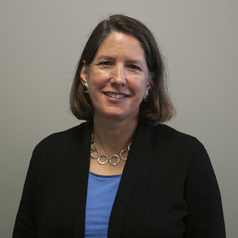
Chancellor's Professor of Anthropology and Museum Studies, Indiana University Dr. Elizabeth Kryder-Reid is Chancellor’s Professor of Anthropology and Museum Studies at Indiana University, Indianapolis, Director of the Cultural Heritage Research Center and Director of the IUPUI Museum Studies Program. Her multidisciplinary research explores the intersections of landscape, power, and memory and investigates how materiality is deployed in the contestation of social inequalities across gender, race, class, ethnicity, and religion. She has disseminated this research peer-reviewed publications, exhibits, and digital history. Her research has focused on landscape history and the production of public memory in the Chesapeake, the Midwest, and the California missions (California Mission Landscapes: Race, Memory, and the Politics of Heritage, U. Minn. Press 2016). Her current research investigates toxic heritage and the ways in which places of environmental harm are mobilized and marginalized in formal and informal memory practices. As part of this research, she has investigated post-industrial sites in the US and UK and was a Fulbright Scholar in France in 2022 studying the toxic heritage of WWI. She is the co-editor with Sarah May of Toxic Heritage: Legacies, Futures, and Environmental Justice (Available open access from Routledge, July 2023).
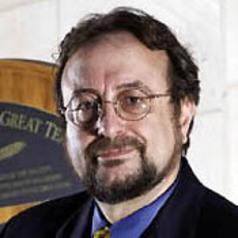
Betty Ruth and Milton B. Hollander Family Professor of Mechanical Engineering, Purdue University Dr. Mudawar's research interests lie in boiling, condensation, two-phase flow, high heat flux, thermal management systems, cryogenic systems, space vehicles, Lunar and Martian environments, microgravity, experiments on International Space Station and electronic cooling
Senior Research Fellow, Nelson Mandela University I am a Senior Research Fellow associated with the African Centre for Coastal Palaeoscience (ACCP) at Nelson Mandela University in South Africa. I am a palaeoecologist, specifically a palynologist who runs the Palaeoecology Laboratory (“Palaeolab”) at the university’s Gqeberha campus (Eastern Cape). My research relates to reconstructing southern African palaeoenvironments, with a key focus on the vegetation history and past climate dynamics of the highly biodiverse Cape Floristic Region.