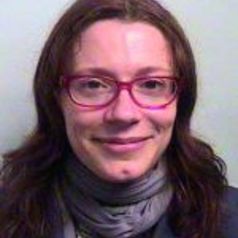
PhD candidate in medical physics, studying MRI biomarkers of declining brain health in aging, Concordia University Stefanie Tremblay is a PhD candidate in the Department of Physics at Concordia University. Her research focuses on uncovering early biomarkers of declining brain health in individuals at risk of neurological disorders using MRI.
Professor of Criminology, University of Sussex Lizzie joined the School of Law, Politics and Sociology after teaching for four years at Durham University. She has published a monograph on gender representations of women who kill and has co-authored, with Maggie O'Neill, a book on cultural criminology and representations of transgression. She has recently completed research on public responses to the death penalty in mid twentieth-century England and Wales.
Lead Midwife for Education, University of South Wales I am the Lead Midwife for Education and senior lecturer at the University of South Wales' Faculty of Life Sciences and Education. I am committed to training the next generation of midwives who will provide the highest standards of care to mothers and babies.
PhD candidate, criminology, University of Leicester Emily's research focuses on hate studies, prejudice and homelessness. Within this, Emily employs creative, non-traditional and trauma-informed research methods in order to support engagement with research in meaningful ways from seldom-heard voices and communities.
Lecturer, social policy, University of Bristol My research focus is the lived experience of homeless adults who identify as autistic. My Doctoral research involved narrative research with autistic adults experiencing homelessness. As part of this project I conducted an extensive scoping review on cognitive impairments in homeless populations. I am particularly interested in the life trajectory of autism, the difficulties surrounding diagnosis in adulthood, and the socio-economic disadvantages associated with being ‘on the spectrum’.
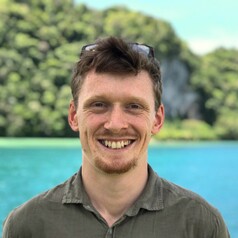
PhD Candidate in Climate Change Ecology and Evolution, Newcastle University Liam Lachs is an ecologist researching the impact of climate change on coral reefs, mass coral bleaching and climate adaptation. His work spans the interface of evolutionary biology, climate science, demography, and coral reef ecology. Throughout the last decade, this has included oceanographic analyses of deep-sea Irish coral ecosystems, isotopic assessments of sewage-derived impacts on coral reefs, manipulative field and lab experiments to quantify coral heat tolerance, and climate impact modelling. He has received various grants and awards to pursue his work on coral reef ecosystems, and has spent time bridging the gap between science and policy as an ambassador to the European Marine Board.