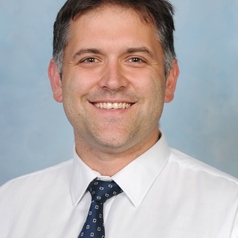
Lecturer in Secondary Maths Education, University of Sydney I received my PhD in 2022 and am currently a lecturer in Education, specialising in Initial Teacher Education for Mathematics. I was a secondary educator for 19 years, until mid 2022, prior to my appointment at the University of Sydney, teaching Mathematics and Computing. I have published and presented in both professional and academic settings. In addition, I have been consulted by NESA for a number of projects, writing Stage 6 curriculum, as a member of a Technical Advisory Group, as a member of a HSC examination committee and as a senior marker for the HSC.
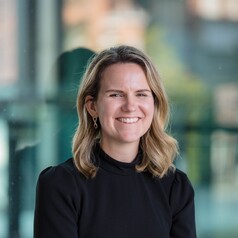
Research Fellow, The University of Queensland Dr Nicole Andrews is an internationally recognised scholar in the field of pain management and an experienced clinician. Dr Andrews currently works as a postdoctoral research fellow at the RECOVER Injury Research Centre, The University of Queensland and as a clinical Occupational Therapist at the Tess Cramond Pain and Research Centre. Dr Andrews' PhD focused on overactivity in the context of chronic pain (i.e. activity engagement that severely aggravates pain). Her research has increased our understanding of the relationship between pain, activity and daily function in a chronic pain populations and led the development of an innovative award winning mobile health platform called Pain ROADMAP. Dr Andrews' research continues to focus on the development, use and evaluation of innovative and cutting edge technology solutions to improve the management of a variety of heath conditions including acute and persistent pain following Trauma.
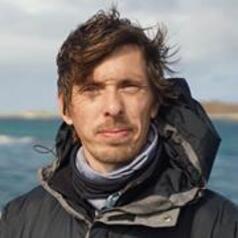
Research Technician in the School of Life Sciences, University of Sussex Nick is a researcher at the University of Sussex. He is an applied and behavioural ecologist working primarily with agroecological systems.
Professor of Apiculture, University of Sussex My research is focused on social insects, honey bees, beekeeping, honey bee breeding and diseases, animal behaviour, behavioural ecology, bee foraging ecology, bee conservation, and social evolution. I have considerable practical experience with honey bees having kept them in several countries and owned up to 180 bee hives when I lived in California. I am head of the Laboratory Apiculture and Social Insects (LASI) at the University of Sussex. I am also involved with outreach/extension to beekeepers and others, and with undergraduate teaching and the supervision of graduate students. Google Scholar page "Francis Ratnieks" https://scholar.google.co.uk/citations?user=mF4l2Z0AAAAJ&hl=en LASI website http://www.sussex.ac.uk/lasi/ LASI You Tube channel "LASI Bee Research & Outreach" https://www.youtube.com/user/LASIbeeResearch
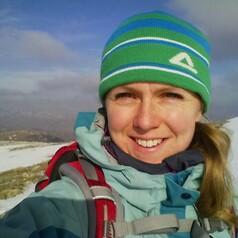
Lecturer in Conservation and Forestry, Bangor University I am a conservation scientist, working across disciplines to understand the difficult trade-offs we negotiate in biodiversity and environmental conservation, with the aim of finding solutions that offer benefits for people, biodiversity and the wider environment. I have led ecological field surveys to assess evidence trade-offs and win-wins for biodiversity, livelihoods and carbon in smallholder plantation landscapes in Southeast Asia, but also use a variety of economic and spatial modelling approaches to understand how land use change affects biodiversity, people and climate at larger scales.
Research Associate in Marine Behaviour , University of Cambridge I am fascinated by the behavioural strategies of predators and their prey. My PhD largely concerned how the presence of visual noise (in the form of dynamic illumination) within a habitat can alter the salience of motion, and subsequently influence predator-prey interactions and foraging behaviour. Two forms of dynamic illumination were of interest: dappled light (in terrestrial environments) and water caustics ("wave-induced flicker"; in aquatic environments). I am continuing this theme throughout my current role, expanding our knowledge to highlight how water caustics in marine habitats can also influence social interactions and collective behaviour. I am also interested in the emergence of interspecific foraging strategies and the ecological factors that may determine such interactions. In particular, I study the foraging behaviour and wider ecology of the trumpetfish, Aulostomus maculatus.