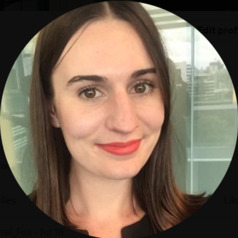
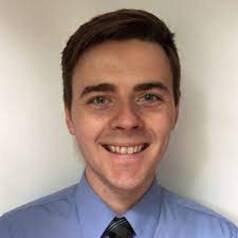
PhD candidate, The University of Queensland Laurel Fox is a PhD candidate in the University of Queensland Law School. She researches the legal, political and institutional history of national Indigenous representative bodies in Australia.
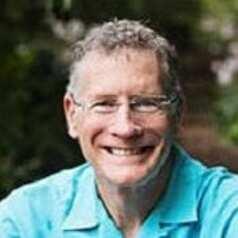
William H. Danforth Distinguished University Professor, Arts & Sciences at Washington University in St. Louis Jonathan Losos is an evolutionary biologist known for his research on how lizards rapidly evolve to adapt to changing environments. Jonathan was born and raised in Saint Louis. He graduated from Harvard University in 1984 and received his PhD from the University of California in 1989. After a two-year postdoctoral fellowship at U.C., Davis, Jonathan came to Washington University for his first faculty position. While there, he served as the Director of the Tyson Research Center and the Environmental Studies program, before leaving in 2006 to become a professor of biology at Harvard and Curator in Herpetology at the university’s Museum of Comparative Zoology. He returned to Washington University in 2018 and was appointed as the inaugural holder of the William H. Danforth Distinguished University Professorship and Director of the Living Earth Collaborative, a partnership between Wash U., the Saint Louis Zoo and the Missouri Botanical Garden. This new biodiversity center, nearly unique in partnering a leading university, zoo, and garden, has as its mission to advance knowledge of biodiversity and to ensure the future of earth’s species in their many forms. Jonathan has written three books, most recently "The Cat’s Meow: How Cats Evolved from the Savannah to Your Sofa," and is the author of "Improbable Destinies: Fate, Chance, and the Future of Evolution" (Penguin Random House, 2017) and one of the leading college biology textbooks (Raven et al., Biology). Jonathan has been elected to the National Academy of Sciences and the American Academy of Arts & Sciences and is the recipient of many awards, including the Daniel Giraud Elliot Medal from the National Academy of Sciences, the Theodosius Dobzhansky Prize from the Society for the Study of Evolution, the Edward O. Wilson Naturalist Award and the Sewall Wright Award from the American Society of Naturalists, and the David Starr Jordan Prize.
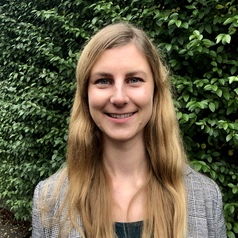
Research Associate, Centre for Climate Change and Social Transformations, Cardiff University Caroline is a Research & Knowledge Exchange Associate at the Centre for Climate Change and Social Transformations (CAST) based at both Cardiff University and the University of Bath. Recently, she has also worked as a Policy Research Fellow with the Welsh Government in the Strategic Evidence Unit. Prior to joining the CAST centre, she completed her PhD at the University of Sheffield (2019). She holds an MSc in Environmental Psychology from the Otto-von-Guericke University Magdeburg (Germany) and a BSc in Psychology from the University of Hamburg (Germany).
Senior Lecturer and Programme Leader BA in Interior Design, Manchester Metropolitan University Lucy Gannon is a Senior Lecturer and Programme Leader BA (Hons) Interior Design at Manchester School of Art, where she predominately teaches final year students in realizing their ambitions. The course is concerned with the occupation of space, how it is used and importantly, how it is experienced. The course promotes the understanding and subsequent remodelling of existing spaces, in order to create meaningful interventions. Lucy shares her time between academia and the creative practice Broadbent Studio, where she forms part of a small design team. Broadbent Studio has a strong design philosophy with a varied and rewarding portfolio. Lucy has significantly contributed to a number of projects surrounding placemaking and storytelling such as Seeds of Hope, Daresbury Linear Park: Light Gardens, Bradford Pit Memorial, Propellors of the City, and most recently Pilgrim Porch in Chester Cathedral. Lucy’s practice by nature is cross-disciplinary, and she takes on a range a roles from facilitator, listener, mentor and researcher to designer, visualiser, communicator and maker. She is a member of the Manchester School of Art, Design Research Hub, and sits under the theme of Community, Culture and Heritage. Re-occuring themes through her research and outcomes surround memory in the everyday and the physical act of remembrance. Lucy is interested in the notion of memory, the materiality of memory and the link to environments and identity. She is concerned with how our living identity is informed and how it defines or affects future living. Through analysing the act of movement and dwelling, she intends to create environments that encourage an investment of time and a sense of enquiry or promote activity. She recently spoke at a AMPS conference with Stephen Broadbent on the paper 'Encapsualting memorry to forge future identities.'
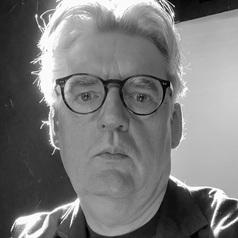
Senior Lecturer in Film Studies, Queen's University Belfast Des O’Rawe is a senior lecturer in Film Studies at Queen’s University Belfast, where he is also a Research Fellow at the Mitchell Institute for Conflict Transformation and Social Justice. He is interested in interdisciplinary approaches to the study of film and visual culture. His publications include: Regarding the Real: Cinema, Documentary, and the Visual Arts (Manchester University Press, 2016), and Post-Conflict Performance, Film and Visual Arts: Cities of Memory (Palgrave Macmillan, 2016).
MD-Ph.D. Candidate in Molecular Pathology and Immunology, Vanderbilt University Michael grew up in the historic city of Williamsburg, Virginia and first dabbled in research at James Madison University where he analyzed the structure and function of mutated proteins implicated in human disease. After earning a B.S. in Biology and a minor in Biochemistry from JMU, Michael moved to the busy D.C. suburbs where he dove into the world of cancer research and immunotherapy at the National Institutes of Health as a postbaccalaureate research fellow. Michael matriculated to the Medical Scientist Training Program at Vanderbilt and to the lab of Dr. Mary Philip. In the future, Michael hopes to work in clinic to treat patients with cancer and operate a research lab to learn more about how we can harness our immune system to treat disease.