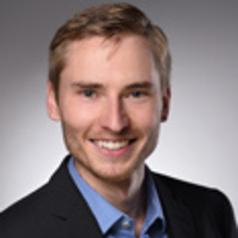
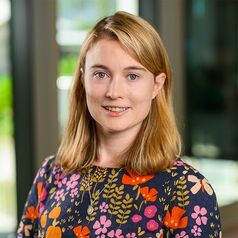
Senior Research Fellow, Max Planck Institute for Innovation and Competition Michael Rose is a Senior Research Fellow at the Max Planck Institute for Innovation and Competition. He holds a PhD in Economics from the University of Cape Town. He specialises in the science of science: How can we improve science as a whole? Important aspects he studies include collaboration, migration, career choice and journal policies.
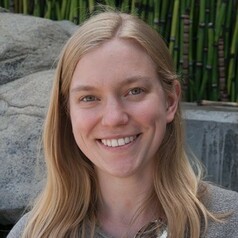
Associate Professor of Economics, UMass Amherst I am an Associate Professor of Economics at the University of Massachusetts Amherst and Director of the UMass Computational Social Science Institute. My research areas are labor economics, the economics of science and innovation, and international development. I am a Research Fellow at the Institute of Labor Economics (IZA), an Affiliated Researcher at the Stockholm Institute of Transition Economics (SITE) at the Stockholm School of Economics, and a Faculty Associate at the Davis Center for Russian and Eurasian Studies and the Laboratory for Innovation Science (LISH) at Harvard University. In 2018, I received the Russian National Prize in Applied Economics, awarded biennially to recognize published research on the Russian economy, and previously received honorable mention for the W.E. Upjohn Institute for Employment Research Dissertation Award. I was a Fulbright scholar in Ukraine in 2004 and have served as a U.S. Embassy Policy Specialist Fellow in Russia, Azerbaijan and Tajikistan.
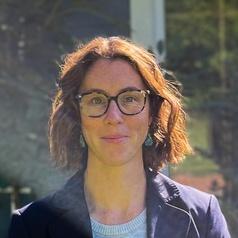
Assistant Professor in Molecular, Cellular, and Developmental Biology, University of Michigan I earned my Ph.D. in pathology at University of Washington in Seattle. My dissertation work focused on reversing age-related problems that lead to heart failure in mice using an anti-aging drug intervention. My work as a postdoc, and then as an assistant professor in the Molecular, Cellular, and Developmental Biology department at the University of Michigan has been to develop the first multicellular model system for studying polyphosphate, an ancient molecule that plays many cellular roles, possibly including aging. I teach a course for senior undergraduates and graduate students about the basic biology of aging.
Assistant Professor, Mississippi State University I am a historian of eastern Africa and the history of science, focused on the nineteenth and twentieth centuries. My research interests fall under the rubric of knowledge production broadly speaking, including in the areas of language, standardization, bureaucracy, research, and education. I received my BA from Yale University in 2008 and my PhD from Princeton University in 2018 and am currently an assistant professor in the Department of History at Mississippi State University. Between January 2021 and July 2022 I was a Humboldt Research Fellow affiliated with the Institute for Asian and African Studies at Humboldt University. My first book, A Language for the World: The Standardization of Swahili (November 2022, Ohio University Press) examines the long-term, interconnected processes that produced Standard Swahili as it is taught around the world today, zooming in on specific moments of conversation, translation, and codification. Adopting this dual perspective allowed me to uncover the ways in which, over the course of a century, various communities-in-construction converged upon the project of linguistic knowledge production in and about Swahili. This upcoming October I will be in Essen, Germany at the Institute for Advanced Studies in the Humanities working on my second book project, tentatively titled Making an African University: Histories of Inquiry in East Africa. The book will examine the diverse frameworks of scholarly inquiry that co-mingled in this region across two centuries, ranging from discussions on the baraza (front porches) of Zanzibar, to universities in Kampala and Dar es Salaam. My aim with this project is to explore the notion of research, demonstrating how a region like East Africa—largely ignored in the mainstream literature on the history of science and its concomitant field the history of the humanities, both of which focus fundamentally on questions pertaining to the production of knowledge—can and should be an essential part of the conversation. To do so, I examine several case studies of research and researchers who, though perhaps not hewing to our traditional understanding of the terms, were engaged in scholarly inquiry. I argue that such “frameworks of inquiry” did not disappear with the establishment of colonial institutions of higher education, but rather informed the possibilities and modes of research available to East Africans in those spaces.
enseignant-chercheur en Etudes Italiennes (poésie, prose et cinéma de l'Italie - XIX-XXème s.), Université Savoie Mont Blanc Fabrice De Poli est Maître de Conférences en Etudes italiennes au département LEA (Langues Etrangères Appliquées) de l’Université Savoie Mont Blanc. Sa recherche, portant sur la littérature (poésie et prose) dans l’Italie de l’ère contemporaine (de 1789 à nos jours) et, plus ponctuellement, le cinéma italien, se décline en trois axes principaux : « Les transfigurations de l’Histoire et de la politique », axe dans lequel il travaille sur le conditionnement d’une inspiration créatrice par son contexte historique (sociétal, politique et idéologique) ; « La condition moderne à l’ère de la sécularisation », où il analyse les répercussions de la sécularisation dans la création italienne ; « Filiations et intertextualité », axe de recherche centré sur la mise en lumière et l’analyse de filiations entre poètes italiens ou entre poètes français et italiens dans le but de mettre au jour le dialogue fécond, sur le plan artistique et moral, entre un poète et ses aînés.
Lecturer, Monash University Kate Saunders is a lecturer in the Department of Econometrics and Business Statistics whose research interests are in statistical climatology. Her primary focus is on modelling climate extremes; and understanding how the probability of extreme events might be influenced by climate change. Other interests include; statistical post-processing of meteorological forecasts, quality control of meteorological data and how to estimate the risk posed by compound weather events. Kate’s research improves our understanding of the probability of extreme climate/weather events and helps us to make informed decisions about natural disaster risk.