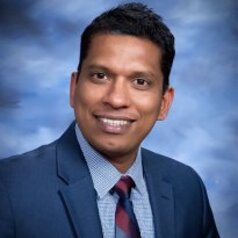
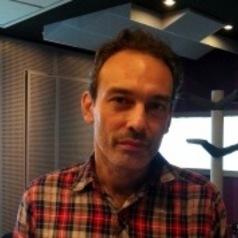
Associate Professor, Electrical and Computer Engineering, University of Windsor I am an Associate Professor in the Department of Electrical and Computer Engineering at the University of Windsor. From 2012 to 2017, I was an Assistant Research Professor in the Department of Electrical and Computer Engineering at the University of Connecticut. I received my Ph.D. in Electrical Engineering from McMaster University, Canada in 2008. After my PhD, I held a postdoctoral position at the University of Ottawa from 2008 to 2010, and then a University Postdoctoral position at the University of Connecticut from 2010 to 2012. My research interests are in signal processing, machine learning, and distributed information fusion and their applications in autonomous systems; particularly, his close interests are in battery management systems. I founded the battery management systems lab (BMSLab, www.bmslab.org) at the University of Windsor in 2017. The BMSLab has several ongoing funded projects in collaboration with government and industry partners. My Book titled "Robust Battery Management Systems with Matlab" is in press and will be published by Artech House, Norwood, MA, in fall 2023.
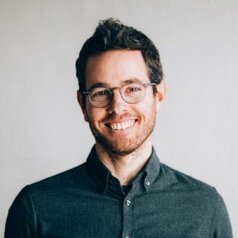
Ph.D. Candidate in Biological Sciences, Vanderbilt University I use computational methods to research human population genetics. In particular, I study how cultural traits like language and marital practices have influenced human genetics.
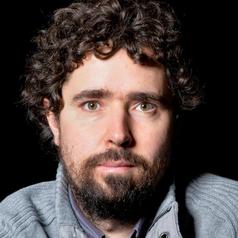
Assistant professor in political science, Tel Aviv University Dr. Lior Sheffer studies elite political behavior. His research focuses on executive decision making, exploring if and how people who run for office differ from non-politicians when they solve problems and reason about the policy choices they have to make. He specializes in fielding large scale experiments with incumbent politicians as participants, across different contexts and countries. His broader substantive interests are in elections and campaigns, the role of personality in politics, and legislative behavior. Methodologically, he is interested in survey and field experiments, survey design, and application of psychological modules and insights in the study of politics. Lior received a B.Sc. in Mathematics and Cognitive Science and an M.A, in Public Policy from the Hebrew University of Jerusalem. He earned his PhD in political science from the University of Toronto. His research has appeared in the American Political Science Review, Journal of Politics, Political Psychology, Political Behavior, Electoral Studies, and Political Research Quarterly, among other journals.
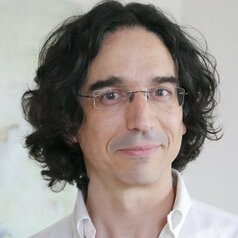
Research director, Centre d’Analyses de Mathématiques Sociales (CAMS), Ecole des Hautes Etudes en Sciences Sociales (EHESS), Centre national de la recherche scientifique (CNRS) David Chavalarias is Director of Research at the CNRS lab Center for Social Analysis and Mathematics (CAMS) and is the head of the Complex Systems Institute of Paris Ile-de-France (CNRS, ISC-PIF – http://iscpif.fr). He studies the social and cognitive dynamics, both from the modeling and data-mining perspective, with an interdisciplinary approach grounded in cognitive and complex systems sciences. His work on science evolution features new methods for the reconstruction of science dynamics from academic productions, as well as models of collective dynamics of scientific discovery. He also has contributed to the development of several macroscopes and visualization tools for mapping knowledge dynamics from large corpora : academic digital repositories, online media or press.
Directeur de recherche CNRS, Institut d'histoire et de philosophie des sciences et des techniques, Université Paris 1 Panthéon-Sorbonne Directeur de recherche l'Institut d'histoire et de philosophie des sciences et des techniques (CNRS), Université Paris 1 Panthéon-Sorbonne. Formé d’abord en mathématiques, il s'est spécialisé dans la philosophie de la biologie, en particulier évolutive, et de l'écologie. Il a écrit de nombreux articles sur des questions relatives au concept d'organisme, à la sélection naturelle, l'écologie théorique ou aux modalités de l'explication biologique, et il a entre autres publié "Métaphysique et biologie. Kant et la constitution du concept d'organisme" (Kimé, 2008), "Pourquoi? Une question pour découvrir le monde." (Flammarion/Autrement 2020) et codirigé "From groups to individuals" (avec Frédéric Bouchard; MIT Press 2013), "Les Mondes Darwiniens" (avec Thomas Heams, Guillaume Lecointre, Marc Silberstein; Matériologiques, 2011), "Challenging the Modern Synthesis" (Oxford University Press, 2017) avec Denis Walsh, et “Temps de la nature, nature du temps“ (CNRS Ed ) avec Christophe Bouton. Publications disponible sur http://philippehuneman.wordpress.com Responsable de de l'équipe "Philosophie de la biologie et de la médecine“ de l'IHPST, et du GDR CNRS Sapienv "les savoirs de l'environnement", il dirige actuellement le projet ANR-DFG "Generalizing Darwinism“ avec Thomas Reydon (Hanovre) , et prépare un livre sur le scientisme et un autre sur ce qu'il nomme "les sociétés du profilage".