Postdoctoral Associate in Conservation Bioacoustics, Cornell University I am a biological anthropologist and behavioral ecologist who studies the ecological, social, and physiological influences on the behavioral and reproductive strategies of wild primates. My collaborative research program spans ecology, bioacoustics, anthropology, and conservation, tied together by a deep interest in how primate populations and human-wildlife relationships are responding to social-ecological change. With my research teams, I have compiled multi-year behavior, ranging, and sound-recording datasets for simakobu (Simias concolor), tamarins (Leontocebus weddelli), and orangutans (Pongo pygmaeus wurmbii) as well as soundscape recordings of dipterocarp, peat-swamp, mangrove, and heath forests in Borneo. Students and early career researchers with an interest in collaborating on any of these research topics, please get in touch! At the Cornell Lab of Ornithology's K. Lisa Yang Center for Conservation Bioacoustics, I am leading a team of natural and social scientists – in collaboration with local partners – to conduct social-ecological research across Indonesia's planned new capital city location in Borneo. With support from Cornell University's Migration Initiative and the Fulbright Scholar Program, we seek to understand the wide-ranging impacts on forests, communities, and biodiversity by combining bioacoustics and ethnographic approaches. In parallel, I am collaborating with Dr. Frank van Veen at the University of Exeter, the Borneo Nature Foundation, and Universitas Muhammadiyah Palangkaraya – initiated in 2018 with a fellowship from the British Academy – on a multidisciplinary research and conservation program in the Mungku Baru Education Forest in Central Kalimantan. We are working to develop cost-effective methods to monitor ecological responses to anthropogenic change to support data-driven conservation strategies for the Rungan landscape.
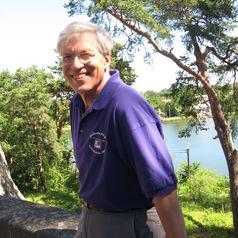
Professor Emeritus of Mathematics, Macalester College David Bressoud was Director of the Conference Board of the Mathematical Sciences from 2017 through 2021. He is now Dewitt Wallace Professor Emeritus at Macalester College, having served on the faculty from 1994 to 2020. He is also a former President of the Mathematical Association of America, a Fellow of the American Mathematical Society, and a Fellow of the American Association for the Advancement of Science. He served in the Peace Corps, teaching math and science at the Clare Hall School in Antigua, West Indies before studying with Emil Grosswald at Temple University and then teaching at Penn State for 17 years. He chaired the Department of Mathematics and Computer Science at Macalester from 1995 until 2001. He has held visiting positions at the Institute for Advanced Study, the University of Wisconsin-Madison, the University of Minnesota, Université Louis Pasteur (Strasbourg, France), and the State College Area High School. David has received the MAA Gung and Hu Award for Distinguished Service to Mathematics, the MAA Distinguished Teaching Award (Allegheny Mountain Section), the MAA Beckenbach Book Award for Proofs and Confirmations, and has been a Pólya Lecturer and a Leitzel Lecturer for the MAA. He is a recipient of Macalester's Jefferson Award. He has published over sixty research articles in number theory, combinatorics, special functions, and mathematics education. His other books include Factorization and Primality Testing, Second Year Calculus from Celestial Mechanics to Special Relativity, A Radical Approach to Real Analysis (now in 2nd edition), A Radical Approach to Lebesgue's Theory of Integration, Calculus Reordered: A History of the Big Ideas, A Course in Computational Number Theory (with Wagon), and Calculus: Graphical, Numerical, Algebraic (with Demana, Waits, Kennedy, & Boardman). David has chaired the MAA special interest group, Teaching Advanced High School Mathematics as well as the AP Calculus Development Committee and has served as Director of the FIPSE-sponsored program Quantitative Methods for Public Policy and PI for two NSF-sponsored national studies of Calculus: Characteristics of Successful Programs in College Calculus (NSF #0910240) and Progress through Calculus (NSF #1430540). A native of Pennsylvania, David lives in Saint Paul, Minnesota.
Ph.D. Candidate in Mathematics, University of Pennsylvania Maxine Elena Calle is a Ph.D. candidate in Mathematics at the University of Pennsylvania, a 2020 NSF Graduate Research Fellow, and a 2023 Dean's Scholar. Hailing from a small beach town in San Diego, CA, she received her B.A. from Reed College in Portland, OR, graduating Phi Beta Kappa. Her research in abstract mathematics focuses on algebraic topology and homotopy theory. Maxine is also committed to creating a more inclusive, diverse, and anti-racist mathematical community, in which any person who wants to be a mathematician, can. To balance her academic life, she enjoys making art, playing music, and hanging out with her two cats, Job and Guppy.
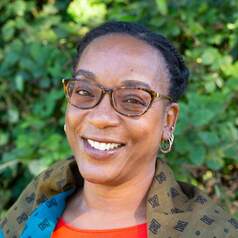
Professor of Sociology, University of South Wales Health and wellbeing are not just about our bodies and physiology, but about the webs we weave and that are woven around us: our relationships, home, community, economy and culture. Community-focussed, place-based approaches to research, and ‘ways of knowing’ that include nuanced and diverse aspects of everyday health and wellbeing are crucial in policy and practice developments seeking to address the low health and wellbeing outcomes that continue to impact poorer, marginalised populations. Since joining USW in 2002, I have led teams of researchers, and collaborated with colleagues across the UK on a wide range of studies and scholarly activities, securing close to £1m of research funding from the Welsh Government, ESCR, AHRC and others. A key aspect of my research activity has been to draw out the voices of people from marginalised, migrant and minority ethnic population groups; to spotlight issues of access, engagement and utilisation in a range of health and social care settings; and to arrive at innovative solutions and new knowledge pathways drawn from a range of stakeholder perspectives, practices and sensibilities. I am a Sociologist and my research incorporates critical race theory, feminism, community development theory, and critical perspectives in health, social policy and practice. My abiding research interest is rooted in intersectionality, in particular, the interplay and impact of, gender, age and social class as experienced by racialised and minority ethnic population groups. My early research included leading on the establishment of a Wales-wide infrastructure research support service that collated and made accessible online research, best practice and policy resources; conducting studies exploring cultural competencies of social work and nursing; and funding, supporting and (most importantly) evaluating the strategies, approaches and outcomes of locally based health and wellbeing small-grant activities led by community organisations. My completed funded projects include qualitative and mixed-methods studies on understandings of dignity, and on experiences and expectations of care, drawing on the perspectives of older Caribbean migrants (men and women) in a localised context, and on the perspectives of older women from a range of minority ethnic backgrounds, alongside the surveyed findings of community-based social care and support professionals across Wales. ‘Go Home’: Mapping the unfolding controversy of Home Office immigration campaigns ended in 2015. This 18-month, multi-site, interdisciplinary research project explored the impact on local communities and national debate of current publicity campaigns about migration by the UK Home Office. Funded by the ESRC (Rapid Response Strand – £200k), this project operated across eight universities; I led on the Cardiff work package. Another recently completed study is Representing communities: developing the creative power of people to improve health and wellbeing (July 2013 to July 2017), a large multi-siteprojectfunded by the Communities, Cultures, Health and Wellbeing strand of Connected Communities (AHRC/ESRC). Using five detailed case studies rooted in communities across the UK (including two in Wales), the project aims to establish how community representations produced through creative-arts practices can be used as forms of evidence to inform health-related policy and service development. I led on the Representing Butetown work package (£183k) and the focus was on the leisure pursuits, physical endeavours and creative activities of older people, with a focus on individual as well as collective wellbeing (behaviours, expectations and representations).
Researcher in History, University of Leeds I am a researcher working in the School of Politics and International Studies at the University of Leeds. Part historian, part geographer and part heritage practitioner, my research interests span children's play spaces, public parks and the urban environment more generally. I am an Associate Fellow of the Royal Historical Society and Royal Geographical Society.
Lecturer in Global Political Economy, University of Leeds I conduct research on the political economy of land, water and infrastructure in Ecuador and Colombia. I draw on a range of academic disciplines to study political economy, including politics, economics, anthropology, geography, sociology and history. I work at the University of Leeds, having previously taught at London School of Economics, University of Oxford and University College London. I am a Fellow of the Higher Education Academy.