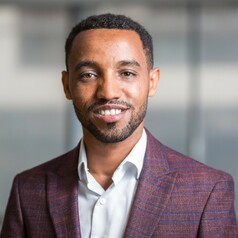
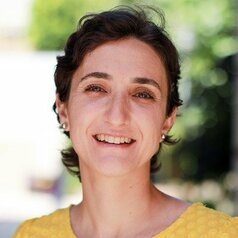
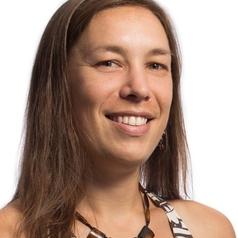
Ph.D Candidate and Public Scholar, Concordia University Hone Mandefro Belaye is a doctoral candidate in the Department of Sociology and Anthropology at Concordia. Hone holds a Master of Arts in development studies from the International Institute of Social Studies in The Hague and a Master of Arts in social work from Addis Ababa University. He earned his Bachelor of Arts in sociology and social work from Jimma University in Ethiopia. Hone’s research examines the change and continuity in relationships among neighbours as their living space in Addis Ababa, Ethiopia, changes from single-story houses to high-rise condominiums. His research is supported by a Vanier Scholarship from Social Sciences and Humanities Research Council and Wadsworth International Fellowship from the Wenner-Gren Foundation. Before Moving to Montreal as a Public Leadership Fellow at Jeanne Sauvé Foundation/McGill University in 2017, Hone was a lecturer in the School of Sociology and Social Work and director of Community Services at the University of Gondar in Ethiopia.
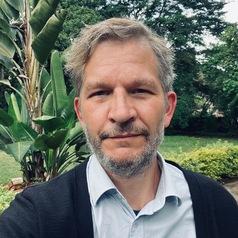
Senior Researcher and Coordinator of the Small Arms Survey's Human Security Baseline Assessment project on Sudan and South Sudan, Graduate Institute – Institut de hautes études internationales et du développement (IHEID) Khristopher Carlson is a senior researcher and coordinator of the Human Security Baseline Assessment (HSBA) project for Sudan and South Sudan at the Small Arms Survey. Before joining the Small Arms Survey in 2012, Carlson was a researcher with the Feinstein International Center at Tufts University. Over the past 20 years he's led projects and conducted field research in Ethiopia, Kenya, Sierra Leone, Somalia, Sudan, South Sudan, Uganda, and Bosnia & Herzegovina on armed conflict, children associated with armed groups, human rights in conflict, and weapons trafficking.
Assistant Professor of Educational Leadership, University of Tennessee Dr. Martinez's 30+ years of instructional and leadership experiences include roles in public, private, parochial and boarding school environments. He currently serves as an Assistant Professor in the Department of Educational Leadership and Policy Studies, a Division of the College of Education, Health, and Human Sciences at the University of Tennessee, Knoxville. After working for six years for Rockwell International as a systems engineer on the Space Shuttle Main Engines, Dr. Martinez changed careers and became a classroom teacher for seventeen years. He was fortunate to teach at all levels during these years, from kindergarten to 12th grade. Between 2007 and 2012, he served as a school administrator in both elementary and secondary schools in the Southern California area. As a faculty member, Dr. Martinez prepares future school leaders and develops intervention research studies to support early career teachers/administrators with their efforts to increase student success in Science, Technology, Engineering and Mathematics (STEM). Dr. Martinez completed his bachelor's degree in Mechanical Engineering from Stanford University in 1988, his master's degree in Educational Leadership from California State University, Channel Islands in 2009 and his doctoral degree in Educational Leadership from California Lutheran University in 2015.
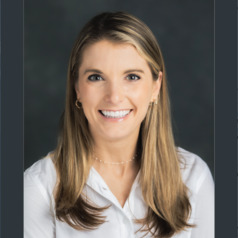
Assistant Professor of Educational Leadership and Policy Studies, University of Tennessee Dr. Rachel S. White is an Assistant Professor of Educational Leadership and Policy Studies at the University of Tennessee-Knoxville. Her research agenda centers around 1) issues of power, voice, diversity, and inclusion in education policy making and implementation processes, and 2) examining structures and policies that contribute to or counteract equitable and socially just K-12 education systems.
Quantum Biology Tech (QuBiT) Lab, Assistant Professor of Electrical and Computer Engineering, University of California, Los Angeles Clarice D. Aiello is a quantum engineer interested in how quantum physics informs biology at the nanoscale. She is an expert on nanosensors harnessing room-temperature quantum effects in noisy environments. Experiments suggest that nontrivial quantum mechanical effects involving spin might underlie biosensing phenomena as varied as magnetic field detection for animal navigation, metabolic regulation in cells and optimal electron transport in chiral biomolecules. Can spin physics be established – or refuted! – to account for physiologically relevant biosensing, and be manipulated to technological and therapeutic advantage? This is the broad, exciting question that the Quantum Biology Tech (QuBiT) Lab wishes to address.
Lecturer in Geosciences, University of Montana I have a passion for finding creative ways to teach and communicate the importance of geology – its application in everyday life, for inspiring students to explore their environment, and for encouraging their natural awe and respect for the Earth. I have a broad range of geologic interests ranging from broad-scale landscape evolution and sustainability to public science communication and wine and terroir. I am passionate about employing creative ways to communicate the importance and value of scientific understanding in everyday life and how critical it is that we as a species embrace sustainable practices now. My recent research has focused on geoscience education, especially assessing the efficacy of pedagogic tools ranging from analog models of Earth systems to the integration of smart technology and augmented reality in learning experiences. My experience in post-secondary education has been driven by my passion for engaging and educating my diverse student body equally.