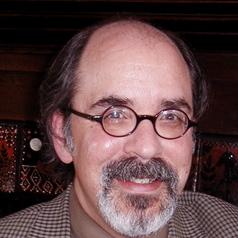
Associate Project Scientist and Continuing Lecturer in Environmental Health Sciences, University of California, Berkeley Dr. Megan Schwarzman is a physician and Environmental Health Scientist at UC Berkeley’s School of Public Health where her research and teaching focus on endocrine-disrupting chemicals, reproductive environmental health, U.S. and European chemicals policy, and strategies for applying environmental health knowledge to the design and selection of safer chemicals and materials. She is also Associate Director of Health and Environment for the interdisciplinary Berkeley Center for Green Chemistry—a joint center of the School of Public Health, the Colleges of Chemistry, Engineering, and Natural Resources, and the Haas School of Business. Dr. Schwarzman has served since 2009 on California EPA’s Green Ribbon Science Panel advising the Safer Consumer Products Program, and since 2014 as a member and chair of the Scientific Guidance Panel for California’s biomonitoring program. Her current research includes an assessment of the impact of California’s Proposition 65 on exposure to breast carcinogens and endocrine disrupting chemicals. After studying history at Haverford College, Dr. Schwarzman earned her medical degree from the University of Massachusetts. She completed specialty training in Family and Community Medicine at the University of California, San Francisco (SF General Hospital) where she earned the Julius R. Krevans Award for Clinical Excellence. She earned a Master of Public Health in Environmental Health Sciences from the University of California, Berkeley in 2007. Dr. Schwarzman also trains family medicine residents in reproductive medicine.
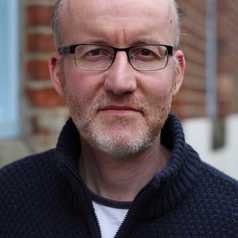
Adjunct Assistant Professor of Environmental Health, Boston University Robin Dodson is a research scientist with expertise in exposure assessment, particularly in the indoor environment. Her research focuses on three main areas: development of novel exposure measurements for epidemiological and community-based studies, analysis of environmental exposure data with a particular emphasis on semi-volatile organic compounds such as phthalates and flame retardant chemicals, and intervention studies aimed at reducing chemical exposures. Dr. Dodson oversees the Institute’s consumer product exposure research. She was the lead author on a landmark peer-reviewed study on endocrine disrupting and asthma-associated chemicals in more than 200 consumer products. As part of the Centers for Disease Control’s Green Housing study, she is currently investigating exposure in children with asthma to chemicals in consumer products and building materials. She leads Silent Spring’s Healthy Green Campus project, a research effort aimed at making health an integral part of sustainability practices on college campuses. Dr. Dodson completed her doctorate in environmental health at the Harvard T.H. Chan School of Public Health. For her graduate work, she designed and conducted an exposure study in the Boston area focusing on residential and personal exposures to volatile organic compounds. She developed models to evaluate the transport of pollutants in the indoor environment and determine the contribution of various microenvironments to personal exposures. In addition, she evaluated methods for using existing residential exposure data to model residential exposures in the general population. As a graduate student, she contributed to two studies focusing on asthma in lower-socioeconomic-status urban residences in the Boston area. Dr. Dodson is an adjunct assistant professor of environmental health at Boston University School of Public Health and also holds an appointment as a visiting scientist at Harvard T.H. Chan School of Public Health. She previously taught biostatistics at Brandeis University for eight years. Prior to her graduate work, Dr. Dodson worked at Menzie-Cura and Associates, where she contributed to both human and ecological risk assessments. In addition to her doctorate, Dr. Dodson holds a bachelor’s in environmental studies from Bates College, where she was inducted into the Phi Beta Kappa Academic Honor Society, and a master’s in environmental science and risk management from the Harvard T.H. Chan School of Public Health. Dr. Dodson’s interest in studying air pollution began in sixth grade when she first learned about the depleting effects of chlorofluorocarbons on the ozone layer. Today, she has dedicated her career to improving public health through her applied research, and hopes to inspire a new generation of young girls to become “future scientists.”
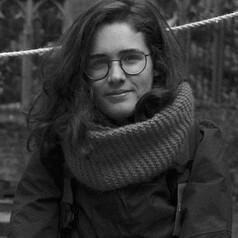
Adjunct Assistant Professor of Psychological Sciences, Case Western Reserve University Jeremy Shapiro is an adjunct assistant professor of psychological sciences at Case Western Reserve University and the author, most recently, of “Psychotherapeutic Diagrams: Pathways, Spectrums, Feedback Loops, and the Search for Balance.” I am a consultant on outcome research, program development and evaluation, a psychotherapist, and a national trainer (over 200 one-day workshops in over 40 states). My recent books include a graduate school textbook, "Child and Adolescent Therapy: Science and Art, 2nd Edition," and "Psychotherapeutic Diagrams: Pathways, Spectrums, Feedback Loops, and the Search for Balance."
Professor of Philosophy, Durham University I came to philosophy by a roundabout route, taking a BSc in Biological Sciences followed by an MA in the History and Philosophy of Science, before obtaining a PhD for a thesis on environmental ethics. I have written a number of articles on environmental philosophy as well as the following books: Zen Buddhism and Environmental Ethics (Routledge, 2004), Buddhism, Virtue and Environment (Routledge, 2005; co-authored with David E. Cooper), The Presence of Nature: A Study in Phenomenology and Environmental Philosophy (Palgrave-Macmillan, 2009) and Environmental Philosophy: An Introduction (Polity, 2015). My new book, How Nature Matters (Oxford University Press, 2022), presents a new theory of environmental value, based on the concepts of meaning, constitution and cultural identity.
Post-doctorate researcher, Université Toulouse III - Paul Sabatier, visiting lecturer, Liverpool John Moores University Adeline Morez is a biological anthropologist who specialises in the study of population genetics. After a Master’s degree in Ecology and Evolution, she studied ancient DNA to directly infer past human movements, focusing on Africa and Europe for her PhD (Liverpool John Moores University, UK). She is now a post-doctoral researcher at the EDB laboratory (CNRS, France). Her main interest is understanding how environment and culture have shaped human genetic diversity – through isolation, gene flow and selection – in Papua New Guinea and the islands of Southeast Asia.
Visiting lecturer at Liverpool John Moores University, lecturer in biomolecular archaeology, University of Aberdeen I specialise in ancient DNA analysis and am particularly interested in animal domestication and past human demography. I also have a keen interest in wet-lab ancient DNA methods. My current research covers genome analysis of Early Medieval Picts in Scotland; assessing past biodiversity in Scotland and Ireland via environmental ancient DNA (NERC-funded QUADRAT PhD project at the University of Aberdeen); and past mobility and migration in prehistoric Scotland (University of Aberdeen-funded PhD project in collaboration with Marischal Museum, Aberdeen, and the Crick Institute, London).