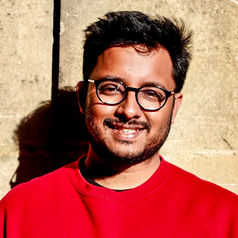
Disco Network Postdoctoral Research Fellow, Purdue University I hold a PhD from North Carolina State University’s Communication, Rhetoric, and Digital Media (CRDM) program where my expertise is in materialist and digital media studies, digital humanities, and cultural studies of technology and race. These areas of expertise inform my research and teaching interests, which, broadly sketched, are Black studies, affective labor, popular culture, urban spaces and temporal flows, and the nexus between sports and science and technology. Currently, I am a DISCO (Design, Inquiry, Speculation, Collaboration, Optimism) Network Postdoctoral Research Fellow where I work at Purdue University’s Humanities and Technoscience (HAT) Lab. Situated at the intersection of the humanities and STEM, the Humanities and Technoscience (HAT) lab will build-out collaborative, interdisciplinary relationships with Purdue’s various departments and schools and experiment with new teaching modules, possible degree programs, and a new project-based course: DISCO STEM+Humanities Technoscience, offering a hands-on, technology-based student experience.
Senior Lecturer in Communication and Applied Linguistics, University of Portsmouth I teach Communication and Applied Linguistics at the University of Portsmouth. I am interested in the representation of violence against women in both online and traditional media.
Associate Professor of Sustainability in the Built Environment, University of Cambridge Dr Ronita Bardhan is an architectural engineer and urban studies educator, with a PhD in urban engineering. She believes that data-driven intelligence of built environments can effectively address sustainability goals and policies. Her research is in the niche sector of the sustainable built environment to inform health and energy decisions in the changing climate and low-income communities. Bardhan uses data-driven methods that couples architectural engineering, AI and machine learning with social sciences to provided built environment solutions for health in resources constraint societies. Her tractable research informs demand-side design solutions using digital tools which positively affects well-being, energy security, and gender equality while entailing fewer environmental risks. Bardhan works in Slum Rehabilitation (social) housing (in India, Indonesia, Ethiopia, South Africa and Brazil). Her impactful work has received traction from policymakers and has received wide coverage in the news media. Ronita is part of AI for Environmental Risk, Cambridge Public Health, Centre for Science and Policy, Cambridge Zero , Cambridge Global Challenges and Sustainability Leadership for Built Environment (IDBE). She is Director of MPhil in Architecture and Urban Studies (MAUS) and leads the Sustainable Design Group at the Martin Centre: Sustainable buildings and cities, Department of Architecture. Dr Bardhan is Director of Studies and Fellow in Architecture at Selwyn College in Cambridge. Bardhan Chairs the Equality Diversity Inclusivity Committee at the Department of Architecture and History of Arts and is strongly committed to and is an ardent advocate of the shared vision of equality, diversity, inclusion, and belonging in all spheres of her research and teaching. She believes that everyone benefits from strength in difference and that diversity is instrumental to success.
Cambridge Zero Fellow, University of Cambridge Dr Ramit Debnath is the inaugural Cambridge Zero Fellow at the University of Cambridge. He is also a visiting faculty associate in Computational Social Science at Caltech, and a sustainability fellow at Churchill College, University of Cambridge. Ramit works at the intersection of data science and public policy to support climate action. Primarily focussing on developing novel approaches to natural language processing, machine learning, AI and qualitative analysis to enable a people-centric and just net-zero transition. In addition, he is interested in exploring how the public, industry and policymakers make decisions for energy and climate justice. At the same time, developing design-driven solutions to counter misinformation and distributive injustices. He is currently co-leading a work package with UNEP on developing a decision-making system for sustainability in the built environment. He has previously worked with the International Energy Agency, Stanford University and the Indian Institute of Technology Bombay. Ramit has a background in electrical engineering and public policy, an MPhil and PhD from Cambridge as a Commonwealth and Gates Scholar. He is the recipient of the 2022 Enrichment Award from the Alan Turing Institute, UK. In Cambridge, he has affiliations with multiple research units like the Energy Policy Research Group (Judge Business School), Centre for Natural Materials Innovation (Architecture), Centre for Climate Repair (Engineering), Cambridge Social Decision-Making Lab (Psychology) and the Bennett Institute of Public Policy (POLIS) as a Research Associate. Ramit has received over £400,000 in research grants and prestigious fellowships. And published in over 30 peer-reviewed journals and conferences
PhD Candidate, History, University of Hertfordshire Tionne Alliyah Parris is a PhD candidate at the University of Hertfordshire. She specializes in African American protest history, with emphasis on the Black Power Movement of the 1960s and 1970s. Her PhD research focuses on Black Radical Women (namely Communist and communist-affiliated activists) of the mid-20th Century, and the long-term impact of their activism on the Black Power Movement. Parris is also a coordinator and researcher at the Young Historians Project – a non-profit organization in the United Kingdom that aims to encourage youths of African and Caribbean heritage to study history in Britain. This organization produces a range of historical projects which focus on enriching public knowledge of Black British History.
Professor of International Relations, Jean Monnet Professor of European Security, National University Odesa Law Academy Tetyana Malyarenko is Professor of International Security and Jean Monnet Professor of European Security at the National University ‘Odesa Law Academy’, Ukraine. She is the founder and director of the Ukrainian Institute for Crisis Management and Conflict Resolution, and has held visiting positions at Johns Hopkins University, the Wilson Centre for International Scholars, the University of California, Berkeley, the University of Granada, the University of Tromso, and the University of Gothenburg. An expert on post-conflict and post-authoritarian transitions, she is the author of numerous books, book chapters, and journal articles in Ukrainian, English, and Russian. Malyarenko earned her Masters, Candidate of Science, and Doctor of Science Degrees from Donetsk State University of Management. Her main research areas of interests include societal and economic aspects of security in transition states, human security and good governance, social conflicts and civil wars. Dr. Malyarenko’s publications to date include five books and over fifty journal articles and book chapters, including research on competing self-determination movements in Crimea and peace and security in post-Soviet states.