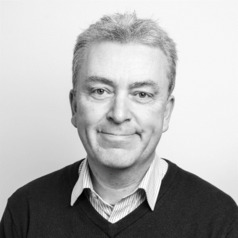
Professor of Chemistry, RCSI University of Medicine and Health Sciences The central theme of my research lies in the advancement of new strategies for the synthesis and functional assessment of structurally complex molecules. Specific goals include the development of NIR fluorophores for fluorescence guided surgery, new light activated anti-cancer agents, and the generation of chemical tools to assist in gaining a molecular level insight into biological processes. My research has its foundations in organic chemistry and chemical biology with strong collaborative links with medical imaging.
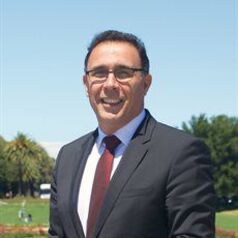
Professor, Institute of Cancer and Genomic Sciences, University of Birmingham Professor Hisham Mehanna is the chair of head and neck surgery, and is the Director of the Institute of Head and Neck Studies and Education (InHANSE) at the Institute of Cancer and Genomic Sciences. Hisham is a head and neck and thyroid surgeon with clinical interests in recurrence in thyroid and parathyroid surgery. He has a keen interest in clinical and translational research, heading a research team of 20 researchers, and holding over £15million in research grants. His research has changed clinical practice across the world. His experience of multi-disciplinary research in the field of cancer biology and treatment has made him a strong proponent of multi- and inter- disciplinary research, as the way to provide new insights and approaches to address intractable global challenges. As Deputy PVC, Hisham has responsibility for promoting interdisciplinary research across the University. Also as Director of the Institute for Global Innovation (IGI) and the Institute of Advanced Studies (IAS), Hisham strives to ensure that the Institutes inspire, support and deliver world-leading, multi- and inter-disciplinary research that seeks to address some of the world’s most pressing challenges, that affect humanity at a global level. The IGI’s research themes revolve around the factors that challenge, and sometimes threaten, the sustainability and resilience of individuals, communities, countries and the world as a whole. Themes include resilient cities, water challenges in a changing world, clean cooling, pollution solutions, antimicrobial resistance, ageing and frailty, gender inequality, artificial intelligence and 21st century transnational crime.
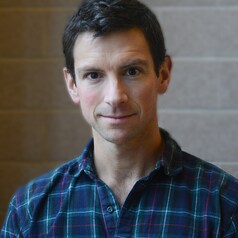
Postdoctoral Fellow, Psychology, University of Cambridge I am a British Academy Postdoctoral Fellow at the Department of Psychology at the University of Cambridge, where I work on misinformation, vaccine hesitancy and online extremist recruitment. My PhD dissertation (2020) examined information warfare in eastern Ukraine after the Euromaidan revolution. I am currently writing two books: The Psychology of Misinformation; and Information, Influence and War in Ukraine.
Professor of Philosophy, UMass Lowell John Kaag is Donahue Professor of Ethics and the Arts at UMass Lowell and External Professor at the Santa Fe Institute. He is the author of the forthcoming Henry at Work: Thoreau on Making a Living (Princeton, June) and Hiking with Nietzsche, which was an NYT Editor Choice and NPR Best Book.
Professor Emeritus of Religious Studies, The University of Texas at Austin J. W. Traphagan is an anthropologist and professor emeritus of Religious Studies and in the Program in Human Dimensions of Organizations at the University of Texas at Austin and a visiting professor at Waseda University in Tokyo. He’s published nine books and numerous articles in scientific journals. His two most recent books are the ethnographic mystery novel The Blood of Gutoku and his anthropological memoir Embracing Uncertainty: Future Jazz, That 13th Century Buddhist Monk, and the Invention of Cultures.
Associate Professor of History, Northwestern University Kathleen Belew is a historian, author, and teacher. She specializes in the history of the present. She spent ten years researching and writing her first book, Bring the War Home: The White Power Movement and Paramilitary America (Harvard, 2018, paperback 2019). In it, she explores how white power activists created a social movement through a common story about betrayal by the government, war, and its weapons, uniforms, and technologies. By uniting Ku Klux Klan, neo-Nazi, skinhead, and other groups, the movement mobilized and carried out escalating acts of violence that reached a crescendo in the 1995 bombing of Oklahoma City. This movement was never adequately confronted, and remains a threat to American democracy. Her next book, Home at the End of the World, illuminates our era of apocalypse through a history focused on her native Colorado where, in the 1990s, high-profile kidnappings and murders, right-wing religious ideology, and a mass shooting exposed rents in America’s social fabric, and dramatically changed our relationship with place, violence, and politics (Random House). Belew has spoken about Bring the War Home in a wide variety of places, including The Rachel Maddow Show, The Last Word With Lawrence O’Donnell, AC 360 with Anderson Cooper, Frontline, Fresh Air, and All Things Considered. Her work has featured prominently in documentaries such as Homegrown Hate: The War Among Us (ABC) and Documenting Hate: New American Nazis (Frontline). Belew is an Associate Professor of History at Northwestern University. She earned tenure at the University of Chicago in 2021, where she spent seven years. Her research has received the support of the Chauncey and Marion Deering McCormick Foundation, the Andrew W. Mellon Foundation, and the Jacob K. Javits Foundation. Belew earned her BA in the Comparative History of Ideas from the University of Washington, where she was named Dean’s Medalist in the Humanities. She earned a doctorate in American Studies from Yale University. Belew has held postdoctoral fellowships from the Center for Advanced Study in the Behavioral Sciences at Stanford University (2019-20), Northwestern University, and Rutgers University. Her award-winning teaching centers on the broad themes of history of the present, conservatism, race, gender, violence, identity, and the meaning of war. Belew is co-editor of and contributor to A Field Guide to White Supremacy, and has contributed essays to Myth America and The Presidency of Donald J. Trump: A First Historical Assessment.