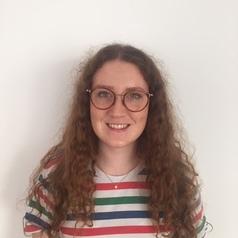
Senior Lecturer in Water Engineering, Loughborough University I am a Lecturer in Water Engineering, with more than 15 years of international experience in water and environmental engineering. My main research interests include waste water treatment, renewable energy from waste and supplying energy for rural communities in developing countries. Currently, I am focusing on the process of biogas generation from waste using the technology of anaerobic digestion. I am involved in a range of international projects providing small-scale, decentralized sustainable energy generation. This includes international research projects (please see below). In addition, I have broad experience in studying heavy metal transport phenomena. For example, I am involved in research of mercury phytoremediation and removal, and its effect on the biological systems. My research collaborators include academics and industries from the UK, Thailand, India, Bahrain, and across Europe.
Postdoctoral Researcher in Fisheries Science, University of Strathclyde I am an Italian living in Scotland since 2019, currently postdoc at the University of Strathclyde, where I also did my PhD, which I am about to finish. I did my BSc in Aquaculture at the Alma Mater Studiorum in Bologna (IT) and my MSc in Marine Biology at the University of Bremen (DE). The broad area of my research is fisheries science, at the moment I am focusing on mathematical modelling of fish population. Food security, and especially seafood security, is a challenge I feel very committed to and will be the focus of my future research.
PhD Candidate, School of Social and Political Sciences, University of Glasgow Ana Alonso Curbelo's PhD Topic is The Role of the News Media in Perpetuating Electoral Fraud Myths in the UK and US. Through multiple Quantitative Text Analyses, this project seeks to examine the British and American news media’s role in perpetuating myths about voter and electoral fraud in UK and US elections. The central research questions include whether news coverage is based more on fact or elite rhetoric, the role of tabloids and the partisan press in the UK relative to the US, what policies are linked to fraud (e.g., immigration), and the particular frames used by the media.
Visiting Senior Lecturer, Department of Media & Communications, London School of Economics and Political Science Maggie Scammell was a Senior Lecturer in the Department of Media and Communications at the LSE for 11 until 2010, and has continued to be associated with the department since then as a visitor. Before coming to the LSE she was a lecturer at the School of Politics and Communications at the University of Liverpool, and a Research Fellow at Joan Shorenstein Center for Press/Politics, at the John F. Kennedy School of Government, Harvard University. She took her PhD at the LSE, investigating the Thatcher government's use of marketing and public relations. Before joining the academy, she worked as a journalist for newspapers, magazines and television, writing and researching on a variety of subjects including general elections, gay politics and sport. Maggie's research interests are in political communications, especially political campaigning, media and elections, governments and news management, political marketing and political journalism. Current research projects include populist political communication and its impact on mainstream party communication; and women in politics, focusing on the rise of women to heads of governments around the world.
Senior Lecturer in Political Communication, University of Glasgow I joined the subject of Politics at Glasgow in September 2006 from the London School of Economics (LSE), where I completed my PhD in Political Communication. My research focuses on political communication: how politics is mediated and how this affects the conduct and nature of the democratic process. Most of my work has focused on the UK and Scotland but I have also done comparative work about countries including Argentina, Germany and China. During the early years of my career, I focused on the personalisation of politics, especially its media dimensions. I still work on the topic but, in the last few years, I have become keenly interested in understanding how the hybrid media environment is affecting ‘classic functions’ of political communication and its impact on democracy. I have recently published work about the Scottish independence referendum campaigns and have work in progress about non-party campaign organisations or ‘satellite’ campaigns. Most of my current work focuses on analyzing how different types of media shape discourse and especially the policy process. This includes a recent paper about Windrush, published in the International Journal of Press/Politics, and a project (funded by NIHR & MRC) about the role of social media on shaping the Chinese government’s policy response during COVID. I have also started to explore how different platform affordances shape to what extent and how topics are politicised.
Postdoctoral research associate, UCL I am a post-doctoral researcher in the Hellenthal group at UCL Genetics Institute. My research focuses on human population genetics. My PhD, also at UCL, uncovered population structure and admixture in worldwide human groups and tried to relate these to historical factors, with a particular focus on African history.