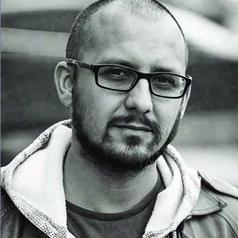
Senior Lecturer in Management Systems, University of Hull Dr Dionysios Demetis is a Senior Lecturer in Management Systems at the Hull University Business School and a Visiting Professor at Texas A&M University. He holds a PhD on Anti-Money Laundering and Information Systems from the London School of Economics and Political Science, where he taught classes on Information Systems Management, IS Security and Research Methods. While at the LSE, he contributed widely to a number of research deliverables for the European Union, but most importantly to the domain of Anti-Money Laundering for the Spotlight EU project, as well as the GATE EU Project targeting Money Laundering and Terrorist Financing. His research on the Risk-Based Approach to Anti-Money Laundering and the 3rd EU Directive has been featured in the IMOLIN select bibliography of the United Nations while his research on ‘Data Growth and the Consequences to Anti-Money Laundering’ has won the Emerald Highly Commended Award from the Journal of Money Laundering Control. For his teaching at the London School of Economics, he was awarded the departmental Teaching Assistant award for Outstanding Contribution based on peer review and student feedback from the Information Systems Department in 2006. During his PhD, he secured three consecutive research scholarships from the LSE. His book on AML entitled ‘Technology and Anti-Money Laundering’ and published by Edward Elgar is the first book to provide a coherent theoretical structure for Anti-Money Laundering research and practice, based on Systems Theory, and the first book to provide an Information Systems perspective on Anti-Money Laundering. With LSE Professor Ian Angell, he co-authored another book that applies second-order cybernetics to uncover deep-seated epistemological paradoxes in science. The book is entitled ‘Science’s First Mistake’, and it is published worldwide by Bloomsbury. Dr Demetis has a background in Physics from the University of Crete, as well as an MSc from the London School of Economics on the Analysis, Design and Management of Information Systems. Prior to this academic post he was an Adjunct Professor for the California based Thomas Jefferson School of Law (TJSL), where he lectured on the International Compliance and Anti-Money Laundering courses for the university’s online program for about three years. He has also been lecturing for TJSL on Qualitative Research Methodology for both MSc-level and PhD-level students, while advising a number of students in their research. He has given a large number of talks in conferences, and is a regular speaker at Cambridge University at the Annual Economic Crime Symposium.
Assistant researcher, University of Nottingham Dr Richard Ramchurn is an artist and researcher whose work explores adaptive narratives; he creates stories that can sense and adapt to the viewers’ physiological and emotional state. His film work explores race and technology in the Anthropocene in the forms of science fiction and magical realism. Ramchurn has been creating films and experiences using Brain Computer Interface technology since 2013. #Scanners, a successfully kick-started project, became an interactive narrative film called The Disadvantages of Time Travel (2014) that viewers controlled via brain data and blinking. His next brain-controlled film, The MOMENT (2018) touring internationally, and online and was covered by international media. These films were further explored as a multi award-winning research PhD project at the University of Nottingham’s Mixed Reality Lab working with world-class researchers in the field of Human Computer Interaction. His current interactive film Before We Disappear is set in the aftermath of a climate revolution in the near future. It explores the use of computer vision to support non-conscious interaction.
Senior Lecturer in Finance, Newcastle University My research interests are as follows: Banking: risk management, regulation & supervision, market structure & competition, efficiency & productivity analysis. Financial accounting: transparency, disclosure, data manipulation, fraud. Finance: financial engineering, securitisation, financial derivatives, off-balance-sheet leverage, hedging, speculation, Fintech, alternative finance, innovation. Financial stability: systemic risk, procyclicality, liquidity, contagion, compliance. Monetary economics: monetary policy transmission, quantitative easing, interest rates and economic growth, bank stress tests. Corporate finance: earnings management, corporate governance, corporate culture, reputational risk. I have conducted a number of research projects individually and in collaboration with scholars from UK Universities and also from abroad, and have developed a broad research network. My research has been published in a number of highly-ranked (ABS 3*) academic journals (Journal of Banking and Finance; Journal of Financial Stability; Journal of Financial Services Research; Financial Markets, Institutions & Instruments; Business Strategy and the Environment; Economics Letters; European Journal of Finance, etc.). I have presented my studies in numerous international conferences and other high-impact events. In this context, I have received several awards and distinctions for my research. I have worked at the Business School of Bournemouth University as a Senior Lecturer (Research) in Accounting and Finance. Before joining BU, I was working as Assistant Professor in Banking and Finance at the University of Sussex. Furthermore, I hold the position of Adjunct Associate Professor at the University of Luxembourg and also various academic positions at the University of Glasgow, University of Bath, and University of Essex. In the recent past, I have held visiting academic positions at Stern School of Business at New York University, the Department of Economics at the University of Illinois, and the Department of Banking and Finance at Chulalongkorn University in Thailand.
Doctoral research fellow, Jill Dando Institute of Security and Crime Science, UCL Conducting research on people smuggling and border policing at the Jill Dando Institute of Crime Science, UCL. Previously working on international migration and antiquities trafficking in conflict zones. Award-winning freelance investigative journalist and documentarist. Creative editor and co-director of the journalist collective Brush&Bow C.I.C.
Associate Professor of Archaeology, University of Leicester I took up the post of Associate Professor of Archaeology in Leicester in early 2021 and I will until 2026 principally focus on the ERC Starting Grant Body-Politics: Death Personhood and Sexuality in the Iron and Viking Ages. Before taking up the post in Leicester I was Associate Professor of Archaeology at the Museum of Cultural History at the University of Oslo. From 2017-2019 a grant took me to the University of Cambridge where I was a Research Fellow at the McDonald Institute of Archaeology and at Clare Hall college. Before this I was substitute Associate Professor (2016) and Teaching Fellow (2015) at the Institute for Archaeology in Oslo. My PhD (2012-2015) was also written there, with some time spent at UCL. My research ranges topics from infancy, power and the powerless, to movement, dreams and the self in the past. It centres around three main axes of late prehistoric and early medieval Scandinavia: the entwinement between architecture and inhabitants; the complex relationships between the living and the dead; and politics of the body. Often, I have worked with the links between architectural spaces and human bodies, by considering how prehistoric houses are built by bodies, produce certain bodily experiences, can be conceptualised as bodies themselves - and how dead bodies, parts and whole, are linked to domestic space. I have a strong interest in the lived experiences of inequality and gender. I was honoured to receive the 2022 Philip Leverhulme Prize in Archaeology.