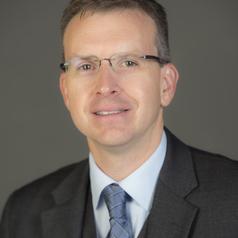
Professor Emeritus of Geography, Florida International University Ralph Clem is Professor Emeritus of Geography at Florida International University. He was also the founding Director of FIU's Center for Transnational and Comparative Studies, a Title VI National Resource Center in International Studies. His research highlights the geopolitics of Russia, Ukraine and other post-Soviet countries and focuses on socioeconomic, military and national security issues. Clem is a Senior Fellow at the Steven J. Green School of International and Public Affairs at FIU and a Research Affiliate of the Russian, East European, and Eurasian Center at the University of Illinois at Urbana-Champaign. He is also retired from the Air Force, having served as an intelligence officer at the squadron, wing and national agency levels and on the Air Staff in the Pentagon.
Professor of Political Science, West Virginia University Erik Herron is the Eberly Family Distinguished Professor of Political Science at West Virginia University. He has published extensively about politics in Eastern Europe and Eurasia, including the recent book Normalizing Corruption: Failures of Accountability in Ukraine (University of Michigan Press, 2020).
Lecturer in Clinical Psychology and Mental Health, University of South Wales Dr. Shakiela K Davies holds the position of Lecturer in Clinical Psychology and Mental Health at the University of South Wales, and is a Senior Fellow of the Higher Education Academy. She was awarded one of the few fully funded PhD Psychology studentships at Swansea University which was based in Cognitive Psychology/Neuroscience of language, and completed this in 2019. Shakiela has experience as an Assistant Clinical Psychologist with expertise in CBT, Acceptance & Commitment Therapy, Stress Control, Mindfulness and delivering NHS group interventions, as part of her NHS training. Shakiela has research interests which span across Clinical Psychology, Cognitive and Neuroscience of Language (e.g., Age of Acquisition and morphological processing); Research Methods, Mental Health and Online Grooming. She was asked to present her research at the Research, Engagement & Innovation Awards (REIS), Swansea. Shakiela has published and disseminated her research nationally and internationally (Spain, Canada). She has recently co-authored and published a book which provides a comprehensive and critical analysis of current perspectives on mental illness with references to psychological disorders and their current evidence based psycho-therapeutic applications - Tyson, P. J., Davies, S. K., & Torn, A., (2019) Madness: History, Concepts and Controversies. Routledge: Taylor and Francis. She is currently in a supervisory team examining Coulrophobia (clown phobia).
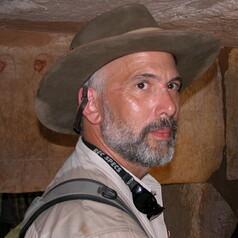
Senior Lecturer in Archaeology , Nottingham Trent University Jay specializes in the archaeology of warfare and has extensive experience in the study of conflict, imperialism, and the Rise and Fall of complex societies. His Master's Research focused on the Sea Peoples and the collapse of the Bronze Age and his Doctoral research centered on the archaeology of the Aztec-Tarascan Imperial frontier. Jay has 17 years of experience searching for MIAs from past wars including WWII, Korea, and Vietnam. Jay developed a nationally recognized Enterprise GIS to track the investigation and recovery of 80,000 missing persons. Jay is a director of the study of the Graeco-Roman city of Thmouis (Tell Timai) in the Nile Delta. The well-preserved city offers an opportunity to analyze the cultural transformations associated with Greek and Roman imperialism and the evolution of religions from the indigenous Egyptian pantheon through Christianity. His theoretical interests focus on the rise and fall of complex societies, imperialism, archaeological manifestations of social power, ancient hydraulic ecological adaptations, warfare, GIS, and urban development. He has led expeditions around the globe studying ancient civilizations and past wars.
Professor of Clinical, Metabolic & Molecular Physiology, University of Nottingham Despite my relatively early career stage, I have been PI or Co-I on successful project grants from UK research councils (MRC, BBSRC), Eurpoean Union (EUFP7), charity (Dunhill Medical Trust) and industrial (Ajinomoto, Abbott Nutrition) sources to the tune of ~£10M. I have published ~80 peer-reviewed articles (H-index 33) and 4 book chapters and my work has placed me in the world's top 5% of cited authors for work in Biology & Biochemistry (source: Thomson Reuters). I have received prestigious early career awards (e.g. American Physiological Society New investigator 2010) and am regularly invited to speak at national (e.g. Physiological Society) and international (e.g. EB, ECSS, ASPEN, ICAAP, A/ESPEN) conferences. Research synopsis: My past work has focused on the identification of central mechanisms regulating metabolism in human musculoskeletal tissues, and where appropriate, using more tractable in vitro cell or where appropriate, in vivo animal models. Combining molecular biology, stable isotope methodologies and detailed in vivo human physiology, I have been a key part of a team that has discovered a number of fundamental parameters that govern alterations in protein metabolism with age and disease. In particular, I have led the molecular analysis in the majority of my publications and over more recent years in becoming laboratory Principal Investigator, been entirely responsible for grant income, research direction and development of state-of-the-art physiological experiments. The current direction of our laboratories work involves the combining of detailed molecular physiology with the application of carbon/ deuterium stable isotope methodologies and more recently, the integration of OMIC (genomic/ metabolomic) techniques to discover predictors of, and the basis for, musculoskeletal decline in ageing and disease.