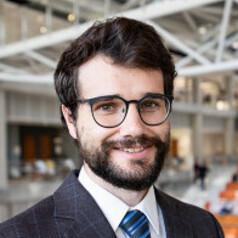
PhD Student in Mechanical Engineering, The University of Texas at Austin As an NSF Graduate Research Fellow, Matt has conducted systems analysis research as it relates to power grid operations and sustainability. Currently, he is focused on assessing the role of energy efficiency and demand response in increasing power grid resiliency during extreme weather events. As part of this research, Matt characterizes electricity demand profiles using the ResStock building energy model developed by NREL. He uses the ResStock model to generate building stock that is statistically representative of current residential housing and apply efficiency retrofits and equipment upgrades to investigate different development scenarios. He has also focused on investigating the impact that weather conditions have on electricity demand for historical severe weather events and future climate change scenarios. Before joining The University of Texas at Austin, Matt earned a B.S. in civil engineering from the University of Wisconsin where he worked for several organizations conducting research to inform environmental and energy policy-making processes. After graduating, he worked as an engineer in the energy services industry implementing energy optimization projects at commercial and industrial facilities.
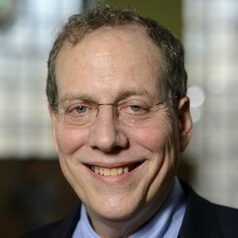
PhD Student in Mechanical Engineering, The University of Texas at Austin Drew comes from the north, i.e., Wisconsin. He grew up in Milwaukee and graduated high school in 2017. He moved out to Madison for undergraduate studies and then graduated from the University of Wisconsin-Madison in 2021 with a Bachelor’s of Science in mechanical engineering. During his undergrad years, he began his research career as an undergrad assistant in a lab that studied fluid dynamics and the heat transfer properties of two-phase flow. Once graduated, he moved to Austin in the summer of 2021 to begin working toward a Ph.D. at The University of Texas at Austin within the Webber Energy Group. Drew’s research interests are in big picture energy systems and cleaning up the power grid. Currently, he is researching grid resilience scenarios in extreme weather events by studying what efforts are needed to prepare for increasingly probable extreme weather. The methods involved in this research are robust capacity expansion models of the ERCOT power grid infrastructure that can be modified to explore specific resilience plans. These plans typically involve grid interconnections, distributed energy resources, and storage options at utility and distributed scales. Ultimately, Drew will study the interactions between these three options on a case by case basis to determine what combinations of them might work in practice.
Professor of Neurology, University of California, San Francisco Jennifer Mitchell is a Professor in the Departments of Neurology and Psychiatry & Behavioral Sciences and the Acting Associate Chief of Staff for Research and Development at the San Francisco VA Medical Center. Dr. Mitchell's current work is focused on identifying and developing novel therapeutics for drug and alcohol abuse, PTSD, stress, anxiety, impulsivity, and depression and on understanding the neural mechanisms responsible for these disorders. She conducts translational neuroscience research that rests at the intersection of psychology, behavioral pharmacology, and neuroanatomy. Over the past few years, Dr. Mitchell has worked on the development of psychedelic therapeutics for a range of psychiatric conditions including MDMA for PTSD and psilocybin for demoralization and depression. She is a member of the UC Berkeley Center for the Science of Psychedelics and the UCSF Neuroscape Psychedelics Division and has extensive and diverse experience with human and animal pharmacology, hypothesis-driven neuroscience, human proof-of-concept studies, translational models, and clinical trials.
Associate Professor of Medicine, University of Virginia It is difficult to explain to many what I do, so I have started by saying that I am like a platypus – full of unique features, but no one knows what to do with me. Currently serve as the Associate Chief Medical Officer for Critical Care at the University of Virginia and the Vice Chair of Patient Safety and Quality Improvement for the Department of Medicine at the University of Virginia. Before these roles, I served as the Associate Hospital Epidemiologist and Medical Director for the Medical Intensive Care Unit and Special Pathogens Unit. My background is in Pulmonary and Critical Care as well as Epidemiology. My research interests are improving population outcomes in Hospital Settings, mainly through the lens of information overload. Outside of my work, I am an avid runner and optical course racer (there is even a photo of me in Trail Runner years ago as an advertisement for Spartan Race). I am also an active volunteer with the Boy Scouts of America, specifically supporting the development of troops for Girls, DEI, and summer camp programs in my local council. Mostly though I am a father, human, and well a platypus.
Professor of Biomedical Engineering, Johns Hopkins University I did the first experiments showing altered DNA methylation in cancer. I showed that epigenetic changes (chemical changes other than DNA sequence per se) cause cancer are not simply consequential to it through my studies of the disorder Beckwith-Wiedemann syndrome. Later I had the first NIH funded epigenome center. More recently I have developed the idea the genetic variants can control epigenetic stochasticity (plasticity) and phenotype (traits) under evolutionary selection in natural populations, or within an individual in the development of cancer.
Associate Professor of Hebrew Bible and Ancient Judaism, The University of Texas at Austin Dr. Jonathan Kaplan is Associate Professor of Hebrew Bible and Ancient Judaism in the Department of Middle Eastern Studies and Director of the Schusterman Center for Jewish Studies at the University of Texas at Austin. His research and teaching focus on the study of the Hebrew Bible and the history of its interpretation in the Second Temple and early Rabbinic periods. He is the author of My Perfect One: Typology and Early Rabbinic Interpretation of Song of Songs (Oxford University Press, 2015). He is currently writing a book on the interpretations of the Levitical Jubilee in ancient Judaism and Christianity. He conducted research remotely for this volume in summer 2021 while supported by a fellowship from the Alexander von Humboldt Foundation and hosted by Ludwig Maximilian University of Munich. He is also writing a commentary on the Book of Daniel for the Oxford Biblical Commentary series. Previously, he was a Jacob & Hilda Blaustein Postdoctoral Associate in the Judaic Studies Program at Yale University.