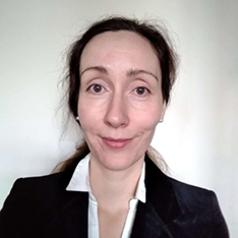
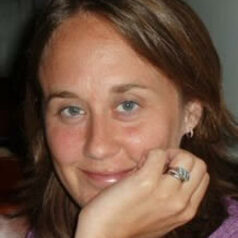
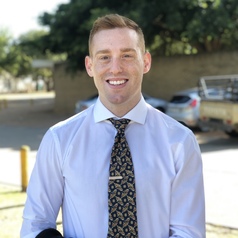
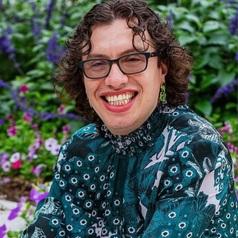
Assistant professor, Physics, Concordia University I am an assistant professor of physics at Concordia University working primarily the field of protein and peptide simulation. I am interested in machine learning for guided drug design and for the fundamental understanding of proteins both beneficial--such as those that can be used for organic nanoelectronics--and harmful--such as those that contribute to neurodegenerative diseases such as Alzheimer's. I have a strong background in undergraduate education and computer programming, in addition to physics and biophysics.
Doctoral Student in Physics, Concordia University Vrinda Nair is a doctoral student in physics and is currently working on the drug design of small molecules by implementing deep learning and machine learning models. Her project focuses on Antibiotic Resistance (ABR) and aims to find new antibiotic hybrids. She holds a Bachelor of Technology and Master of Technology in biotechnology and was awarded the Young Investigator Award for her bachelor's thesis project on making biocolours. She also serves as the treasurer of the Forum on Graduate Student Affairs (FGSA) at the American Physical Society. She is a published author-poet, artist, science communicator, and STEM mentor. She actively supports many causes, like women in STEM and supporting sci-artists, has worked with various organizations, and has offered her volunteering services. Her doctoral research is funded by the Natural Sciences and Engineering Research Council of Canada (NSERC), Canada Research Chairs (CRC), and Concordia University. She is also working on her internship through the Mitacs Accelerate Fellowship at Molecular Forecaster.
Postdoctoral Research Fellow, Anglia Ruskin University Femke is a social scientist working in the field of disaster and humanitarian studies. She specialises in knowledge management for disaster mitigation, response and recovery – with a special focus on localised, participatory and inclusive approaches. She has a university teaching qualification (UTQ). Femke has a background in organisation sciences and social anthropology. Her research focuses on knowledge management (KM) in disaster and humanitarian settings. To date, she has studied disaster KM in the context of earthquakes, climate change, global health (esp. HIV/AIDS), conflict and displacement. She is trained and experienced in both qualitative and quantitative social research methods. Femke has over 15 years of experience in programme management and policy research for government and global NGOs. Spoken Languages English Dutch (native) Spanish (professional working proficiency) Research interests Disaster management Knowledge management Sociology of disasters Humanitarian studies Organisation sciences Social anthropology Qualifications PG Dip Social Research Methods, The Open University MA Social Anthropology, SOAS University of London BA International Development and History, SOAS University of London Memberships, editorial boards Advisory Board Member, DATAWAR project, Sciences Po Lille, France Member, International Humanitarian Studies Association, International Institute of Social Sciences, the Netherlands Guest editor, Emerging voices and pathways to inclusive disaster studies, Disaster Prevention and Management (2022) 31(1-2).
Professor of Film and Television, University of Leeds I have published extensively on film and television, particularly on feminist media studies, emotion and affect, British television history, and discourses on care in contemporary culture. My most recent publication is Remembering British Television: Audience, Archive and Industry (BFI/Bloomsbury, 2019) with Professor Joanne Garde-Hansen, and I'm currently writing a monograph on Sally Wainwright for Manchester University Press with Professor Beth Johnson.
Postdoctoral fellow, Stellenbosch University My research has broadly been focussed on social movements and questions of 'justice'. Ranging from spatial justice to environmental justice, I have done research on groups that have had to strategically leverage a range of resources to actualise South Africa's progressive constitutional rights. I have worked with groups such as Reclaim the City, the Climate Justice Charter Movement and the Philippi Horticultural Area Campaign, and in doing so, developed scholarship around concepts of 'slow activism', and more recently on temporality as a lens.
Associate Professor of Anthropology, College of the Holy Cross Dr. Carmen Alvaro Jarrín received their Ph.D. from Duke University and they are Associate Professor of Anthropology at College of the Holy Cross. Their research explores the imbrication of medicine, the body and inequality in Brazil, with foci on plastic surgery, genomics and gender nonconforming activism. They are the author of The Biopolitics of Beauty: Cosmetic Citizenship and Affective Capital in Brazil (University of California Press), which explored the eugenic underpinnings of raciological thought among plastic surgeons, and the aesthetic hierarchies of beauty that reinforce racial inequality in Brazil. They are also co-editor of two collections of essays: Remaking the Human: Cosmetic Technologies of Body Repair, Reshaping and Replacement (Berghahn Books), and Precarious Democracy: Ethnographies of Hope, Despair and Resistance in Brazil (Rutgers University Press).