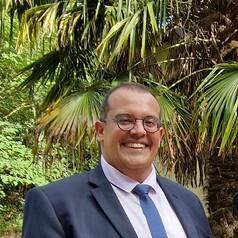
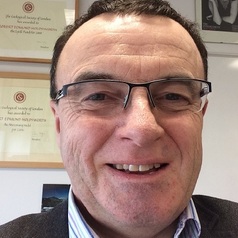
Chercheur en Toxicologie, Inrae Après une thèse en sciences des aliments, option toxicologie de l’Université de Bourgogne, j’ai passé trois ans à l’Université Tufts à Boston (USA) pour étudier les effets néfastes du bisphénol A après une exposition périnatale à (très) faibles doses sur les paramètres de fertilité, développement et fonctionnement de la glande mammaire. De retour en France, j’ai fait un second post-doc dans l’unité Inra «Xénobiotiques» puis «Toxalim» pour mettre en place des approches globales de métabolomique pour l’étude des effets à faibles concentrations de perturbateurs endocriniens sur le métabolisme. J’ai ensuite été recruté en 2011 dans cette unité Inrae pour m’intéresser au rôle de la bioactivation métabolique dans les mécanismes d’action toxique des contaminants alimentaires et environnementaux de type perturbateur endocrinien.
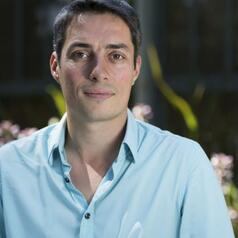
Professeur du MNHN, Muséum national d’histoire naturelle (MNHN) Jean-Baptiste Fini, PhD, is a full professor at the French National Muséum of Natural history (MNHN) in the department “Adaptation of living organisms ” in a common unit with the CNRS (French National Research Center) named “Physiological and Molecular Adaptation”. In this joint unit CNRS/MNHN (Paris, France) Pr. Fini leads the research team RODEO (responses to Environmental challenges) particularly on thyroid hormone signalling pathway disruptors and studies short- and long-term consequences of early exposure to different classes of chemical substances, either as single molecules or as mixtures. During the previous ten years, he has developed an assay to identify thyroid disruptors and their effects within Pr. Demeneix's team, who was awarded with the medal of innovation by the CNRS in 2014. Dr. Fini currently participates in several expert groups at the OECD (AOP, Thyroid) and is also part of the working group on endocrine disruptors at the French National Food Safety and Environment Agency (ANSES) and part of a working group on EDCs at the EFSA (European Food Safety Agency).
Professor of Toxicology and Biochemistry, Université Paris Cité Xavier Coumoul is a professor of toxicology and biochemistry at Université Paris Cité and co-leads the toxicology - ecotoxicology master of the university. His research focuses on the characterization of the modes of action of environmental contaminants. He leads the INSERM METATOX team which focuses on various pathologies including cancer and metastasis formation, chronic liver diseases and neurodegenerative diseases. Metabolic deregulations are one of the most studied modes of action of his team. He has authored more than 100 peer-reviewed articles in the field of cellular and molecular toxicology. He is also an expert in environmental health for the university and INSERM, having participated in two INSERM collective reports and having been interviewed by numerous media. He has also held positions of responsibility for the university (board of directors and vice-president) as well as a strong involvement in educational innovation.
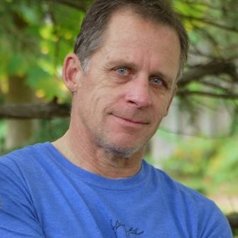
Profesor Ayudante Doctor. Departamento de Física Aplicada., Universidad de Zaragoza Finalicé mi licenciatura de Ciencias Físicas en junio de 1999 (Universidad de Granada) e inicié mis estudios de doctorado bajo el programa "Química" de la Universidad de Murcia. Este programa interdisciplinar incluía, entre otros, el curso "Técnicas numéricas y de simulación" impartida por el catedrático Miguel Ortuño, el cual me propuso una línea de investigación sobre el tiempo túnel cuántico para electrones y fotones. Utilizando métodos numéricos, logramos calcular el tiempo de tránsito de pulsos de distintas anchuras a través de distintos potenciales mediante el operador cuántico "tempus". Estos resultados constituyeron la base de mi tesis doctoral "Efectos de tiempo finito en el tiempo túnel para electrones y fotones" la cual defendí en 2007 con la calificación de "Apto cum laude por unanimidad". Publicamos nuestros resultados en la revista "Physical Review A" y "Physical Status Solidi". Posteriormente, accedí a un puesto de profesor asociado en el área de Óptica en el laboratorio del catedrático Pablo Artal. Llevo impartiendo asignaturas de los grados de Física y Optometría durante 9 cursos académicos. He desarrollado distintas líneas de investigación teóricas y experimentales en el campo de la Óptica a lo largo de mi carrera investigadora, correspondiendo a las siguientes temáticas: - simulación de estructuras dieléctricas periódicas para generar "luz lenta" (reducción considerable de la velocidad de la luz para aplicaciones tecnológicas). - modelado teórico de la intensidad de segundo armónico generada por fibras de colágeno corneales. - estudio numérico de la longitud de localización en estructuras unidimensionales magnetoópticas. - optimización numérica de multicapas periódicas dieléctricas para uso en tecnologías fotónicas. - diseño teórico de un reflector dieléctrico omnidireccional en el rango del infrarrojo cercano. - estudio teórico sobre agujeros negros primordiales y su relación con los estallidos de rayos gamma térmicos. En la actualidad desempeño mi labor docente e investigadora en la Universidad de Zaragoza. Cuento con 19 artículos científicos publicados en revistas del JCR y 12 comunicaciones a congresos científicos internacionales.
Professor of Biology, Trent University I have been Professor in the Department of Biology for nearly 25 years. Prior to my academic appointment, I served as Senior Wildlife Biologist with the Government of Newfoundland & Labrador. I am a member of the International Boreal Conservation Science Panel, a Fellow with the Leopold Leadership Program, and the founding Director of the Trent Centre for Communicating Conservation.
Professor of Structural Geology, Durham University Bob’s main research interests lie in the study of the structure, mechanics and transport properties of weak fault zones using fieldwork, microstructure and rock deformation experiments. Together with Nicola De Paola and Stefan Nielsen, he has recently established the Rock Mechanics Laboratory in the Earth Sciences Department at Durham. He has also pioneered studies of fractured basement reservoirs and the role played by pre-existing structures in controlling crustal deformation patterns at all scales. His international expertise in these areas has led to significant industry funding for his research, most notably in work related to the Clair oil field, the largest remaining asset in the UKCS. He also provides expert advice to the nuclear industry (new builds, geological disposal of waste) and is a member of the Office of Nuclear Regulation (ONR) Expert Panel in Seismic Hazard and Climate Change, contributing expertise on reactivation and capable faulting in the UK. Bob has published 174 peer-reviewed papers and has edited 12 books. Since 2001, he has obtained research funding in excess of £2.9 Million. He is a former Head of Department (twice) and NERC KE Fellow.