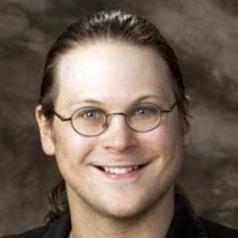
Associate Professor of Political Science; Director, Center for Political Participation, Allegheny College I am an Assistant Professor of Political Science at Allegheny College in Meadville, PA. Before coming to Allegheny College, I completed my B.A. at the University of Wisconsin-Stevens Point and my Ph.D. at the University of Illinois. My research and teaching interests lie primarily in political behavior, participation, and mobilization. As a scholar, my research is motivated by a commitment to the ideals of participatory democratic theory. More specifically, my research examines the inherent challenges of participatory democracy and seeks strategies for overcoming these challenges. One of my current projects examines the challenges of mobilizing citizens for collective action. Another examines the challenges of communicating accurate policy information to citizens. My teaching similarly combines a focus on participatory democracy with my interests in American politics and citizen behavior. Courses I teach include political psychology, politics and the news media, and direct action organizing (social movements and community organizing). My commitment to participatory democracy also extends beyond my academic work. Prior to joining the faculty at Allegheny College, I worked as a community organizer for the Champaign County Health Care Consumers (CCHCC) where I contributed to campaigns addressing health care and environmental justice concerns.
Professor of Cultural Sociology, Lancaster University Anne Cronin is a Professor of Cultural Sociology at Lancaster University who works on social and cultural analysis of public relations, advertising and marketing.
Senior Lecturer in Clinical Microbiology, University of Leicester Dr Primrose Freestone (BSc (Hons), PhD, PGCE) is a Lecturer in Clinical Microbiology. She is a biochemist by training, with extensive experience in bacterial physiology and biochemistry, including bacterial protein phosphorylation (she was the first to identify tyrosine phosphorylation as a regulatory mechanism in bacteria and provided key evidence concerning the biochemical function of the Universal Stress protein (uspA) in E. coli). Currently, Dr Freestone’s research interests are focused on the relationship between stress and infection. She is a co-founder and internationally recognised leader in the field of Microbial Endocrinology, a newly recognised research discipline which represents the intersection of microbiology, endocrinology and neurophysiology. Microbial Endocrinology is directed at providing a new framework with which to examine and understand the ability of microorganisms to interact with a host in both health and disease (Freestone et al 2008, Trends in Microbiology). Dr Freestone’s Microbial Endocrinology research interests are focussed on the relationship between stress and how it influences human and animal infection, particularly the effects of exposure to human stress hormones such as adrenaline and noradrenaline on bacterial growth and virulence. This research has led to the demonstration that stress hormones stimulate biofilm formation in normally harmless skin commensals such as Staphylococcus epidermidis, an important factor in the mechanism by which these inadvertent pathogens form biofilms within indwelling medical devices. This research was funded by the Wellcome Trust and was published as a lead article in the Lancet. Other ongoing research projects include molecular analyses of stress hormone responsiveness in E. coli, Salmonella, the staphylococci, and other bacterial pathogens. Dr Freestone is an editorial board member of Recent Patents on Anti-Infective Drug Discovery, Bentham Publishers, and a member of the SGM, ASM and SFAM. She has research collaborations with Professor Mark Lyte, Texas Tech University; Texas, USA, Professor Charles Penn, University of Birmingham; Dr Anthony Roberts, School of Dentistry, University of Manchester; Professor Vic Norris, University of Rouen; Dr Nick Walton, Institute of Food Research, Norwich, and with colleagues at the University of Leicester, including Dr Jonathan Woodward, of the Department of Chemistry and within the Department of III - Professor Christopher O’Callaghan, Professor Richard Camp, and Dr Jonathan Barratt.
Adjunct Senior Research Fellow in Environmental Law, University College Dublin Ray Purdy is an Adjunct Senior Research Fellow in the Faculty of Law, UCD (2022 -). Prior to this he held academic research positions at: University of Oxford (1995-1996, 2006-2022); Imperial College (1996-2003); and University College London (2000-2014). His key area of academic expertise is in environmental law where has developed a substantial personal research profile of international standing on a wide variety of research subjects – particularly environmental compliance, legislative analysis and drafting, environmental monitoring and enforcement, climate change). He is probably best well known for his research on the use of space technologies as evidence and their capacity to monitor and enforce laws (particularly environmental ones). He has conducted funded research in this field for the European Commission, UK Space Agency, Arts and Humanities Research Council, Economic and Social Research Council and European Space Agency. He has written guidance reports on this subject for: United Nations Environment Programme (UNEP), DG ENV European Commission, International Network on Environmental Compliance and Enforcement (INECE) and the EU LIFE+ programme. In 2014 after nearly 20 years of frustration of research not having the impact on the world that he hoped, he set up an academic spin off company called Air & Space Evidence, with a emeritus Professor of Earth Observation from University College London, and a former intelligence services analyst. This company, internationally recognized as the 'World's First Space Detective Agency," seeks to help move commercial remote sensing from the black world of intelligence uses by governments to the white world of commerce (and public good). It undertakes many different types of investigations and research using archived (and tasked) Earth observation data and designs environmental monitoring programmes using satellite imagery (and algorithms). The company was named by the leading US business and innovation magazine, Fast Company, as one their 12 World Changing Company Ideas for 2015. It won the Earth Observation Product of the Year Award 2017 (from the European Association of Remote Sensing Companies).
Associate professor, University of Bristol Evan Jones is an Associate Professor in Economic History at the University of Bristol. He specialises in the history of Bristol and its region in the medieval and early modern period, with a particular interest in maritime history. This includes the history of smuggling, piracy, shipping, trade and exploration. He has more general interests in environmental history and historical epidemiology.
Assistant Professor, Department of Earth Sciences, Durham University My current focus is on imaging strange and poorly understood features sitting on the core-mantle boundary of the Earth known as ultra-low velocity zones (ULVZs). ULVZs are small in size, 100s by 10s km, but show huge reductions in seismic wave speed compared to the rest of the mantle (10-50%). We currently have very little understanding about what these features are or what effect they have on the large scale convective mantle processes. My current work looks at developing new seismic imaging techniques to better map out the detailed shape and characteristics of ULVZs, with the aim of identifying their underlying cause.