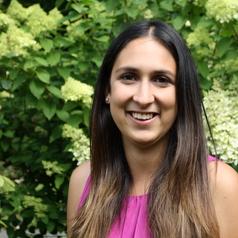
PhD Candidate, The University of Texas at Austin Megan Dias is a PhD Candidate in Political Science at the University of Texas at Austin. She study the policies and politics of immigrant political incorporation in the United States on a local level. She explores why cities across the country have passed inclusive policies for immigrants, specifically looking at the role that immigrant-serving organizations and advocacy groups play in this process. Prior to starting her PhD, Megan held several different roles at organizations dedicated to building more inclusive democracies. She worked at an immigrant settlement center, at a think tank, and as a “get out the vote” coordinator. For the past five years, Megan has supported the Institute of Future Legislators at the University of British Columbia.
Assistant professor in the Department of Government, The University of Texas at Austin Derek Epp is an assistant professor in the Department of Government. He joined the faculty in 2017 from Dartmouth College where he was a postdoc within the Nelson A. Rockefeller Center. In May 2015, he received his Ph.D. in American Politics with a minor in Public Policy from the University of North Carolina at Chapel Hill. His dissertation is titled Information Processing and the Instability of Political Outcomes and he currently has a book expanding on themes from his dissertation forthcoming with the University of Chicago Press. He graduated from the University of Maryland, College Park in 2008 with a bachelor's in Political Science. His research agenda focuses on policy change, asking why some policies persist - remaining the status quo for decades - while others undergo frequent adjustments. In particular, he is interested in measuring the capacity of institutions to attend to political information and then tracking the allocation of that attention across issues: what issues receive attention, for how long, and to what effect. He also study criminal justice, with a particular focus on racial patterns in police traffic stops.
Professor of Space Engineering, University of Surrey Prof. Ryden is currently Interim Director of the Surrey Space Centre which is a research unit within the School of Computer Science and Electronic Engineering. The centre currently focusses on space applications, exploration and instrumentation and has a long history of building space experiments (including experimental satellites) and space instruments. Keith’s field of research concerns the effects of space radiation and space weather on spacecraft, aircraft and ground systems and also how to protect them. He has been involved in a numerous national and international (e.g. European Space Agency and NASA) projects to develop space environment models has invented and flown novel instruments to measure and investigate such issues – his instrument designs are used today for example, in the European Space Agency ‘Galileo’ satellites and the Japanese Meteorological satellites. He has strong research links with the UK Met Office and Ministry of Defence in the field of space weather as well as with the space industry. Keith has developed a new Masters-level module ‘Space Environment and Protection’ at Surrey. After graduating from the University of Bath in 1986 with a First in Electrical and Electronic Engineering, Keith joined the Royal Aerospace Establishment (RAE), Farnborough, then part of UK Ministry of Defence (MoD), to carry out research into improving the effectiveness and survivability of UK defence satellites. In parallel he completed a part-time MSc in Satellite Engineering at the University of Surrey, graduating with Distinction. Keith led the design, construction and launch of MoD’s 50kg STRV1a research satellite which performed its mission successfully from 1994-1999. In 2007 he was appointed to the position of Technical Fellow at QinetiQ (a spin-out from MoD) where he led a team dedicated to understanding radiation environments and effects. In 2012 he joined the Royal Academy of Engineering study team looking into Extreme Space Weather which reported in 2013. Soon thereafter he took up a post at the University of Surrey as Reader in Space Engineering. Keith is currently a member of the UK Space Environment Impact Expert Group (SEIEG), which advises the UK Government on space weather risks. He is Chartered Engineer and a Fellow of the IET.
Emeritus Professor of Primary Care E-Health, The University of Edinburgh Brian McKinstry is a general practitioner and Emeritus Professor of Primary Care eHealth at the University of Edinburgh. He leads SHARE the Scottish Health Research Register (www.registerforshare.org) and until recently he led the Telescot programme of research into telehealth (www.telescot.org) His research interests are mainly around remote information exchange between clinicians and patients, more recently focussed on eHealth and telehealthcare. The Telescot programme has carried out multiple randomised controlled trials and descriptive/qualitative studies in this area. These studies include telemonitoring of chronic obstructive airways disease, heart failure, high blood pressure (HBP) and diabetes, remote measurement of cough and respiratory rate, the use of machine learning on patient accrued data to develop improved telemonitoring algorithms and video-consulting in general practice. He is clinical lead for Scale-Up BP, a large-scale implementation of telemonitoring of HBP, and is exploring the use of routinely acquired data to evaluate this. He has with colleagues in the Scottish Government developed and is testing a home telemonitoring system to detect deterioration in people recently diagnosed with COVID-19.
Chercheur Doctoral (Technologie, Relations Internationales, et Affaires Militaires) | Doctoral Researcher (Technology, International Relations, and Military Affairs), University of Kent Thomas Chevalier est chercheur doctoral à la Brussels School of International Studies (University of Kent) et travaille sur les questions spatiales militaires et les nouveaux domaines de conflictualité. Il est particulièrement intéressé par l'interaction entre politique, science et technologie, and imagination dans la fabrique des politiques publiques de défense. Thomas Chevalier is a doctoral researcher at the Brussels School of International Studies (University of Kent). He works on space military studies and new domains of conflicts. He is particularly interested in the interplay between politics, science and technology, and imagination in defence policymaking.
Senior Lecturer in Enterprise, De Montfort University Dr Danny Buckley is a Senior Lecturer in Enterprise at De Montfort University. Having spent over twenty years working in the automotive, fashion, and sports industries he joined academia in 2016. He is currently the Director for the Help to Grow Management programme at De Montfort University and the Deputy Director for Apprenticeships within the faculty of Business and Law. Danny’s research interests include informal work, the cash-in-hand economy, retail and sales environments, social mobility and SME businesses.