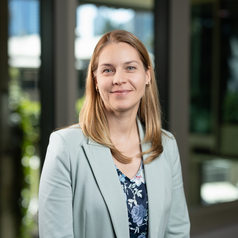
Associate professor of history, Université de Montréal My research interests concern the processes of reform and centralization in the Arab provinces of the Ottoman Empire throughout the 19th century (Egypt, Syria, Iraq, North Africa), from a cultural and social perspective. The central role of the press and associations in the emergence of a public space during the Arab Renaissance and the issues of education and citizenship in the colonial and post-colonial periods are central to my research. At the same time, my work bears on the symmetrical processes of professionalization and the popularization of Islamic expertise in the 20th century. More specifically, I am interested in the institutional and curricular development of mosque-universities such as al-Azhar, Zaytuna and Qarawiyyin, from the 18th century until their nationalization in the 1960s, and also in the legacies and uses of Islamic historiography, philosophy and law in the contemporary period, particularly in nationalism and Islamism. My current research aims to contribute to the cultural history of Arab nationalism and to define its key institutions: volunteer associations and secret societies; scouting movements; school textbooks.
Associate Professor, Massey University Dip teaching, Dip Bilingual Teaching, BA teaching and learning, PGDip Professional Development, PhD Māori Education Kaihautū Māori Institute of Education, Associate Dean Māori College of Humanities and Social Sciences, Kaiārahi Tiriti College of Humanities and Social Sciences.
Senior lecturer, Massey University After many years as a maths and science teacher, and school advisor, in English medium and Māori medium schools, I completed a doctorate which investigated the effects of curriculum mathematics education in Māori-medium schools.
Epidemiologist, Epidemiological Modelling Unit, School of Public Health and Preventive Medicine, Monash University Angus is an epidemiologist with a medical background. His interest is understanding and applying the epidemiology and public health aspects of infectious diseases to support the development of mathematical models of disease transmission, with a focus on assisting public health response and disease control.
Lecturer in Education, Edith Cowan University Sarah is a highly experienced secondary educator who has held extensive school based teaching and leadership positions in both the United Kingdom and Australia. Her PhD focused on identifying positive veteran teachers and examining the role of social support in sustaining their commitment to teaching. Sarah has worked with government agencies and curriculum authorities advising on policy and curriculum development in a diverse range of fields, including social support, inclusion and funding models. Sarah is also engaged with research examining the role of public value in relation to education. Most recently, Sarah has become a Scholar at the Not-for-profit UWA Research Group which fosters interdisciplinary research, collaboration and engagement with the not for profit sector. Professional associations: ACSSO - Australian Council of State School Organisations (2018-2022 Director) Diverse Women in Leadership Golden Key International Honour Society TRBWA - Teachers Registration Board of Western Australia Not-for-profits University of Western Australia Research Group – Scholar Research areas and interests: Not-for-profit and education Social support and well-being Teacher well-being Long term and later career teachers Diversity and inclusion in education Educational policy design and implementation Qualifications: Doctor of Philosophy, Edith Cowan University, 2020. Graduate Diploma in Education, The University of Western Australia, 1997. Bachelor of Arts, The University of Western Australia, 1996.
Research Fellow, Queensland University of Technology I am a registered psychologist and Research Fellow at the Queensland University of Technology and at the University of Queensland. My research centres around improving the development, health and wellbeing of children, and mitigating the impact of early adversity. I use a prevention lens to target risk and protective factors to enhance child and family well-being. My work also considers the economic context in which families raise children and examines structural barriers to positive development and health. My early research revolved around the development and evaluation of Behavioural Family Interventions, with a focus on digital applications and increasing program reach for priority populations. More recently my research has specifically focussed on improving outcomes for families experiencing food insecurity.