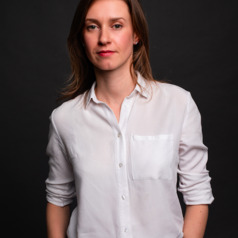
Allen-Taylor Oladipupo Kehinde recently completed his Postdoctoral at the Department of Waste and Resource Management, Technische Universität Braunschweig, Germany. He obtained his PhD and Master’s degree at the Christian-Albrechts-University (CAU) Kiel, Germany and his Bachelor of Science from the Lagos State University Lagos, Nigeria. His expertise includes environmental, social, and governance (ESG), waste management, environmental policy, corporate social responsibility, climate change, and circular economy. He is also knowledgeable about sustainability and sustainable development goals (SGDs). He has looked into a variety of multidisciplinary techniques to address complex issues that Nigeria and many other African growing economies are facing.In order to pursue these interests, Dr. Allen- Taylor has acquired knowledge of and put that knowledge to use in both qualitative and quantitative approaches, combining case study analysis, descriptive methods, observation, and interviewing with regression analysis and qualitative comparison analysis (QCA).
I am a Lecturer in Private and Commercial Law. I hold a PhD from LSE, LLM from Cambridge, and LLB from LSE. I currently sit on the Law and Technology committee in the Scottish Law Society.
Anna Kvit is a visiting research fellow at University College London. Her research is focused on women in the military of Ukraine, veterans’ reintegration into civilian life, and the gendered impacts of the war in Ukraine. Anna contributed to the development of programs and policies on the implementation of the Women, Peace and Security agenda in Ukraine. She co-taught Military Sociology at the National University of Kyiv-Mohyla Academy. Anna holds a BA degree in Sociology from the National University of Kyiv-Mohyla Academy (Ukraine) and MA degree in Global Political Economy from the University of Kassel (Germany).
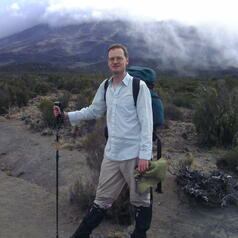
I am a climate scientist interested in mountain climates and how they may respond in a warmer world. I graduated from the University of Durham in 1991 with a first class degree BSc in Geography. I went on to study in Durham for a PhD supervised by Joan Kenworthy and Nick Cox, investigating long-term climate change in the Pennines in Northern England using meteorological records, and was awarded the PhD in 1994. In 1994 I started at the University of Portsmouth as lecturer in climatology/meteorology in the Department of Geography. In 1998 I was a visiting scientist for six months at the Institute of Arctic and Alpine Research (INSTAAR), part of the University of Colorado at Boulder, USA. I studied long-term climate change in the instrumental records kept by the Mountain Research Station at high elevations in the Colorado Rockies. This work was sponsored by a Fulbright Scholarship. In 2003/2004 I was awarded a National Academies National Science Foundation scholarship to visit NOAA’s Air Resources Laboratory in Silver Spring Maryland, U.S.A. for 12 months as a Senior Research Associate. My work as part of the Climate Variability and Trends Research Group under adviser Dr Dian Seidel, was concerned with the comparison of temperature trends from a variety of global datasets (surface, radiosonde and reanalyses). The focus was trends at high elevations sites, since mountain summits show some of the characteristics of both the free atmosphere and the Earth’s surface (boundary layer). More recently I have developed work on Kilimanjaro, installing a transect of 22 stations which observe air temperature and humidity - on both the south-west and north-eastern slopes. The range in elevation from below 1000 m to 5800 m is amongst the largest in the world, making the site critical for examining elevation changes in warming rates (elevation-dependent warming). In 2015 I helped lead a paper examining mountain warming (https://www.nature.com/articles/nclimate2563). I also have current field projects in the Pyrenees and in Finnsh Lapland examining cold air drainage patterns and how they may change in a warmer world. In 2018 I was a visiting scientist at the Institute of Tibetan Plateau Research at the Chinese Academy of Sciences in Beijing (PIFI scholarship) and have links with many Chinese researchers. I am currently Reader in Climate Science in the newly-formed SEGG (School of Environment, Geography and Geosciences) and I am a senior member of the Environmental Processes and Change Research Group. Research Interests Global and regional temperature change in mountainous regions Research concerns analysis of 20th/21st century temperature change in mountainous regions using a variety of primary and secondary datasets. Comparison of high quality homogenised climate datasets allows a comparison between free-atmospheric changes (measured by radiosonde and some satellite data and assimilated datasets such as reanalyses) and surface temperature changes (as measured by conventional instrumentation). Most recently work has compared MODIS LST (land surface temperature) data for mountainous areas with in situ air temperature data, with a particular focus on the Tibetan plateau. This work has been undertaken in collaboration with many international organisations including the Climate Variability and Trends Group at the Air Resources Laboratory in Silver Spring, Maryland, the Scripps Institution of Oceanography, San Diego, the University of Washington, Oregon State University, and the Institute of Tibetan Plateau Research in Beijing, China. Funding has been obtained from Royal Society, National Academy of Sciences (U.S), Chinese Academy of Sciences, Fulbright Commission and Newton Fund. Measuring and modelling surface temperatures in areas of complex relief Part of the reason why mountains and areas of incised topography show varied environmental responses to climate change is because of their inherent spatial and temporal complexity. Members of staff at Portsmouth have been part of climate monitoring campaigns in mountains and complex terrain around the world, including the Rocky Mountains of the USA, Arctic Lapland (northern Finland and Sweden), the Pyrenees, the uplands of England and Scotland, and on Mt Kilimanjaro in Africa. The focus has been on obtaining better information on the spatial and temporal variation in surface temperature and moisture fields using networks of meteorological sensors. This information allows us to relate temperature patterns to synoptic conditions, and thus to investigate the influence of landscape position on longer-term climate trends. Work has been performed in collaboration with the following institutions: University of Brunei Darussalam University of Colorado Mountain Research Station University of Turku Sub-Arctic Research Station Abisko Scientific Research Station University of Massachussetts University of St Andrews Centre for Ecology and Hydrology Servei Meteorologic de Catalunya Funding has been obtained from LAPBIAT 2, INTERACT, NERC and RCIF The influence of land use change on mountain climate on Kilimanjaro and consequences for summit ice fields Another emergent research strand is the response of the cryosphere (snow and ice) in mountain regions to contemporary climate change. This work involves a wide range of foci ranging from global analyses examining long term changes in snow cover in mountains and its influence on surface energy balance and mountain temperatures, to regional influences of atmospheric circulation on snow cover, and local field investigation into factors influencing snow distribution in the altitudinal and latitudinal forest-tundra ecotones (areas which are expected to show rapid environmental response to climate change). In relation to this specific project, NERC funding has been obtained to monitor mountain climate on the slopes of Kilimanjaro in Tanzania, East Africa. Through the installation of two unique climate transects on the SW and NE slopes of the mountain, covering a range of 5000 metres in elevation and extending back to 2004, this study can examine the day to day role of the diurnal thermal circulation in transporting moisture to and from the summit region. Typically, during the day moisture is transported upslope to the crater region, contributing indirectly (through cloud cover and increased humidity) or directly (through precipitation) to the mass balance of the summit ice fields. However these ice fields are in rapid retreat. The role of vegetation and land use change in this process is a focus of this project. Funding has been obtained from NERC and RGS.
Imruh Bakari is a filmmaker, writer and creative industries consultant. He studied at Bradford College of Art, and is a graduate of the National Film & Television School, Beaconsfield. He also completed postgraduate studies at Goldsmiths College, University of London. He teaches on the BA (Hons) Film Studies and BA (Hons) Film Production programmes. From 1999-2004 he was Festival Director of Zanzibar International Film Festival (ZIFF), and is a founder/director of Tanzania Screenwriters Forum. He was a founder/director of Ceddo, the film and video production and training organization in London (1982-93). He is a former member (2012-15) of the Advisory Council of the Pan-African Federation of Filmmakers (FEPACI); and currently a member Tanzania Independent Producers Association (TAIPA), and the Editorial Board of the Journal of African Cinemas. His professional work includes a number of film and television credits, which include Riots and Rumours of Riots, Street Warriors, The Mark of the Hand, Blue Notes and Exiled Voices and African Tales. In 2013 he received a Lifetime Achievement Award from the Afrika Filmfestival in Leuven, Belgium for his work in African Cinema. His research interests are in Africa Cinema, Caribbean cinema and filmmaking.