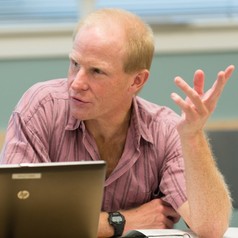
PhD Researcher in Finance, University of Bath James has a keen interest in Emotional and Behavioural Finance frameworks. He mainly focuses on the psychological and emotional implications of investors' investment decision-making processes through analysis of volumetric expression. He also has a passion for Elliott Wave theory and works as an associate tutor at the university.
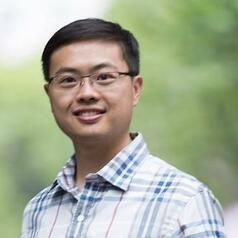
Principal Research Fellow in Spatial Epidemiology of Infectious Diseases, School of Geography and Environmental Science, University of Southampton Dr Lai is a Principal Research Fellow in Spatial Epidemiology of Infectious Diseases at the School of Geography and Environmental Science, University of Southampton. He is currently leading the Dynamics and Mobility (DM)/Spatial Epidemiology and Public Health (SEPH) thematic group within WorldPop (https://www.worldpop.org/). His research interests are investigating the spatiotemporal patterns and interactions between seasonal population movements, environmental changes and infectious disease transmission dynamics by using multidisciplinary approaches, e.g. GIS and epidemiology, and novel data sources, e.g. mobile phone and Internet check-in data, to provide an improved evidence-base for development and disease control decision-making.
Economic Development Specialist, University of Wisconsin-Madison Tessa is an Economic Development Specialist at the University of Wisconsin-Madison /Extension, studying community economic growth and development, small business dynamics, and women entrepreneurs.
Professor of Economics, Colorado State University Stephan Weiler holds the William E. Morgan Endowed Chair as Professor of Economics at Colorado State University. He received his BA (Honors) in Economics and MA in Development Economics from Stanford University in 1988, and his Economics PhD from UC-Berkeley in 1994 where he studied with eventual 2001 Nobel Laureate George Akerlof. From 2004 through 2006, Stephan was appointed as Assistant Vice President and Economist at the Federal Reserve’s Center for the Study of Rural America to lead the Center’s applied research work. The Center was the focal point in the Federal Reserve System for rural and regional development issues, providing cutting-edge research perspectives to private, public, and nonprofit decision makers. Stephan became a frequent speaker before industry, university, and public policy audiences throughout the nation, is a regular contributor to media outlets ranging from the Wall Street Journal to National Public Radio, and has published over one hundred articles, book chapters, and policy papers. He served as Research Associate Dean for CSU’s College of Liberal Arts from 2006 to 2016. His research, teaching and mentoring have spanned a variety of development and labor market issues in Africa, Appalachia, Europe, and the American West. His current work focuses on regional economic growth and development, particularly in rural and inner-city areas, combining theoretical, empirical, and policy analyses on topics such as information, innovation, industrial restructuring, land use, public/private partnerships, immigration, entrepreneurship, and the environment. These various elements informed his role as founding research director of the Colorado Innovation Report (www.innovation.colostate.edu), begun in 2012 with a broad-based coalition of leaders from the private, public, and nonprofit sectors to understand and enhance the state’s innovative capacities. He is distilling these three decades of experience into the Regional Economic Development Institute (REDI@CSU), partnering with the City-Region Economic Development Institute (City-REDI) at the Birmingham Business School in the UK to provide fresh, timely, and cutting-edge information to enhance economic growth and development prospects for regions across the globe.
Professor of Biology and Distinguished Arts and Science Scholar, University of Louisville I'm an evolutionary biologist and a historian of science in the Department of Biology at the University of Louisville. I have lectured about my research and my books at more than 175 venues around the world, including in New Zealand, Australia, Mongolia, Cuba, Russia, Romania, Turkey, The Czech Republic, Croatia, Taiwan, Norway, Denmark, Sweden, Finland, Norway, and many other countries. I'm the author of twelve books and more than 200 articles, in such journals as Nature, The Proceedings of the National Academy of Sciences, and The Proceedings of the Royal Society of London, and I'm a contributing author to Scientific American, The American Scientist, The New Scientist and The Washington Post. The New York Times Book Review called my book, How to Tame a Fox and Build a Dog, "Sparkling... A story that is part science, part Russian fairy tale, and part spy thriller… it may serve — particularly now — as a parable of the lessons that can emerge from unfettered science, if we have the courage to let it unfold.”
Senior Lecturer in Game Design, University of Portsmouth I am a Senior Lecturer in Computer Games Design in the School of Creative Technologies at the University of Portsmouth. I am the Deputy Course Leader for BSc(Hons) Computer Games Technology. Previously, I have taught Games Design and Development at both Further and Higher Education level, focusing primarily on game design, 3D asset creation, gameplay scripting and academic games research. I have design and development experience in the UK games industry, including in my role as Game Designer at The Chinese Room. I completed my PhD in 2015, with my thesis focusing on Disruptive Game Design - an approach to game design that aims to subvert 'typical' game rules and associated player expectations of how games 'should' work. I now lead the Advanced Games Research Group (AGRG) within the school which is currently engaged in multiple projects, developing research-driven commercial game products in areas including disruptive game design, narrative design, player psychology, and playful prototyping.