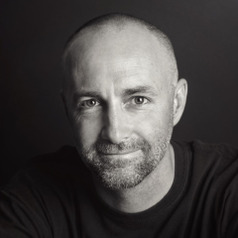
Associate Professor of English, Arizona State University Patrick Bixby (he/him/his) is an associate professor of English in the New College of Interdisciplinary Arts and Sciences at Arizona State University. After earning a BA in psychology from the University of California, Los Angeles and a MA in English from California State University, Long Beach, Bixby completed his PhD in English at Emory University in 2003. He served as visiting assistant professor of literature at Claremont McKenna College for one year and then joined the faculty of ASU’s New College, where he has held a number of posts. In 2017, after directing several graduate programs and then serving as director of graduate studies for the college, he took a role building partnerships between the university and Arizona tribal communities, as well as other universities around the globe. Most recently, in 2021, he became the program lead for the BA in Disability Studies. In addition to these duties, he currently serves as vice president of the Samuel Beckett Society and resident director of the USAC summer school program at NUI Galway. Bixby's scholarly interests span a variety of fields, including Irish studies, modernist studies, postcolonial theory and criticism, Continental philosophy, and issues of travel, mobility, and the body. He teaches courses in these fields and in the history of the novel, the history of film, the history of literary criticism, twentieth-century thought, postmodernism, and methods of interdisciplinary research. His essays have appeared in journals such as Modernism/Modernity, Modernist Cultures, Irish Studies Review, and the Journal of Beckett Studies, as well as in collections such as A History of Irish Modernism (Cambridge UP, 2019), A History of the Modernist Novel (Cambridge UP, 2015), Beckett in Context (Cambridge UP, 2013), and Beckett and Ireland (Cambridge UP, 2010). Bixby's latest book, License to Travel: A Cultural History of the Passport (U of California P, 2022), investigates the unyielding paradox of the document: even as it promises independence and mobility, escape and safe haven, the passport also serves as an essential tool of government surveillance and state power, purportedly assuring homeland security and the controlled movement of individuals across national boundaries. The study investigates this paradox by drawing on a range of sources, including literary history and modern art, archival documents and contemporary journalism, international law and theories of cosmopolitanism.
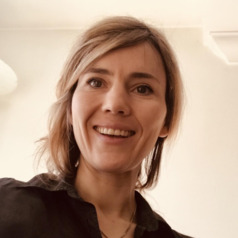
PhD Student, University of Delaware Baffour Agyeman Prempeh Boakye is a Doctoral student at the University of Delaware, and a Research Associate at the Elections Research and Resource Centre in Accra, Ghana. His research interests focus on democracy, elections and political parties. He holds both a Master of Philosophy and a Bachelor of Arts degree in Political Science from the University of Ghana.
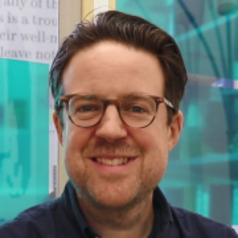
Privatdozentin, Munich School of Philosophy Mara-Daria Cojocaru's main research interests include: political philosophy and theory, philosophical pragmatism, (animal) ethics, philosophy of emotion and intellectual virtues. She has taught at the Ludwig-Maximilians-University Munich, the Munich School of Philosophy, the Friedrich-Schiller-University Jena and Graz University, and she has been visiting scholar at the University of Sheffield, the University of Brighton and the University of Veterinary Medicine Vienna. Currently, she is establishing a new project on “animal-assisted philosophy” – a blend of philosophical and creative writing that is not just about, but with and for other animals.
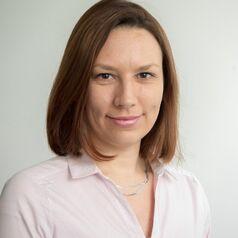
Professor of Political Theory, University of Sheffield Alasdair Cochrane’s main research interests include: contemporary political theory, rights theory, human rights, environmental ethics, animal ethics and bioethics.
Environmental Virologist, School of Natural Sciences, Bangor University I competed my PhD in microbiology at the University of Canterbury, New Zealand in 2014. My research focused on the fate and behaviour of enteric viruses in groundwater. After finishing my studies, I was involved in various project that uses viral metagenomics approaches to identify viruses (both known and novel) in various ecosystems. Since 2015, I have been working at the Bangor University, on the Viraqua Project (www.viraqua.uk; 2015-2018) and at the Shellfish Centre (2019-2022) and on th eimplementation of wastewater-based epidemiology (WBE) for SARS-CoV-2 and other viral pathogens (2020, ongoing). My research focuses on the ecology and survival of viruses in the aquatic environment with a special interest in the fate of enteric viruses. Enteric viruses are responsible for the majority of gastroenteral illnesses globally putting an enormous burden on healthcare systems and the wider economy. These pathogens are often found in water reservoirs (recreational and drinking water sources, shellfish harvesting areas) and hence responsible for water- and foodborne outbreaks. I am also leading the R&D activities for the Welsh WBE programme.
Professor of Cognitive Development, University of Surrey Emily Farran is a Professor of Cognitive Development at the University of Surrey and Director of the Cognition Genes and Developmental Variability lab (CoGDeV Lab). She is interested in the development of visual and spatial cognition in both typical and atypical populations. Her most recent research focuses on: the relationship between spatial thinking and Science, Technology, Engineering and Maths (STEM) in primary school age children; and large scale spatial ability (navigation) in atypical populations such as Williams syndrome and Down syndrome. She is also an advocate for open research. Her efforts formed an integral part to the University of Surrey joining the UK Reproducibility Network in December 2019. This was coupled with her appointment as Academic Lead for Research Integrity and Culture in November 2019.