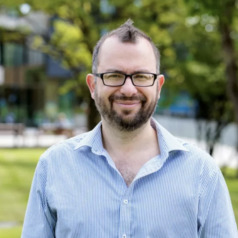
Associate Professor of History, University of Stirling I was born in St Petersburg, Russia and began my university career at the Hebrew University of Jerusalem, where I pursued two concurrent degrees in History and Violin Performance. I received my PhD in Medieval History from the Centre for Medieval Studies at the University of Toronto (2008). Before joining Stirling in 2018, I spent two years as a postdoctoral fellow at the Economic Growth Center, at Yale University (2008-10), three years as a Mellon Fellow and faculty lecturer at McGill University, Montreal (2010-3) and five years as a lecturer and then senior lecturer at the University of Kent (2013-8). When outside a classroom or his office, I enjoy listening to and playing music (be it Classical, Jazz, Rock or Folk), tasting ales and whiskies (the more obscure the better), cooking, and hiking (the further away from 'Civilization' the better). I love languages and have always been attracted to their beauty, written or spoken. My scientific creed and research interests Rather than seeing myself as an historian in the ‘traditional’ sense, I view myself as a ‘scientist of the past’, trained to work across disciplines and collaborate with colleagues in sciences, to promote a unified knowledge and science of the past. In my research, I use historical knowledge as a powerful tool to understand some of the most important issues and challenges that the human race and its wider bio-ecological environment face today. My principle research interests fall into two main categories. Firstly, I am interested in the history of natural environment, economy, health, and society of the late-medieval world, with a particular focus on the British Isles within the wider North Atlantic context, and Central Asia within the wider Eurasian context. My first monograph Bread and Ale for the Brethren: The Provisioning of Norwich Cathedral Priory, c.1260-1536 (2012) offers a re-interpretation of the decline of feudal system in England, through the prism of food production and consumption by local landlords. My second monograph Experiencing Famine: A Fourteenth-Century Environmental Shock in the British Isles , recently published with Brepols, examines the Great European Famine of 1315-17 (arguably the single worst subsistence crisis in Europe in the last two millennia) as a case-study to answer the most pressing question ‘What creates famine?’ In addition, I have authored (and in some cases co-authored) 34 articles on various topics related to environmental, economic and social history of late-medieval world. Secondly, in recent years I have expanded my interests in these topics to a global ‘deep history’ perspective, all the way from early hunters-gatherers to our contemporary world. These topics are among the most pressing and complex socio-economic, environmental and political issues that scientists, NGOs and policy makers are struggling with today. Before these issues can be solved, we need a better understanding of their determinants and dynamics in a long-run historical context. I am currently working on two large-scale monograph projects. The one will examine the historical roots of global economic inequality, in a very long run. It argues that we cannot fully appreciate the phenomenon of global economic inequality, unless we study the development of socio-economic and cultural institutions from a ‘deep history’ perspective, which follows this development from early hunter-gatherer societies to our contemporary world. The other monograph is a global history of the single most notorious killer: plague - all the way from the Late Neolithic Period until sporadic outbreaks in the 21st century. This book, too, takes a deep history perspective, to answer some most pressing questions related to the phenomenon of ‘emerging diseases’, such as ‘What makes some diseases so deadly?’ ‘What is the relationship between emerging diseases and a wider bio-ecological and climatic environment?’ ‘What makes those diseases fade and disappear – or, by contrast – re-emerge again?’ I welcome enquiries from prospective research students interested in the environmental, economic, social and medical history of late-medieval and early modern British Isles and other parts of the European and North Atlantic world. Publications
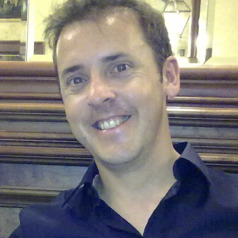
Professor of Geography, University of Galway John Morrissey is Professor of Geography and Associate Director of the Moore Institute for Humanities at the University of Galway. He has published widely in the areas of geopolitics, security and international development. His books include: Haven: The Mediterranean Crisis and Human Security (Edward Elgar 2020); The Long War: CENTCOM, Grand Strategy, and Global Security (University of Georgia Press 2017); Spatial Justice and the Irish Crisis (Royal Irish Academy 2014; Co-edited); and Negotiating Colonialism (Royal Geographical Society 2003). He was a Government of Ireland Fellow at the Center for Place, Culture and Politics at CUNY Graduate Center in New York, and is a former Quatercentenary Fellow at Emmanuel College, Cambridge. He has held additional research fellowships at Virginia Tech, the University of Oxford, and Australian National University. His current research is concerned with critically theorising human security in the wake of COVID-19 and wider global human-environmental crises. In 2021, he was appointed International Consultant on Human Security in the Human Development Report Office of the United Nations. For over 10 years, he has been Programme Director of University of Galway’s award-winning MA in Environment, Society and Development, which addresses key challenges of international relations, global governance and sustainable development, and involves students working on the ground with the United Nations Development Programme in Bosnia. Professor Morrissey has won the President's Award for Teaching Excellence at the University of Galway on two occasions, and is a past recipient of the NAIRTL Irish National Academy Award for Research and Teaching Excellence.
Professor of Transitional Justice and International Criminal Law, University of Birmingham I have a PhD from the University of Nottingham (School of Politics), a Master's degree in International Studies from the University of Leeds and an undergraduate degree (LLB) in Law and French from the University of Bristol. After completing my PhD, I held two postdoctoral fellowships in the International Politics department at Aberystwyth University. Since then, I have worked at several different universities in the UK and I am currently based in Birmingham Law School at the University of Birmingham. My research is interdisciplinary, drawing on ideas and concepts from a variety of different fields, and I have published widely in academic journals. I also have four research monographs and one edited volume (co-edited with Professor Michael Ungar). I have a particular interest in transitional justice, dating back to my earlier work on the International Criminal Tribunal for the former Yugoslavia (ICTY). I have extensive fieldwork experience in the former Yugoslavia (primarily in Bosnia-Herzegovina) and I have conducted many qualitative interviews over the years.
Associate Professor of Economics, MacEwan University Teaching experience: European Economic Integration • Macroeconomics • Microeconomics • Development Economics • International Trade • Game Theory • Industrial Organization • Supervising Student Research Projects • Mathematical Economics • Econometrics Research interests: Income inequality, Compounded markups in complex markets, public attitudes toward political ans social issues, Economic integration. Recent publications: Colonescu, C. (2018). Using R for Principles of Econometrics. Second Edition. Creative Space. Colonescu, C. (2022). Using Python for Principles of Econometrics. Kindle Direct Publishing. Colonescu, Constantin. (2022) Measures of Populism in the CHES 2017 Dataset. Athens Journal of Social Sciences, Vol. 9, Issue 2, 177-196. DOI: 10.30958/ajss.9-2-5 Colonescu, C. (2021). Price Markups and Upstreamness in World Input-Output Data. Economics and Business 9, 71–85. Acta Universitatis Sapientiae. http://www.acta.sapientia.ro/acta-econ/C9/econ9- 04.pdf Colonescu, Constantin (2021) Compounded Markups in Complex Market Structures. Athens Journal of Business and Economics Vol 8, pp. 1-14. https://www.athensjournals.gr/business/2021-4433-AJBE-ECO-Colonescu-03.pdf
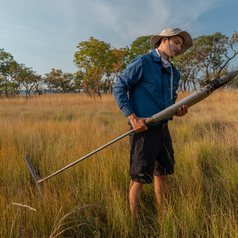
PhD student, University of the Witwatersrand I have recently summitted my PhD thesis on "Peat dynamics in the Angolan Highlands" at the University of the Witwatersrand in the school of Geography, Archaeology and Environmental Studies. I graduated in 2019 with a Master of Science degree at the University of the Witwatersrand.
Research Associate, University of Johannesburg I am a professional writer and a researcher. I have contributed many articles to Daily Maverick, The South African, Voices360, EduOne, The Latest, News24 (Book Reviews), Mail & Guardian. I am a self-taught individual with experience in graphics design and website development through WordPress.