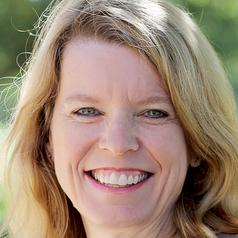
Assistant Professor of Human Development and Family Studies, Purdue University I joined Purdue University’s Human Development and Family Studies Department in Fall 2021. I earned my PhD in Interdisciplinary Social Psychology from the University of Nevada, Reno and completed a Presidential Postdoctoral Fellowship in the Ohio State University’s Institute for Behavioral Medicine Research. As a social-health psychologist with specialized training in psychoneuroimmunology and quantitative methods, I study how couples’ stress affects their relationships and health. My work focuses on the underlying psychological, behavioral, and biological pathways connecting stress to people’s own and their partners’ relational and physical health across adulthood and later life.
Associate Professor of Human Development and Family Studies, Purdue University I joined the Family Studies faculty in the Department of Child Development and Family Studies at Purdue University in the fall of 2007. My program of research focuses on marital processes in the management of chronic illness. In this work, my colleagues and I investigate health lifestyles and marital interactions and their association with the physical health and psychological well-being of both marital partners. Our current work is funded by the National Institute on Aging. I am a social psychologist, and I received my doctoral degree from Kent State University. My dissertation research ignited my continuing interest in marital processes in the context of illness. Together with my graduate mentor, Mary Ann Stephens, I investigated the social support that husbands provide to their wives who are caring for an aging parent. This work on family caregiving led me to pursue postdoctoral training in gerontology. I received an NIA postdoctoral fellowship through the Institute of Gerontology at the University of Michigan. My postdoctoral training with Dr. A. Regula Herzog focused on productive aging and on self-making among older adults. Following my postdoctoral training, I joined the faculty at Wayne State University where I began my research on the management of chronic illness in married couples. I later returned to the University of Michigan to continue my research in the Institute for Research on Women and Gender. At Purdue, I am a faculty associate in the Center on Aging and the Life Course. My families and health research is conducted through the Relationships and Healthcare Lab, in collaboration with Dr. Cleveland Shields. Several exciting projects are underway in this lab, and new projects are being developed by affiliated faculty and students. These projects will contribute new knowledge about the influence of marriage and family relationships on the health and well-being of individual members.
Professor of Biology and Verne M. Willaman Dean, Eberly College of Science, Penn State My lab works at the interface of ecology and evolution to understand how an organism's traits are matched to its environment and responds to novel selective pressures imposed by global environmental change, and the consequences of this adaptation. Our research takes an integrative approach, applying behavioral observations, endocrine assays, morphological analysis tools, and molecular approaches to both field and laboratory studies, with a focus on reptiles and amphibians. This work has both basic and applied importance, informing the role of evolutionary processes in assembly and dynamics of natural communities, and our understanding of the resilience and responses of native populations to rapid perturbations caused by global environmental change.
Postdoctoral Researcher in Biology, Penn State Catherine Tylan works primarily in physiology and ecology, answering questions regarding the effects of stress, invasive species, and temperature on the physiology, metabolism, and immune function of wild animals. Recent work has also included assessing interactions between wildlife, their environment, and ectoparasite infestations.
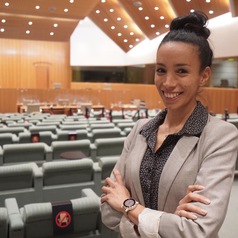
PhD candidate, College of Social Sciences and International Studies, University of Exeter Meriem, a PhD candidate at the College of Social Sciences and International Studies, has spent recent months conducting interviews as part of her research on the conflict in Western Sahara. The interviews took place in London and New York where she gained valuable insights from, among others, Aminatou Haidar, one of Africa’s most prominent human rights activist and Nobel Prize nominee. Meriem’s research focuses on the absence of an explicit human rights monitoring mechanisms in the United Nations Mission for the Referendum in Western Sahara (MINURSO). In April 2019, the United Nations Security Council unanimously extended the mandate of MINURSO for the 45th time since its creation in 1991, but once again did so without entrusting the Mission with any human rights monitoring responsibilities. This makes MINURSO the only post-Cold War UN peacekeeping mission without a human rights monitoring mandate. This is despite the fact that, according to reports from major international NGOs, human rights abuses have been committed by both parties to the long-running conflict in Western Sahara. Against this background, Meriem is evaluating the extent to which human rights monitoring and protection mechanisms can play a part in advancing the current process towards a peaceful resolution of the conflict in the Western Sahara. She has a particular interest in the issue regarding the right to access natural resources and their management by a people living in a Non-Self-Governing Territory. To that effect, she has been invited to join a panel at the next World Congress of the International Political Science Association due to take place in Lisbon next summer under the title: “Why do natural resources matter in the Western Sahara conflict: Actors and Strategies”. In addition to working on her thesis, Meriem has participated in a number of high-profile conferences and meetings on the subject of the Western Sahara throughout Europe. She is a member of the steering committee of the International Academic Observatory on Western Sahara at the University of Paris Descartes. As such, she has participated in a pluri-disciplinary colloquium in Amiens earlier this year on the legal, economical, anthropological and social questions raised by the situation in Western Sahara. Meriem has recently been offered a placement at the European Parliament in Brussels where she will be working closely with the Human Rights Advisor to the Greens/EFA group, looking specifically at the relations between the EU and Western Sahara.
Ethnomusicology and African Musical Arts lecturer, Rhodes University Dr. Boudina McConnachie (PhD, PGCE, RULS) is a lecturer in ethnomusicology at Rhodes University in Grahamstown. She co-ordinates various music education courses through the Rhodes University Education department and is integrally involved in the teaching and learning programme at the International Library of African Music (ILAM). Boudina completed her undergraduate music degree majoring in African music (uhadi and mbira) and was a music teacher at a government school in the Eastern Cape for over ten years. She has written two books relating to African music education for school children, Listen and Learn, Music Made Easy (2012) and My Music, My Classroom- Umculo Wam, Iklasi Yam (2016) and is involved in the development of African music curricula for various South African departmental projects.