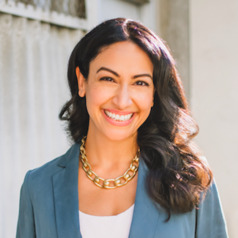
Assistant Professor of Sociology, USC Dornsife College of Letters, Arts and Sciences Hajar Yazdiha is an Assistant Professor of Sociology, faculty affiliate of the Equity Research Institute, a 2022-23 Ford Foundation Postdoctoral Fellow, and a William T. Grant Advanced Quantitative Critical Methods (AQCM) Scholar of the Institute in Critical Quantitative, Computational, and Mixed Methodologies (2020-23). Dr. Yazdiha received her Ph.D. in Sociology from the University of North Carolina, Chapel Hill and is a former Turpanjian Postdoctoral Fellow of the Chair in Civil Society and Social Change. Dr. Yazdiha's research examines the mechanisms underlying the politics of inclusion and exclusion as they shape intergroup boundaries, ethno-racial identities, and intergroup relations. This work crosses subfields of race and ethnicity, migration, social movements, culture, and law using mixed methods including interview, survey, historical, and computational text analysis. Her book project is forthcoming in May 2023 with Princeton University Press titled, "The Struggle for the People’s King: How Politics Transforms the Memory of the Civil Rights Movement." The book examines how a wide range of rivaling social movements across the political spectrum – from the Muslim Rights Movement to the Nativist Movement - deploy competing interpretations of the Civil Rights Movement to make claims around national identity and inclusion. Comparing how rival movements constituted by minority and majority groups with a range of identities — racial, gender, sexuality, religious, moral, political — battle over collective memory, the book documents how political action becomes directed toward divergent imagined futures. In other research projects, Dr. Yazdiha investigates these questions through three central lines of inquiry. A first strand of research explores how social exclusion is produced in macro-structures like laws, policies, and media. A second strand of research explores how and when groups develop perceptions of ‘groupness’ and collective identity in relation to these broader structures. A third strand of research investigates the collective behaviors that result from perceptions of groupness and their outcomes. This research provides new insights into the relationship between macro-level institutional structures, meso-level group processes of collective identity formation and collective behavior, and micro-level perceptions, emotions, and mental health. This body of research works to expose the covert consequences of institutional practices to show how systems of inequality are reproduced and examine how everyday actors develop strategies to resist, contest, and create social change.
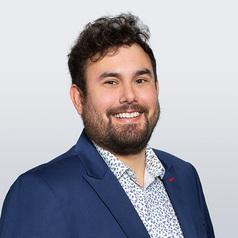
Post-doctoral Fellow, Department of Biology, McMaster University I am a Mitacs Post-doctoral Fellow at McMaster University (Hamilton, Ontario) in the department of biology. I'm a developmental toxicologist, and my work delves into trying to understand our impacts on aquatic life. As carekeepers of this planet, humans haven't really done a great job. We have released pharmaceuticals, personal care products, single-use plastics, and other contaminants into aquatic environments through our wastewater, and we don't really know what their consequences would be in habitats receiving municipal wastewater effluent. I like to investigate the damage these contaminants may have on early-life stages of fish, because these critical windows of development can have life-long effects. I look at these animals from the top-down, finding changes in their behaviour, and then looking under the hood to see what part of the engine is malfunctioning.
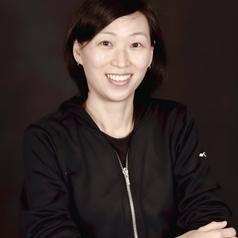
Associate Professor of Real Estate Finance and Economics, Western University My research interests are broadly defined in the realm of real estate and urban economics, with a focus on housing and urban development. Most of my research studies have been applied, empirical studies of urban phenomena drawn from existing theories, and I often adopt a spatial lens to study my research questions. Specifically, my research has evolved and developed around three themes, intertwined, and with a spatial focus: risk, real estate, and urban growth. I seek to understand the interrelatedness among risk, the real estate market, and how the real estate market affects people’s economic activities in everyday life.
Associate Professor of Real Estate Finance and Economics, Western University My research interests are broadly defined in the realm of real estate and urban economics, with a focus on housing and urban development. Most of my research studies have been applied, empirical studies of urban phenomena drawn from existing theories, and I often adopt a spatial lens to study my research questions. Specifically, my research has evolved and developed around three themes, intertwined, and with a spatial focus: risk, real estate, and urban growth. I seek to understand the interrelatedness among risk, the real estate market, and how the real estate market affects people’s economic activities in everyday life.
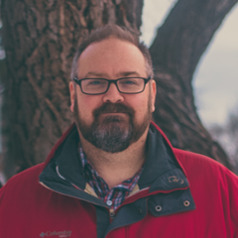
Assistant Professor, Department of Geography and Planning, University of Saskatchewan Dr. Krys Chutko is an Assistant Professor in the Department of Geography and Planning and has been teaching at the University of Saskatchewan since 2016. Krys has been a field researcher since 1999 in a variety of fields, primarily looking at paleoenvironmental reconstructions, hydro-climatology, and the influence of land use change on terrestrial and aquatic systems. In 2018, Krys was awarded with a USSU Teaching Excellence Award.
Senior Research Fellow, Institute of Commonwealth Studies, University of London, School of Advanced Study Dr Susan Williams is a senior research fellow at the Institute of Commonwealth Studies in the School of Advanced Study, University of London. Her most recent book is White Malice: The CIA and the Neocolonisation of Africa (2021). Her other pathbreaking books include Who Killed Hammarskjöld?, which in 2015 triggered a new, ongoing UN investigation into the death of the UN Secretary-General; Spies in the Congo, which spotlights the link between US espionage in the Congo and the atomic bombs dropped on Japan in 1945; Colour Bar, the story of Botswana’s founding president, which was made into the major 2016 film A United Kingdom; and The People’s King, which presents an original perspective on the abdication of Edward VIII and his marriage to Wallis Simpson.