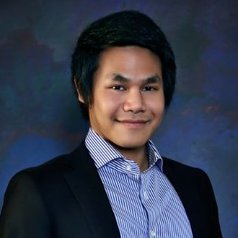
Assistant Professor of Marketing, S P Jain School of Global Management My main research interests include Dark Marketing, Consumer Behaviour, Relationship Marketing and Integrated Marketing Communications. I am currently serves as an editorial board member for the Asia Pacific Journal of Marketing and Logistics and the International Journal of Trade and Global Markets. My research has been published in leading marketing journals including but not limited to the Journal of Retailing and Consumer Services, Journal of Business and Industrial Marketing, Journal of Strategic Marketing, Journal of Relationship Marketing, Asia Pacific Journal of Marketing and Logistics, International Journal of Bank Marketing, International Journal of Nonprofit and Voluntary Sector Marketing, and Services Marketing Quarterly. The fundamental aim of my research is for a better tomorrow. I wish that my current and future research would contribute to the overall benefits and well-being of the society.
Lecturer in Evolutionary Developmental Biology, University of Sheffield Our research comprises three major areas of interest: (i) biodiversity and morphological evolution of fishes; (ii) comparative dental development and regeneration; and (iii) evolutionary developmental biology. We study the development of dental diversity across a range of vertebrates. Our lab questions how varieties of teeth are patterned and modified across species, how they form, and how they are replaced for continued production, specifically in fishes. Fishes account for more than half of all extant vertebrates and in addition have an immense diversity of dental form. The models that we study vary vastly from initial dental patterning and tooth number, to the capacity for dental regeneration with a diverse array of tooth replacement modes. This comparative context provides a framework in which to understand the complexities of dental diversity at the genetic level. Our broad research focus is the genetic basis of developmental mechanisms that regulate vertebrate craniofacial patterning and evolution. By coupling evolutionary and developmental genetic disciplines with more translational biosciences we aim to break down the complexities of morphological development, diversity and regeneration of the craniofacial skeleton, and in particular the dentition.
Music psychologist, University of Cambridge My research examines musical behavior at the intersection of personality, social, and cognitive science. It begins from that standpoint that differences in musical experience are not random, but are rather tied to various psychological and cultural processes. Recently, our work has shown that personality and cognitive styles predict musical preferences and musical ability. We also explore a range of other topics including musical talent and skill in autism, how music is linked to resilience and well-being, and whether music can increase empathy and communication skills.
PhD Student in Sport, Health and Exercise Science, University of Hull I am a PhD student and Graduate Teaching Assistant, teaching and researching within the area of exercise physiology. I am broadly conducting research looking at the health benefits of high intensity interval training (HIIT), an increasingly popular type of exercise. I believe exercise is an important part of daily life and can have profound benefits to your health over time. I work and study at The University of Hull where I am studying for a PhD in Sport, Health and Exercise Science. I also obtained my Master of Science in Sport Science and Bachelor of Science (Hons) in Human Biology at The University of Hull. My main research interest is attempting to make HIIT accessible to a larger portion of the population by reducing the intensity needed while training, so making this form of exercise easier to complete. While I appreciate this form of training will not be suitable for all, I do believe, a well-designed HIIT programme can be used as part of someone's regular training programme.
Lecturer in Biomedical Sciences, Cardiff Metropolitan University Teaching I teach on the MSc in Biomedical Sciences course from data analysis to medical biochemistry. I also teach on the BMS BSc course. Research I consider my research background as cell biologist and biochemist, with my research interests centering on exploring the potential of extracellular vesicles (EVs), particularly exosomes, as a possible source of biomarkers for disease. Exosomes are nanometre sized vesicles formed in the endocytic pathway within multivesicular bodies (MVBs). Upon fusion of the MVB with the cell membrane the exosomes contained within are released into the extracellular environment. These exosomes contain proteins, mRNA, miRNA and DNA from the secreting cell and are often enriched with proteins associated with disease, inflammation, and/or cellular stress. This makes them a potential source of multiple biomarkers for diseases, which can be obtained by minimally invasive means (from biofluids such as plasma and urine). Exosomes as biomarkers for disease (2006-2010; 2013-present) My most recent work has involved developing methods for the isolation of EVs from biological fluids and standardising their analysis for quality assurance. Once the isolation methodologies were optimised the proteome of these biofluid-derived EVs (plasma, urine and cerebrospinal fluid) were examined using a novel aptamer based protein arrays and analysed in silico through the use of the statistics package R. These methodologies have been used in the context of prostate cancer and multiple sclerosis biomarker discovery pilot studies. These two projects have shown the potential of both novel isolation methods for exosomes and protein analysis have the potential to identify novel disease biomarkers in follow-up studies. Immunology Research (2011-2013) Previous research has looked at the phenotype of peripheral blood mononuclear cells and plasma pro-inflammatory cytokines with respect to the acute phase response (APR) of osteoporosis patients and breast cancer patients undergoing aminobisphosphonate (nBP) treatment. We identified that peripheral γδ T cells and Monocytes became rapidly activated and ultimately determines the clinical severity of the APR in nBP naïve osteoporosis patients. The findings of this study may have diagnostic and prognostic implications for patients with and without malignancy as well as relevance for Vγ9/Vδ2 T-cell based immunotherapy. We also undertook a comprehensive meta-analysis of 15 randomized clinical trials patients on adjuvant therapy for breast cancer with zoledronate, identifying a significant overall survival benefit with zoledronate treatment. These new findings supported the call for zoledronate to be considered as a new standard of care in adjuvant breast cancer therapy.
Associate Professor at the Institute of Cognitive and Evolutionary Anthropology and Fellow in Human Sciences at Wadham College, University of Oxford I am Associate Professor at the Institute of Cognitive and Evolutionary Anthropology, University of Oxford and Fellow in Human Sciences, Wadham College. My current primary research explores psychological links between collective movement and exercise, social bonding, cooperation and wellbeing. Since completing my PhD in Anthropology (Queen’s University Belfast, 2005) I have held positions at the Institute of Cognition and Culture (Queen’s), the Centre for Anthropology and Mind and the Institute of Cognitive and Evolutionary Anthropology (Oxford), and the Research Group in Comparative Cognitive Anthropology at the Max Planck Institute for Evolutionary Anthropology (Leipzig, Germany) and the Max Planck Institute for Psycholinguistics (Nijmegen, Netherlands).