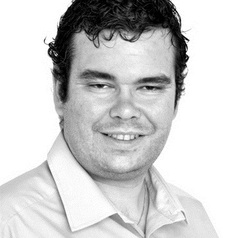
Principal Teaching Fellow, University of Warwick My current research focuses on contemporary British politics and the political economy of the post-war British state. I maintain an interest in education policy, specifically the politics of higher education, which was the subject of my doctoral dissertation. My forthcoming monograph on the role of Anthony Crosland’s contribution to the politics of post-war British education policy begins a critique of state intervention in education within the context of a ‘moral economy’ of social fairness in the post-war period. This will be followed by a second book, The Birth of the Knowledge Economy, which interrogates the political economy of the post-war state in relation to British higher education. The two books taken together will offer a significant new interpretation of post-war British educational politics and its place in the wider life of the nation. I have previously researched and published on a wide range of topics including the social history of the First World War, the politics of constitutional reform, contemporary education reform and the tenure in office of the coalition government between 2010 and 2015. I am currently working with Professor Matt Qvortrup (Coventry) and Professor Gillian Peele (Oxford) on a project analysing the politics of the forthcoming referendum on Britain’s membership of the European Union. I am also editing a forthcoming special section of the Political Quarterly on the role of history in the British political present. I was born in Liverpool, where I studied for my first degree, receiving a BA in History from the University of Liverpool. An MPhil and PhD in History at Magdalene College, Cambridge followed, and I spent a year at Harvard University as Kennedy Scholar in History. I also read BA Theology at Exeter College, Oxford, specialising in the study of Islam and Catholicism. I have taught widely in universities, teaching History and Politics at both Oxford and Cambridge, Politics, Political Science and International Relations at the London School of Economics (for the Hansard Society) and in the Department of Political Science and International Studies at the University of Birmingham. I also taught education at a number of institutions, and was the founder of the Centre for Education Policy Analysis. I worked in Westminster politics for a number of years as a speechwriter and political adviser, and I also have a background in journalism. My research draws on this diverse range of experiences; my writing of political history/contemporary political analysis is indebted both to my original training as an empirical historian and my subsequent work in politics and the media. I have appeared in a range of broadcast media, and in May 2015 contributed election commentary to CNN and BBC local radio.
Senior Lecturer in Sociology, Glasgow Caledonian University Peter Kennedy is a senior lecturer in the Department of Social Sciences, Media and Journalism. His teaching commitments cover modules relating to health, illness and medicine; sport; and Marxism and critical social theory. He also teaches the relationship between knowledge, self and society on the University-wide Master of Research Programme. Dr Kennedy's research specialisms and interests include football studies, sport, health and illness, Marxism, and Critical Social Theory. He is a reviewer for the Journal, Soccer and Society and for the Journal, Capital and Class. He is a Member of the Editorial Board of the Journal, Critique; and an Associate of the Centre for the Study of Socialist Theory & Movements, School of Social and Political Sciences, Glasgow University. He co-wrote with Dr David Kennedy the book Fan Culture in European Football and the Influence of Left-Wing Ideology (2013, Routledge). He received his undergraduate degree in social sciences at Liverpool John Moores University and his MPhil and PhD degrees at Glasgow University.
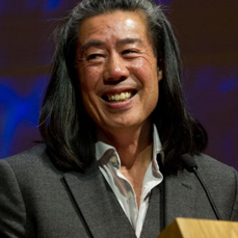
Professor of World Politics, SOAS, University of London Stephen Chan was awarded an OBE for "services to Africa and higher education" in the summer of 2010, alongside receiving the 2010 Eminent Scholar in Global Development award of the International Studies Association. Professor Chan has published 27 books on international relations and more than 200 articles and reviews in the academic and specialist press, as well as over 100 journalistic feature articles. His books include Robert Mugabe: A Life of Power and Violence, Kaunda and Southern Africa: Image and Reality in Foreign Policy, and Citizen of Africa: Conversations with Morgan Tsvangirai. His most recent work is The End of Certainty: Towards a New Internationalism. He participated in the transition to independence of Zimbabwe, the reconstruction of Uganda after the fall of Idi Amin, and also advised and trained government ministries in Zambia, Zimbabwe, Lesotho and Kenya. He established a consortium that trained the Eritrean Ministry of Foreign Affairs immediately before and after independence in 1993. He was also part of a consortium that trained the parliamentarians and ministers of post-Dergue Ethiopia from 1998-9. From 2006-7 he was a member of the Africa-China-US Trilateral Dialogue, an effort to establish a common set of principles to help govern the emerging trade wars involving the three continents.
Lecturer in Politics and International Relations, University of Exeter My primary research interests lie in International Relations, British Foreign Policy and Security. My current research examines the work of British public inquiries into issues of security and foreign policy. Briefly put, a public inquiry is an exercise in social science. It explains the occurrence of social phenomena. Social scientists are aware that their methodological commitments are productive. Methods and methodology ‘make social worlds’ by framing an explanation in terms of specific understandings of causation, structure and agency, and political responsibility. Through a range of qualitative methods this pioneering research explains how inquiries conduct their investigations, shaping contemporary policy debates and public discourse on security and strategy. Funded by a highly competitive ESRC 1+3 Studentship, I completed my doctoral research in 2014, which examined the relationship between publicity, secrecy and security through the Iraq public inquiries. From 2003 Britain conducted several public inquiries, each obstructed by official secrecy justified on the grounds of national security. This led to an apparent dilemma whereby a liberal ideal of publicity was balanced against security. I rejected this balance. Instead I showed how publicity and official secrecy are both tools of security, and that the inquiries are a site of contestation between them. This research, grounded in a range of qualitative methodologies, showed how attempts to seek either publicity or secrecy constitute security practices. The inquiries and the British case for war were united by the same security practice, thus a resistance to government secrecy in the name of publicity reinforces rather than rejects the basis of liberal war. My research has also generated important social and policy impact. I have been invited to speak on my research at the European Parliament, the Houses of Parliament, and on BBC radio. Through my research activities I have developed a successful record of external funding, including awards from the British International Studies Association, the ESRC Festival of Social Science and an ESRC Overseas Institutional Visit award for a Visiting Scholar position at the New School for Social Research
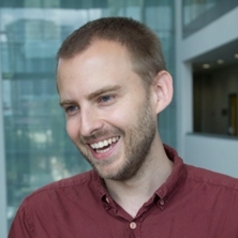
Senior Lecturer in Psychology, City University London Dr Cook completed his PhD in Cognitive, Perceptual and Brain Sciences at University College London before taking up a faculty position at City University London in February 2012. He is an ESRC Future Research Leader and Winner of the British Academy's Wiley Prize in Psychology.
Professor of Modern History, University of Exeter I am an historian of Britain in in its global and imperial context in the period from the late Nineteenth Century to the present day. I am particularly interested in the rhetorical dimensions of politics and economics. I am the author of three books on Winston Churchill. Prior to moving to Exeter in 2007 I taught at the univeristies of Manchester and Cambridge.