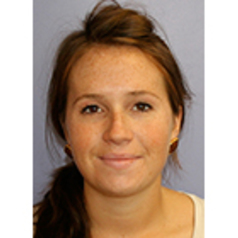
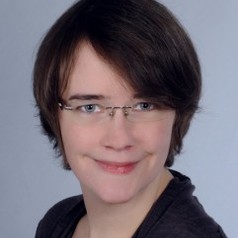
PhD Candidate, Queen Mary University of London My research interests are primarily in gender, development, intersectionality, well-being, gendered agency, qualitative methods and South Asian studies. My doctoral research explores intersectionality, well-being and agency amongst Nepali widows. The methodological approach taken involves a triangulation of qualaitive methods. My research hopes to not only contribute empirically to the limited scholarship on widowhood, especially in Nepal, but also conceptually to reimagine approaches to understanding and theorising widowhood. With this doctoral research, and my personal pursuits outwith this work, I hope to bring attention to the issue of widowhood and in some way improve the lives of Nepali widows.
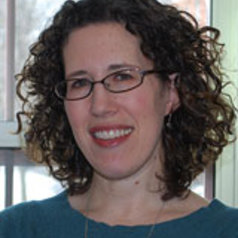
Professor of Political Science, Tufts University Debbie Schildkraut received her Ph.D. from Princeton University and her B.A. from Tufts University. Her courses include the Politics of Ethnicity and American Identity, Political Psychology, Political Science Research Methods, Introduction to American Politics, Public Opinion, and Political Representation in the United States. She is the author of Americanism in the Twenty-First Century: Public Opinion in the Age of Immigration (Cambridge University Press, 2011), Press 'One' for English: Language Policy, Public Opinion, and American Identity (Princeton University Press, 2005), and The Challenge of Democracy: American Government in Global Politics (Cengage Learning, 2015, with Ken Janda, Jeff Berry, and Jerry Goldman). Her research examines the implications of the changing ethnic composition of the United States on public opinion in a variety of domains. Her current research concerns public opinion about political representation and how the impending loss of majority status affects the political attitudes and behaviors of white Americans. For more on Schildkraut's research, see a project summary from the Russell Sage Foundation. She has also published articles in the Journal of Politics, Political Behavior, Political Psychology, Political Research Quarterly, Politics, Groups, & Identities, American Politics Research, and Perspectives on Politics. She previously served as an Assistant Professor of Politics at Oberlin College.
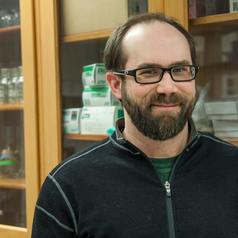
Associate Professor of Criminal Justice, Michigan State University Thomas J. Holt is an associate professor in the School of Criminal Justice at Michigan State University whose research focuses on computer hacking, malware, and the role of the Internet in facilitating all manner of crime and deviance. His work has been published in various journals including Crime and Delinquency, Deviant Behavior, the Journal of Criminal Justice, and Youth and Society.
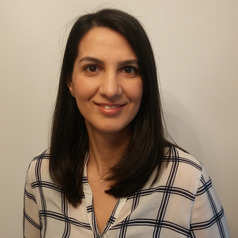
Lecturer in Economics, University of Stirling Seda Erdem is a lecturer in Economics at the University of Stirling. Her research interests broadly include applied microeconomics, public health economics, behavioural economics and food and resource economics. More specifically, she is interested in consumer choice behaviour, decision-making and eliciting preferences in the fields of health, agri-food and environment.
Assistant Professor of Marine Science, University of Texas at Austin Microorganisms are key mediators in nearly all of the planet’s elemental cycles. However, our understanding of the ecological roles of many groups of microbes has been hampered by low-resolution analytical approaches to studying the staggering diversity present in nature. As a result the tree of life is full of branches, which remain undiscovered, and those, which have only been identified in single-gene sequencing surveys (Baker and Dick, 2013). This is a fundamental gap in our understanding of biology. Filling in the genomic gaps in the tree of life will provide a rich context to understand the evolution of life on the planet and will provide us with a genetic understanding of how microbial communities drive biogeochemical cycles. Recent advances in DNA sequencing technologies and computational analyses have made it possible to reconstruct the genomes and transcriptomes of uncultured natural populations (Baker et al. 2010, 2012 and 2013). I have been involved in the development (Dick et al. 2009) and implementation of environmental omics since the beginning. I was involved in the first metaproteomic study of a microbial community (Ram et al. 2005) and have been using these approaches to track fine-scale evolutionary processes (Denef et al. 2010). Using these techniques I discovered deeply branching, novel groups of microbes (Archaea referred to as ARMAN) that are close to the predicted lower size limit of an organism (Baker et al. 2006). Obtaining complete genomes of the ARMAN phylum revealed that they have signatures of inter-species interactions and form connections to other species in nature (Baker et al. 2010). More recently, my laboratory has reconstructed the genomes of hundreds of widespread, uncultured sediment microbes to understand how ecological roles are partitioned in these microbial communities. Many of the genomes belong to phyla which have no previous genomic representation and discovered three new groups of bacteria they play important roles in the global carbon cycle (Baker et al. 2015; Lazar, et al, Environ Micro). One of the new branches for which we have obtained several genomes for is a deeply branched member (Thorarchaeota) (Seitz et al. 2016). These genomes have provided rich insights into the evolutionary histories of life on the planet and we have been able to map the flow of carbon and energy, a microbial food web, through sediments with unprecedented detail (Baker et al. 2015).
Postdoctoral Fellow, University of Texas at Austin I am a postdoctoral researcher at the University of Texas Marine Science Institute in Port Aransas. My research aims to understand the lifestyle of marine bacteria using the most recent “omic”-techniques. More specifically, my current project tries to unravel the metabolic capacities present in bacterial genomes and their metabolic potential. One topic I am working on deals with bacteria enriched during the Deepwater Horizon oil spill, addressing the question how bacteria cope with oil contamination. I am a biologist with a background in molecular biology. More specifically, I graduated in plant genetics and during my PhD I obtained an additional background in microbiology to better understand how microbes and plants interact. My current goal is to gain a better background in bioinformatics to better be able to tackle the research questions I am interested in. Currently, I want to understand: What are the microbes that can be found in marine ecosystems? How can we use “omics” to uncover novel bacterial lineages? What are their genomic and metabolic features? Where I come from: I did my PhD (just finished this year, in 2015) at the Max-Planck Institute for Plant Breeding Research in Cologne. I investigated how rhizosphere and root-bacterial communities interact with Arabis alpina and two Brassicaceae plant species. I worked on 16S rRNA gene community profiling and also isolated numerous bacteria. The research questions of my PhD were (in a simplified way): How are bacterial communities affected by their surroundings/ what determines how bacterial communities assemble on plant roots (i.e. plant species, soil type, flowering time…)? What is the effect of synthetic bacterial communities on plant growth?