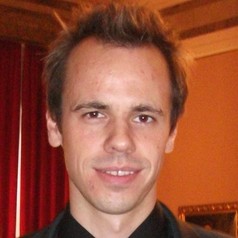
PhD Researcher in International Relations, University of Warwick Ragnar Weilandt is a doctoral researcher at the University of Warwick and the Université libre de Bruxelles working on external perceptions of the European Union, Euro-Mediterranean relations and civil-military relations in the Arab world. He also contributes to various newspapers including SPIEGEL ONLINE, ZEIT ONLINE, The European, The Huffington Post UK and zenith - Zeitschrift für den Orient. Ragnar co-founded FactCheckEU.org , a watchdog monitoring European politicans' statements on EU affairs.
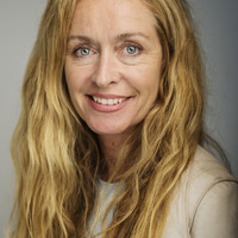
Professor of Sociology, Oslo and Akershus University College of Applied Sciences I am a professor of sociology at the University College of Oslo and Akershus in Norway. My main interests are gender studies, social politics and childhood and family Research. My work includes analysing gender, the welfare state, vulnerable subjects and lately also differences in healthcare treatment to look at social inequality. I study standards and the general cultural understandings that produce what is understood as different, or deviant. II have also published several international articles about research methods. Within qualitative methods I've discovered untapped data sources and developed new procedures.
Lecturer in Law and Co-director Liverpool European Law Unit, University of Liverpool Stephanie was appointed Lecturer in Law at the School of Law and Social Justice in September 2013. She is a graduate of L'Université Paris 1 Panthéon-Sorbonne and the University of Liverpool and completed her PhD studies at the latter institution in March 2015. Stephanie's area of expertise falls primarily within EU law, specifically EU constitutional law, the law of the single market, Union citizenship and the EU legal framework relating to the protection of fundamental rights. Her doctoral thesis analyses the Court of Justice's approach to adjudicating tensions between the Treaty free movement provisions and fundamental rights. It argues that the Court's adjudicative methodology offers procedural prioritisation to free movement over fundamental rights and that this has concrete consequences for fundamental rights protection. The thesis runs a diagnostic analysis of the causes of this adjudicative imbalance concluding that it is the result of historical factors and significant constitutional evolutions. This uneven adjudicative architecture is then critiqued against fundamental rights theory and the Union's contemporary constitutional framework. Ultimately an alternative model of adjudication is proposed rooted in the concept of balancing. Stephanie has also published in leading journals on the introduction of the 'genuine enjoyment test' to the EU citizenship legal landscape, and on the relationship between free movement and fundamental rights in the area of housing policy. In 2014, she was also appointed UK co-rapporteur at the XXVI FIDE Congress, hosted by the University of Copenhagen, on the topic of "Union Citizenship: Development, Impact and Challenges". As an active member of the Liverpool European Union Law Unit, Stephanie contributed extensively to the UK Government's UK/EU Balance of Competences Review. Developing this work, she is currently working with other members of LELU on a series of UK ESRC-funded events around the UK's renegotiation of its relationship with the European Union and the forthcoming referendum on UK membership of the EU. From September 2015, Stephanie became Director of the Liverpool European Law Unit. Stephanie enjoys teaching on a wide range of engaging subjects including criminal law, EU law, and the School's innovative Law and Social Justice module. Prior to joining the School, Stephanie worked in policy and communications at the Merseyside Brussels Office.
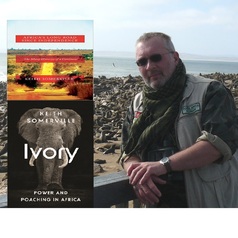
Visiting professor, University of Kent Professor Keith Somerville is a writer and lecturer on African affairs, journalism and the global media. In January 2013, he was appointed as a Senior Research Fellow at the Institute of Commonwealth Studies at the University of London. He teaches the Communications and Humanitarianism and Propaganda modules at the Centre for Journalism at the University of Kent.His book, Africa’s Long Road Since Independence. The Many Histories of a Continent has just been published by Hurst and Co and his work on the history of the ivory trade in Africa – Ivory. Poaching and Power in Africa will be published at the end of 2016. . Professor Somerville founded and runs the Africa, News and Analysis website. Keith writes on Africa’s military and political affairs; the politics of conservation in Africa; Africa and the media; the history and use of propaganda and hate broadcasting; analysing the global media and its coverage of major world events; finding and developing stories; news and feature writing; interview techniques; broadcast and online news reporting and production; media law and ethics, and international journalism. He has specialist knowledge of African politics and military/strategic issues; foreign intervention in Africa; environmental and wildlife issues in Africa and beyond; Marxism and the foreign policy of the former Soviet Union; and rugby (he has years of playing and team captaincy experience and is an RFU-qualified rugby coach). His current research interests are the contemporary history of Africa in light of the interplay bet ween structure and human agency; radio propaganda in apartheid South Africa; and the links between insurgency, organized crime and poaching in central and southern Africa A career journalist with the BBC World Service and BBC Newsi for three decades, Keith has an established track record as a trainer and training designer for the BBC, initially with BBC World Service training and latterly with the recently-established BBC College of Journalism. He was executive producer for the BBC’s international award-winning Legal Online course; co-author and role-play developer for the BBC’s post-Hutton Sources, Scoops and Stories course; he in charge of and the scenario writer for the BBC’s interactive journalism teaching tool, The Journalism Tutor. His knowledge of journalism theory and practice is based on nearly three decades of reporting, writing, presenting and editing World Service news programmes. He also has extensive online production experience and has written for specialist publications on African affairs. The major world events he has covered include running the World Service team in South Africa for the first post-apartheid elections in 1994; presenting live coverage of the attempted coup against Soviet President Mikhail Gorbachev; overseeing the first 10 hours of World Service coverage of the death of Princess Diana; running of live World Service radio coverage on 9/11; and producing and presenting radio documentaries from South Africa, Angola, Botswana, Tanzania, Namibia, Zambia, Zimbabwe, Guyana, Barbados, Jamaica and the wilds of deepest Cardiff and Norfolk. Keith has an extensive publication record on African continental and international politics. From 2012 to 2014 he taught the Humaniatarian Communications module and a module on Conflict and Security in Africa in the School of Politics and International Studies at the University of Kent. From 2008 to 2011, he taught journalism at undergraduate and postgraduate level at Brunel University and was BA (Hons) Journalism course leader and Admissions Tutor for the MA in International Journalism. He was educated at St Clement Danes Grammar School, the University of Southampton, the University College of Wales, Aberystwyth, and Brunel University.
Associate professor, Monash University I am an observational astronomer, studying how galaxies evolve over billions of years. I was born and raised in Melbourne’s southeastern suburbs. My interest in astronomy began as a child, when the Voyager spacecraft visited the outer planets. I undertook my undergraduate and postgraduate studies at the University of Melbourne during the 1990s. For my PhD, I used (now antiquated) photographic plates to identify thousands of galaxies and measure their distribution in space. In 2000 I joined the staff of the National Optical Astronomy Observatory, and started working on surveys of the distant Universe with large ground-based telescopes and satellites. In 2004 I was awarded Princeton University’s Henry Norris Russell Fellowship, and studied the growth of the most massive galaxies. Using thousands of galaxies in the constellation of Bootes, I found that the most massive galaxies have grown slowly over the past seven billion years, which is almost certainly due to mergers of galaxies. Since 2007 I have been at Monash University’s School of Physics and Astronomy. I am measuring spectra of galaxies across the electromagnetic spectrum, which is useful for measuring the distances to galaxies, the luminosities of galaxies and how rapidly galaxies form stars. I am also using large astronomical surveys to measure how rapidly galaxies are growing, and how this growth compares to the growth of dark matter halos.
Professor of Theology, Australian Catholic University I began my academic career as a mathematician, obtaining a PhD in pure mathematics from UNSW in 1979. After working as a mathematician I began undertaking studies in theology, completing a Bachelor of Divinity, and Master of Theology from MCD before completing my DTheol