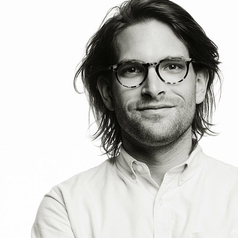
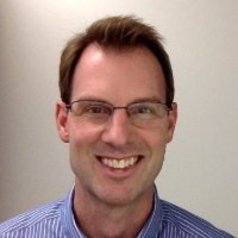
Medical Doctor; Co-Founded NCDFREE and festival21; Associate Researcher, University of Copenhagen Dr Demaio trained and worked as a medical doctor at The Alfred Hospital in Australia. While practising as a doctor he completed a Masters in Public Health including fieldwork in Cambodia to develop and evaluate a community-based, culturally appropriate health intervention for noncommunicable diseases, particularly diabetes. In 2010, Alessandro relocated to Denmark where he completed a PhD with the University of Copenhagen, focusing on noncommunicable diseases. His doctoral research was based in Mongolia, working with the Ministry of Health. He designed, led and reported a national epidemiological survey, sampling more than 3500 households to better understand national knowledge, attitudes and practices on noncommunicable diseases and risk factors and provide policy recommendations to address them. Alessandro held a Postdoctoral Fellowship at Harvard Medical School from 2013 to 2015, and was assistant professor and course director in global health at the Copenhagen School of Global Health, in Denmark. He has established and led the PLOS blog Translational Global Health, and has served on the Advisory Board of the EAT Initiative: the global, multi-stakeholder platform for food, health and environmental sustainability. To date, he has authored over 20 scientific publications and more than 80 blog articles. In his pro bono work, Dr Demaio co-founded NCDFREE, a global social movement against noncommunicable diseases using social media, short film and leadership events – reaching more than 2.5 million people in its first 18 months. Then, in 2015, he founded festival21, assembling and leading a team of knowledge leaders in staging a massive and unprecedented, free celebration of community, food, culture and future in his hometown Melbourne. In November 2015, Alessandro joined the Department of Nutrition for Health and Development at the World Health Organization (Geneva), as Medical Officer for noncommunicable conditions and nutrition. While a staff member of the World Health Organization, Alessandro alone is responsible for the views expressed in this column, and they do not necessarily represent the decisions or policies of the World Health Organization.
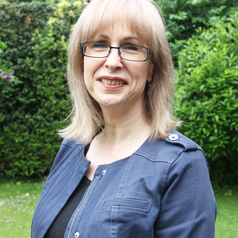
Professor Of Management, University of Sussex Katie (nee Truss) joined Sussex University in November 2013 as Professor of Management. Previously, she held several roles at the University of Kent and Kingston University. She has a PhD from London Business School where she has also recently been Chief External Examiner for the Global MBA programme. Katie has written numerous articles on meaningful work, employee engagement and strategic human resource management. Her work has appeared in the Harvard Business Review and the Sloan Management Review, and she has been commissioned to write reports and thought-pieces for the Chartered Institute of Personnel and Development. She is frequently invited to present her work at practitioner conferences or to chair events around the world, and has undertaken a range of consultancy, training and development projects. She is currently Non-Executive Director of the Involvement and Participation Association and Honorary Fellow at the Institute for Employment Studies. Previously, she was Co-Chair of the Steering Committee of the 'Guru Group', part of the Engage for Success movement. Katie has led large research projects funded by industry, the CIPD, the ESRC, and the NIHR. She is Associate Editor of Human Resource Management Journal and member of the Editorial Board of several other journals. Currently, she is leading a study of 'purposeful leadership' funded by the CIPD, and is co-editor of the Oxford Handbook of Meaningful Work due to be published in 2017. She is a Fellow of the Academy of Social Sciences, an Academic Fellow of the CIPD, a Fellow of the Royal Society of Arts, and Fellow of the Higher Education Academy. She is also an Associate Member of the Assocation for Coaching, and is entered in the register of qualifications in test use (A and B) of the British Psychological Society.
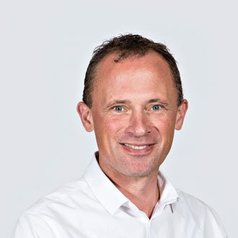
Professor of Innovation and Entrepreneurship, Associate Dean (Teaching), Director of the Glendonbrook Institute for Enterprise Development, Loughborough University Wilfred is a Professor of Innovation and Entrepreneurship as well as Director of the Glendonbrook Institute for Enterprise Development. Wilfred has taught at bachelor, master, MBA, and PhD levels, in a number of different programmes and countries on the core themes of his academic research. His research focuses on collaboration for innovation, within and between organisations. Wilfred has consulted a number of large and small firms as well as government and NGO organisations. Trained as both an economist and a philosopher, Wilfred focuses his research and teaching on collaboration within and between organisations to stimulate innovation and entrepreneurship. The approaches taken include social network analysis, (gift) exchange theory, and institutional theory. He has published award winning books and articles, in a range of international academic journals. CURRENT RESEARCH AND COLLABORATIONS Wilfred is involved in a number of projects with leading firms and academics across different continents. He is keen to collaborate with organisations that seek to improve their innovative performance, providing advise in exchange for research collaboration. CURRENT PHD/RESEARCH SUPERVISIONS Wilfred supervises PhD projects that focus on the antecedents for and effects of innovation for large as well as small firms, in particular the strategic implications for firms of their strategic choices where innovation is a key research focus. INTERESTS AND ACTIVITIES Wilfred is an editor-in-chief of the Review of Social Economy, associate editor of Innovation Management Policy and Practice, and a member of the editorial board of the Journal of Organisational Change Management.
Adjunct Professor, Global, Urban and Social Studies, RMIT University Peter Fisher is an Adjunct Professor in in the School of Global, Urban and Social Studies at RMIT University. He has spearheaded a large number of projects at all levels of government as well as private industry including stormwater, creating cooler cities through the use of vegetation and a systemic integration of the water and electricity sectors. He has further been involved in education and training writing tertiary level courses on water management as well as climate change adaptation and water management; some for AusAid. He has also contributed a chapter on Melbourne to a new book, Resilient coastal city regions: Planning for climate change in the United States and Australia as well as to another new book, Managing Urban Disaster Recovery on infrastructure. He has just published with D Trainham, a PhD candidate, Naturizing outside-in: Reconnecting buildings with the natural world through a design innovation metric https://www.cuge.com.sg/research/images/cugeresearch/CG6/Article%2014..pdf in the January 2013 issue of the Singapore based journal, CITYGREEN https://www.cuge.com.sg/research/CITYGREEN. This has recently been incorporated into the Green Building Council of Australia's Innovation Challenge program. A Green Star naturizing index can now be found at http://www.gbca.org.au/uploads/78/34894/Market_Intelligence_Research_FINAL_JUNE2014.pdf. As an environment and science writer Dr. Fisher has published thirty eight articles since his first for the Australian Financial Review in 1999. Those of relevance to the carbon/climate change arena are: Water industry guilty of burning too much energy, Water Special (AFR, Tuesday 14 August 2003), Susceptible to calamity: Extremes of climate are a fact of life and we should be better prepared for them, The Australian, (Tuesday 21 March, 2006); Cold comfort in climate change, Sydney Morning Herald, (Saturday 6 January 2007); Canberra Times, Climate: Time is against us (Monday 8 January 2007.); and Why we need the urban forest, Urban magazine, (July quarter, 2007). His most recent pieces to with adaptation have appeared as OpEds in The Age - Ready for heavy weather, Monday 23 April 2008; Planning for a flood, Monday 29 September 2008; Big solutions for our water needs will use even more energy, Monday 9 March, 2009; It's time literally to go green, Monday 23 January, 2009; followed by A lack of ingenuity is evident in dealing with our water crisis, Tuesday 28 July 2009. And, a week before the latter, All change for the future, The Australian, Wednesday 22 July 2009. Further pieces appearing in The Age and National Times since then have been Rack ’em and stack ‘em: a silly solution to population growth, Thursday 18 March 2010. When everything's connected, one fault can be catastrophic. Monday, June 21, 2010 and Building for a cantankerous planet, Monday October 11, 2010, and Energy hungry water providers need to get with the power, Monday 3 January 2011.
Principal Investigator on Deep Space Atomic Clock Technology Demonstration Mission, Jet Propulsion Laboratory, NASA Todd has over 29 years of experience in astrodynamics and space navigation. Since 1999 he has been at the Jet Propulsion Laboratory developing and implementing navigation systems and architectures for many projects - big and small - including the NASA’s Mars Network, the former Constellation Program and Altair lunar lander. His research focuses on new navigation methods, adaptive navigation, nonlinear dynamics, and mean element theory. Todd is currently the principal investigator for NASA’s Deep Space Atomic Clock mission being developed to advance our capabilities to navigate effectively in deep space. He is a graduate of Purdue University and is a former Air Force Officer.
Assistant Clinical Professor, Case Western Reserve University Gregory L. Hall, MD, is a primary care physician practicing in Cleveland, Ohio for over 20 years. A native Clevelander, he attended Williams College and majored in psychology while taking pre-med coursework. After graduation from Williams College with a bachelor’s degree in psychology, and working summers as a research assistant at the Cleveland Clinic, he attended the Medical College of Ohio, and completed residency in Internal Medicine at the Cleveland Clinic Foundation. Dr. Hall serves on the teaching faculty at Case Western Reserve University’s School of Medicine and Northeast Ohio Medical University and has an appointment of Assistant Clinical Professor. He has co-chaired the City of Cleveland’s Public Health Advisory Committee, and co-chaired the leadership board of Steps to a Healthier Cleveland which oversaw health awareness and improvement activities throughout the area. In 2002, Dr. Hall received a governor’s appointment to the Ohio Commission on Minority Health, on which he now serves as Chairman. In January of 2008, he was appointed to Ohio Medicaid Medical Care Advisory Committee and served on its executive committee. In 2010, he was appointed to the Cuyahoga County Board of Health which oversees Ohio’s largest county’s broad range of quality driven public health programs and services.