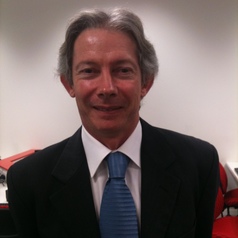
Security Researcher, Senior Lecturer in Software Engineering, Edith Cowan University Dr Mike Johnstone is a member of the Security Research Institute and the School of Computer and Security Science at Edith Cowan University in Western Australia where he teaches secure programming. His research interests include secure development methodologies, wireless sensor networks and cloud security. He is currently working on a large co-operative project about privacy-preserving authentication.
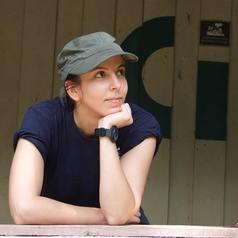
PhD candidate in Primate Behaviour, University of Stirling Sophia Daoudi is a member of the Behaviour and Evolution Research Group Stirling and the Scottish Primate Research Group. Before starting her PhD she undertook an MSc in Primate Conservation at Oxford Brookes University, where she spent 3 months in the Peruvian Andes studying the Critically Endangered yellow-tailed woolly monkey as part of her dissertation research. She is currently a teaching assistant on the psychology undergraduate animal behaviour modules, as well as module coordinator for the INTO Stirling introduction to psychology course. Her current research focuses on the behaviour of tufted capuchins and squirrel monkeys in both captive and wild environments. In particular she investigates polyspecific associations between the two.
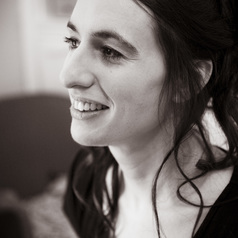
Senior Lecturer in Law, University of York I've been awarded an ESRC 'Future Research Leader' grant, with which I'm PI on the EU Rights Project, www.eurightsproject.org.uk - working with EU migrants, Citizens Advice Services, and other advice agencies around the country, providing an advice and advocacy service while conducting an ethnography on the administrative and legal problems encountered. I have documented the effects of the recent welfare changes targeting EU migrants. The project was described by reviewers as 'groundbreaking', 'tremendously innovative', 'strikingly original' and said 'the applicant’s background makes her possibly the only person of her generation in a position to credibly offer the opportunity to develop this methodology in this kind of context: access to civil justice, in supranational contexts’. Having volunteered and worked in Citizens Advice Bureaux for over thirteen years, and specialised in EU legal research for eleven years, I have practical as well as academic expertise in UK welfare law, EU law, (particularly EU social law - welfare, free movement, citizenship and equal treatment), human rights law, equality and non-discrimination law (especially disability), the rights of carers, and child poverty. I've been appointed an 'analytical expert' on the EU Commission's Free Movement and Social Security Coordination network, producing reports and giving litigation advice and suggestions to the Commission. I am also joint cases editor for the Journal of Social Security Law. My work has been published in key international journals, such as the European Law Review, the Common Market Law Review, the Maastricht Journal of International and Comparative Law, and the Journal of Social Welfare and Family Law. I've communicated about my research through various media, including the Today Programme on Radio 4, BBC Inside Out, and BBC Breakfast. I have given various public talks, including at the YorkTalks 2016, https://youtu.be/Iz-dY3g-ZAI and in an Open Course lecture series on Law, Government and the Public, 2015. My PhD in Law (Liverpool) was funded by the AHRC, and focussed on free movement, equal treatment and EU citizenship; during this I took part in two research projects on retirement migration funded by the Spanish Ministry for Employment & Social Affairs and Age Concern. These looked at the access to welfare services for post-retirement EU migrants, particularly UK nationals abroad. My LLM (Leeds) research involved study of the attempts to produce an EU constitution. My work is inherently interdisciplinary; my first degree was a BA in Social & Political Sciences, (Cambridge).
Senior Lecturer in French Politics & Contemporary European Studies , University of Sussex My research interests relate principally to contemporary French politics, and more specifically to the politics of culture and heritage during the Mitterrand presidencies, but I have also more recently developed an interest in the exercise of voting rights by European citizens resident in other EU Member-States.
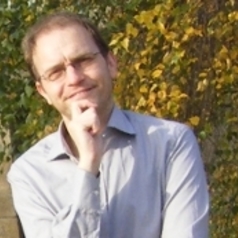
Reader in Psychology, University of Glasgow My research interests are broad, and are strongly influenced by my education in Cognitive Psychology at the Max-Planck-Institute for Psychological Research and subsequent neurobiological research at the Medical School of Washington University in St.Louis. My current research is best described as a mix of Cognitive (they of thinking, attention, perception, action, memory, etc), Differential (studying differences between individuals), and Educational Psychology (the psychology of learning processes). I am particularly interested in gender differences in thought and behaviour, the psychology of learning, as well as in meta-cognitive processes, such attention and executive control. One of my aims is to understand and reduce performance gaps between boys and girls in school. For example, in international surveys, British boys fall behind in reading skills, and British girls in mathematics (this is the case in most countries). More research is necessary to be able to reduce these fairly persistent gaps, which limit children's career opportunities. This research is a good example of combining Differential and Cognitive Psychology. In the past, I have gained much experience with a wide variety of extremely different laboratory measurement techniques (see my publications below). Currently, I use behavioral measures from my own lab as well as "secondary data", in particular those from the Programme for International Student Assessment (the largest international test of school children with millions of data points). The main academic aim of this research is to understand variation in human attitudes and cognition. The practical aim is to improve learning and education. Most of my past and present research has been funded with grants from the ESRC, NIH, German Science Foundation (DFG), Max-Planck-Society, James S. McDonnell Foundation, British Academy, and Nuffield Foundation, and I would like to thank the funding organisations and collaborators for their support.
Associate Professor in Marketing, Heriot-Watt University I joined Heriot Watt as a Reader from the University of Edinburgh and before that held the post of senior lecturer at University of Sydney. My main interests revolve around sustainability. I am the Sustainable Consumption theme leader for the International Sustainable Development Research Society and my research focusses on anti-consumption, consumer’s responses to scarcity and how consumers dispose of goods. This has led to policy work exploring ways to rebalance dysfunctional relationships with materialistic consumption. http://allofusfirst.org/library/from-i-to-we-changing-the-narrative-in-scotlands-relationship-with-consumption/ Starting with an interest in how the Scottish Green party were influencing the Scottish Independence referendum, I have spent the last 4 years studying volunteer participation in this event and the marketing practices deployed, including the use of Hope vs Fear appeals. As part of this, I conducted what is the most comprehensive survey of the Yes volunteers to date, the findings of which, published by CommonWeal “available via http://allofusfirst.org/library/the-yes-volunteers-capturing-the-biggest-grassroots-campaign-in-scotlands-history This work has been widely reported in new media outlets such as Bella Caledonia, Common Space and Independence live and the Scottish Independence podcast. It is also making its way through academic journal review processes.