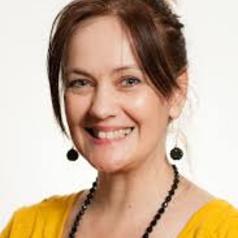
Amanda du Preez is Professor in the Department of Visual Arts at the University of Pretoria, where she teaches Visual Culture Studies. She obtained a DPhil in English from the University of South Africa on the topic of cyberfeminism and embodiment in 2003. She has co-edited South African visual culture (2005); edited Taking a hard look: gender and visual culture (2009) and authored Gendered bodies and new technologies: rethinking embodiment in a cyber-era (2009). She served as assistant editor of two accredited journals, Image & Text and De Arte. Currently she serves on the editorial board of Gender Questions, advisory board Persona Studies, the VIAD (UJ) advisory board, and most notably the International Association for Visual Culture. She has a C2 rating from the NRF and received the award as researcher of the year (Arts Cluster) in 2013 and Lecturer of the Year (Humanities) in 2015. Research focus areas: critical visual culture, feminist theory, gender, embodiment, cyber culture, the sublime, self-portraiture, social media, selfies, place and sense of belonging, digital humanities
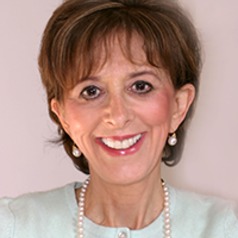
Linda Goldman has a Fellow in Thanantology: Death, Dying, and Bereavement (FT) with an MS degree in counseling and Master's Equivalency in early childhood education. Linda is a Licensed Clinical Professional Counselor (LCPC) and a National Certified Counselor (NBCC). She worked as a teacher and counselor in the school system for almost twenty years. Currently she has a private grief therapy practice in Chevy Chase, MD. She works with children, teenagers, families with prenatal loss, and grieving adults. Linda shares workshops, courses, and trainings on children and grief and trauma and currently teaches as adjunct faculty in the Graduate Program of Counseling at Johns Hopkins University. She has also taught on the faculty at the U. of Md. School of Social Work/Advanced Certification Program for Children and Adolescents and lectured at many other universities including Penn. State University, Buffalo School of Social Work, University of North Carolina, The National Transportation Safety Board, and The National Changhua University of Education in Taiwan as well as numerous schools systems throughout the country. She teaches the course on “Working with LGBT Youth” at Johns Hopkins Graduate School, the University of Maryland School of Social Work, and the Child Welfare Administration. She has written many articles, including Healing Magazine’sHelping the Grieving Child in the Schools, The Bullying Epidemic, Creating Safe Havens for Gay Youth in Schools (2006) and Parenting Gay Youth (2008). Some of her articles on children and grief and trauma have been translated into Chinese for the Suicide Prevention Program of Beijing. She appeared on the radio show Helping Gay Youth: Parents Perspective (2008) and has testified at a hearing before the MD Joint House and Senate Priorities Hearing for Marriage Equality (2007) and the MD Senate Judicial Proceedings Committee for the Religious Freedom and Civil Marriage Protection Act (2008). Linda has worked as a consultant for the National Head Start Program, National Geographic, and was a panelist in the National Teleconference: When A Parent Dies: How to Help The Child. She has appeared on the Diane Rehms show to discuss children and grief and Dan Roderick’s Baltimore NPR Show to discuss gay youth. She was named by the Washingtonian Magazine as one of the top therapists in the MD, VA. DC area (1998) and again named by The Washingtonian Magazine as a therapist to go to after the terrorist attacks in 2001. She has served on the board of ADEC, The Association for Death Education and Counseling, and has served on the advisory board of SPEAK, Suicide Prevention Education Awareness for Kids, RAINBOWS for Our Children, Academic Advisory Board of Annual Editions/Death, Dying and Bereavement/ McGraw Hill, and the advisory board of TAPS (The Tragedy Assistance Program for Survivors) as their Children’s Bereavement Advisor. Linda is the recipient of the ADEC Clinical Practice Award 2003. Linda Goldman is the author of Life and Loss: A Guide to Help Grieving Children (First edition, 1994/Second edition 2000, Third edition, 2014) Taylor and Francis Publishers. Her second book is Breaking the Silence: a Guide to Help Children with Complicated Grief (First edition, 1996/Second edition 2002, Chinese Edition, 2000). Her other books include Bart Speaks Out: An Interactive Storybook for Young Children On Suicide (1998) WPS publishers, a Phi Delta Kappan International fastback, Helping the Grieving Child in the School (2000), and a Chinese Edition of Breaking the Silence: A Guide to Help Children With Complicated Grief (2002), the Japanese Edition of Life and Loss: A Guide to Help Grieving Children (2005), and Raising Our Children to Be Resilient: A Guide for Helping Children Cope with Trauma in Today’s World (2005) and a children’s interactive story and memory book Children Also Grieve: Talking about Death and Healing (2005), Chinese translation of Children Also Grieve (2007) and Coming Out, Coming In: Nurturing the Well Being and Inclusion of Gay Youth in Mainstream Society (2008). She has also authored contributing chapters in resources including Loss of the Assumptive World (2002), Annual Death, Dying, and Bereavement (2001-2013), Family Counseling and Therapy Techniques (1998), and The School Services Sourcebook: A Guide for School-Based Professionals (2006, 2012, 2nd edition). She has also written two books to be included in a series, Great Answers to Difficult Questions about Death (2009, Polish translation, (2012), Korean translation, 2013) and Great Answers to Difficult Questions about Sex (2010). Linda also created a CD-ROM “A Look at Children’s Grief” (2001) published by ADEC, The Association for Death Education and Counseling, and she was a part of ADEC’s Webinar series, Children and Grief, 2009. Her op/ed “Cut Out Guns, Bullying” appeared in the Baltimore Sun, March 2001. She was an important part of the Washington Post Article, How To Talk to Kids about Suicide and has participated in other interviews for articles in the media including the Washington Post, The LA Times, USA Today, The New York Times, The Boston Globe, The Wall Street Journal, the Associated Press, Seventeen Magazine, ABC News and US Magazine. Linda contributed in many ways after 9/11. She authored the chapter about children, “Talking to Children about Terrorism” in Living with Grief: Coping with Public Tragedy,Published by the Hospice Foundation of America 2003. She contributed to The Journal for Mental Health Counselors in their special grief issue in the article “Grief Counseling with Children in Contemporary Society” 2004. She was a strong part of the TAPS (Tragedy Assistance Program for Survivors) response team at the Pentagon Family Assistance Center, conducted a workshop about children and grief at the 2002/2004/2005/2006,2010 TAPS National Military Survivor Seminar, authored articles including, “Helping Children With Grief and Trauma” (2002/ 2003) and Fostering Resilience in Children: How to help kids cope with adversity (2005) TAPS Journal, Children Coping with a Military Death (2008) TAPS Journal. Linda contributed on the Public Broadcasting Series Program “Keeping Kids Healthy” on Children and Grief, which aired in October 2006, and KNBP Channel 5 Public Broadcasting –“You’ll Always Be With Me”, Nevada Children and Grief, 2010. She consulted with Sesame Street for their program and materials on Children and Grief andChildren and the Military (2010). She also is the recipient of the “The Tenth Global Concern of Human Life Award 2007”.
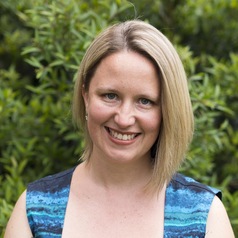
Dr Carly Sawatzki is a teacher-educator with expertise in curriculum and pedagogy across the Victorian and Australian curricula (VCE, Victorian Curriculum, Australian Curriculum). Carly's subject areas include upper primary Mathematics, middle school Economics & Business, senior school Business Management and senior school Psychology. Being an interdisciplinarian is critical to her key area of interest, contextual learning. Carly's PhD explored the role of social and mathematical understandings in children's financial problem-solving and decision-making. Her ongoing research focuses on the 'Money and financial mathematics' strand of the Australian Curriculum - Mathematics in upper primary school, and has involved developing, trialling, studying, and refining unique financial dilemmas and associated pedagogies to enhance financial literacy teaching and learning. Some of her tasks have been included in the Encouraging Persistence, Maintaining Challenge (EPMC) project. Before switching careers to teaching and academia, Carly worked in marketing and business development roles in the finance industry.
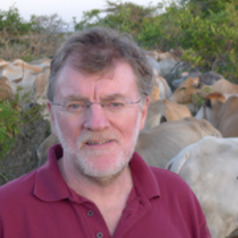
I trained as a tree pathologist and spent ten years in Asia working first on a bamboo disease in Bangladesh and then on clove trees in Indonesia on UK aid projects. I've worked around the world, first with the Natural Resources Institute then with CABI for 17 years. My dominant interest for the last 20 years has been in farmer support, stimulated through the development and introduction of plant health clinics to Bolivia, Uganda, Bangladesh and beyond. More recently I have been attached to the University of Aberdeen, where I've returned to an interest in ash trees - the subject of my PhD way back then. In a varied career that has included studying wild mushrooms in Malawi and bamboo for rural development, it is sometimes difficult to give a concise description of what I do. Hence this rather long-winded explanation. But the main theme has been bridging gaps between the science I love and the people for whom it is intended, whether they are cocoa farmers in DRC (which I visit regularly) or members of the public worrying about the health of the trees in the UK.
Keith Laws is Professor of Cognitive Neuropsychology in the School of Life and Medical Sciences at the University of Hertfordshire. He completed a PhD at the Department of Experimental Psychology, University of Cambridge and is the author of over 100 papers and a recent book entitled 'Category-Specificity: Evidence for Modularity of Mind'. His research focusses on cognitive function in a variety disorders including Alzheimer's Disease, Schizophrenia, Obsessive-Compulsive Disorder. He is a Chartered Psychologist, Associate Fellow of the British Psychological Society, Member of the Institute of Learning and Teaching, Fellow of the Royal Society of Arts and various academic organisations including the British Neuropsychological Society, British Neuropsychiatric Association, Experimental Psychology Society.
Dr. Peter Ghosh is Associate Professor of Modern History at Jean Duffield Fellow in Modern History, University of Oxford. I am interested primarily in the history of ideas, both social and political theory and also the history of historiography, in accordance with my research interests. I have two related research interests: first, the interface between political ideas and English politics, ca 1850-1895; secondly, the evolution of Western European and British ideas, including historiography, from the Enlightenment to the present. My current publishing commitments centre on Max Weber.