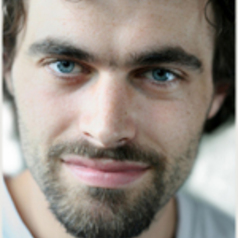
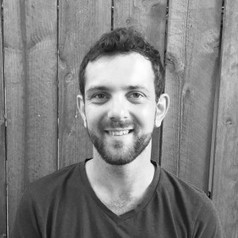
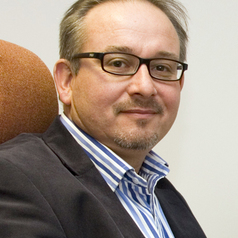
I study learning and decision making. My main focus is the movement system – the idea being that if we can understand the intelligence of simple actions we will have an excellent handle on intelligence more generally. My research looks at simple decision making, and simple skill learning, using measures of behaviour informed by the computational, robotics and neuroscience work done in the wider group. Academic website here: http://www.tomstafford.staff.shef.ac.uk/
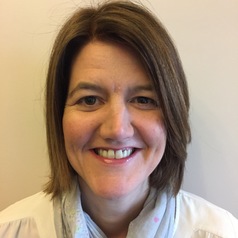
Barbara is a Lecturer in the School of Health Sciences at the University of Stirling. Her research interests relate to the psychological aspects of health. She worked for 15 years as a Registered Nurse, including as a British Heart Foundation specialist cardiac nurse.
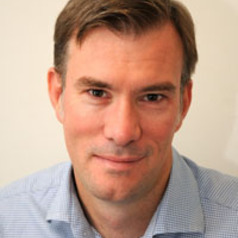
Roger works on optimisation and integration of renewable energy systems, linking together different technologies to find the least expensive, most reliable systems with the lowest carbon emissions possible. He also researches the chemistry of the stratosphere, and the impact of ozone chemistry on the surface climate. Prior to returning to Melbourne in 2008, he worked for the International Energy Agency on the Energy Technology Perspectives 2008 publication. He has worked to integrate observing systems for the global carbon cycle, and on the impact of climate change on the carbon cycle.
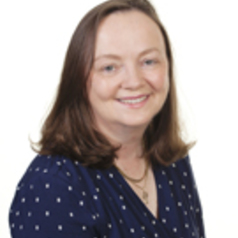
Máiréad Nic Craith joined the Department of Languages and Intercultural Studies as Professor of European Culture and Heritage in September 2012. She previously held a Chair in the School of Social Sciences and Applied Social Studies at the University of Ulster. Máiréad has held an honorary professorship at the University of Exeter as well as a DAAD guest professorship at the University of Göttingen. She has held other academic positions at the Universities of Liverpool, Dublin and Cork. She has received many accolades for her publications, including the Ruth Michaelis-Jena Ratcliff research prize for folklife (joint winner), which was awarded at the University of Edinburgh in 2004. Two years later she was awarded a Senior Distinguished Research Fellowship at the University of Ulster. In 2009 she was elected to the Royal Irish Academy, the highest academic honour in Ireland. Máiréad has served on numerous research evaluation panels in Europe and in Canada. She has recently been appointed assessor to the Australian Research Council. Máiréad’s research focuses on different aspects of living heritage including literary heritage (from the Great Blasket Island), intercultural heritage (Cork), World Heritage sites (Skellig Michael), heritage and conflict (Northern Ireland) and heritage and law in a European context. Her recent publications include an exploration of the role of heritage in the Derry/Londonderry (the first UK City of Culture). Máiréad has published a number of edited volumes on heritage including Cultural Heritages as Reflexive Traditions (2007 with Ullrich Kockel) and Cultural Diversity, Heritage and Human Rights (2010 with William Logan and Michele Langfeld). She is currently co-editing the Blackwell Companion to Heritage (due for publication in 2014). In 2011, she was invited by the United Nations as an expert on access to heritage as a human right. Language, power and cultural policy in European society have also been a sustained focus of interest throughout Máiréad's academic career. In 2009 Máiréad held a Leverhulme Research Fellowship examining the sense of dislocation that is experienced by bilingual authors living ‘in-between’ two cultures and two languages. She has explored key questions, such as the impact of political boundaries on the concept of language and the significance of language for citizenship. Máiréad has examined the quest for recognition and legitimacy among speakers of minority and contested languages and queried the non-recognition of migrant, non-European languages in the public space. In 2013, she was invited by the European Centre on Minority Issues as an expert on (linguistic) minorities.
Tim Highfield is Vice-Chancellor's Research Fellow in the Creative Industries Faculty at Queensland University of Technology, where he is a member of the Digital Media Research Centre. His fellowship project is 'Visual Cultures of Social Media'. His research covers social and digital media, politics, activism, popular culture, sport, identity, humour, digital cultures, and more. His first book, Social Media and Everyday Politics, was published by Polity in April 2016. For more information, see http://timhighfield.net or @timhighfield on Twitter.
I am currently undertaking a Computer Science PhD at the University of Bath researching autonomous robotics, with a focus on domestic applications and ethical considerations. What models do humans form when interacting with AI systems, and how do we make the behaviour of these systems more understandable? I am interested in real world AI for real world problems. I am also Founder and CFO of RWA Ltd, a major international supplier of IT systems to the leisure travel industry for over 20 years. I have a wide experience of developing technology and systems, including electronics, chip design, systems and applications programming in many languages and environments.