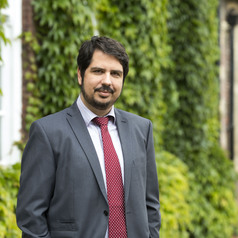
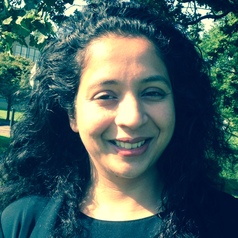
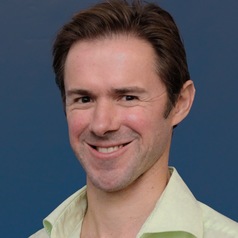
Dr Parveen Akhtar joined the University of Bradford as a lecturer in January 2014. Prior to this she was awarded a British Academy Research Fellowship, held at the University of Bristol (2011-2013). In 2010 she was a visiting scholar at Lahore University of Management Sciences before which she was an ESRC postdoctoral fellow at the University of Bristol (2008-2009). Dr Akhtar completed her ESRC funded PhD at the University of Birmingham (2008) during which time she held research positions at the Institut für die Wissenschaften vom Menschen Institute for Human Sciences, Vienna (2007); the Institute for Migraiton and Ethnic Studies, Amsterdam (2006); Sciences Po, Paris (2006) and the School for Postgraduate Interdisciplinary Research on Interculturalism and Transnationalism, Aalborg (2005). Dr Akhtar has published widely on Political Participation, Islam, Migration and Social Change in journals including; the British Journal of Politics and International Relations, the Political Quarterly and European Political Science. Her monograph, British Muslims Politics, was published by Palgrave in 2013. Dr Akhtar’s work has an international audience and she has presented her research in over 40 conferences in 15 countries. She makes regular contributions to public and media debates.
A graduate of Exeter University, Prof Church’s academic career started as a Teaching Assistant in University College, London and the School of Oriental and African Studies. From 1963-65 he was Junior Lecturer in Modern History in Trinity College, Dublin. From there he went to the University of Lancaster as Lecturer in French History, rising to be Senior Lecturer in European Studies in 1975. Transferring to Kent in 1981 he taught a variety of historical and political courses, including Swiss Studies, first for the School of Languages and then in the School of Politics and International Relations. Promoted Reader in 1988 and Professor in 1992, he was awarded a Jean Monnet Chair in European Integration in 1995. He was the first Director of the Kent Centre for Europe, a Jean Monnet Centre of Excellence, and has been an Emeritus Professor since 2003.
Dr Dionysios Demetis is a Lecturer in Management Systems at the Hull University Business School. He holds a PhD on Anti-Money Laundering and Information Systems from the London School of Economics and Political Science, where he taught classes on Information Systems Management, IS Security and Research Methods. While at the LSE, he contributed widely to a number of research deliverables for the European Union, but most importantly to the domain of Anti-Money Laundering for the Spotlight EU project, as well as the GATE EU Project targeting Money Laundering and Terrorist Financing. His research on the Risk-Based Approach to Anti-Money Laundering and the 3rd EU Directive has been featured in the IMOLIN select bibliography of the United Nations while his research on ‘Data Growth and the Consequences to Anti-Money Laundering’ has won the Emerald Highly Commended Award from the Journal of Money Laundering Control. For his teaching at the London School of Economics, he was awarded the departmental Teaching Assistant award for Outstanding Contribution based on peer review and student feedback from the Information Systems Department in 2006. During his PhD, he secured three consecutive research scholarships from the LSE. His book on AML entitled ‘Technology and Anti-Money Laundering’ and published by Edward Elgar is the first book to provide a coherent theoretical structure for Anti-Money Laundering research and practice, based on Systems Theory, and the first book to provide an Information Systems perspective on Anti-Money Laundering. With LSE Professor Ian Angell, he co-authored another book that applies second-order cybernetics to uncover deep-seated epistemological paradoxes in science. The book is entitled ‘Science’s First Mistake’, and it is published worldwide by Bloomsbury. Dr Demetis has a background in Physics from the University of Crete, as well as an MSc from the London School of Economics on the Analysis, Design and Management of Information Systems. Prior to this academic post he was an Adjunct Professor for the California based Thomas Jefferson School of Law (TJSL), where he lectured on the International Compliance and Anti-Money Laundering courses for the university’s online program for about three years. He has also been lecturing for TJSL on Qualitative Research Methodology for both MSc-level and PhD-level students, while advising a number of students in their research. He has given a large number of talks in conferences, and is a regular speaker at Cambridge University at the Annual Economic Crime Symposium.
From "friendship clubs" and two-line classifieds to flipping through faces on Tinder, the technologies and rituals of dating have changed much in the past 40 years. But how deep do these changes go? Does gender operate as differently within the new courtship realm as the range of new dating technologoies would suggest? My research is intended to answer these questions, focussing on how mediated dating platforms (eg lonely hearts adverts, computer dating message boards, introduction agencies) have evolved since 1970 and tracking how singles using these platforms have put to work ideas of gender in their adverts or profiles. The study focusses on the metropolitan environment of London, where new technologies, fashions and experimentalism in relationships were more observably taken up than elsewhere in Britain, and considers the effects on daters of the capital's heightened discourses of consumerism, permissivness, choice and alienation. Crucially, London formed a major (though certainly not exclusive) hub of the Women's Liberation Movement, and the ways in which the newly strident and bounteous discourse generated by the movement was used, played with or ignored by daters is also of key interest to me, raising broader questions of how the political relates to the personal in the domain of gender. More broadly, I am interested in Anglo-American and global courtship cultures throughout the 20th century (up to the present), and particularly in how new technologies are adopted, used or rejected by daters around the world. I am also extremely interested in historiographical debates, particularly those concering where lie the strengths and weaknesses of contemporary history and its sources, especially live digital ones like Facebook.
I am a political sociologist and my primary area of research over the last 10 years has been on the politics of identity, representation and violence in relation to development and governance. I believe that good research should make a social impact and I have taken inspiration from and evolved through connections with academic, practical and policy spheres. Soon after completing my PhD in International Development from the University of Bath in 2010 I joined BRAC University’s Institute of Governance Studies (now called Institute of Governance and Development) as their Head of Research between 2010-2012. I was steering the IDRC’s Think Tank Initiative programme and during my tenure I led the research team on the publication of the first and very influential State of Cities report on Dhaka. In 2012, I joined the University of Surrey’s Department of Politics where I was engaged with the Centre for Critical Research on International Intervention. I came to the U.K. for the first time in 2001 to study for a Master’s in Gender Studies at the University of Warwick, returned to India to work as a journalist and then a scholarship brought me back to the U.K. in 2004 for an M.Res and Phd in International Development. At present, I am settled in the U.K. but like most cosmopolitan migrants I remain connected with my peers in India, Bangladesh and the rest of South Asia.
I hold degrees in Music and Psychology from the University of New South Wales in Australia. I am currently Professor of Cognitive Science and leader of the ‘Music Cognition and Action’ research program in the MARCS Institute for Brain, Behaviour and Development at Western Sydney University. I conduct research aimed at understanding the behavioural and brain bases of human interaction in musical contexts.