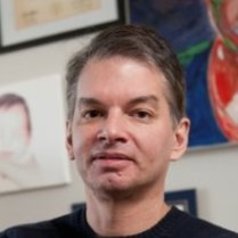
As a computational biologist, Dr. Adami’s main focus is Darwinian evolution, which he studies theoretically, experimentally, and computationally, at different levels of organization (from simple molecules to brains). He has pioneered the application of methods from information theory to the study of evolution, and designed the “Avida” system that launched the use of digital life (mutating and adapting computer viruses living in a controlled computer environment) as a tool for investigating basic questions in evolutionary biology. He was also a Principal Scientist at the Jet Propulsion Laboratory where he conducted research into the foundations of quantum mechanics and quantum information theory. Dr. Adami earned a BS in physics and mathematics and a Diplom in theoretical physics from the University of Bonn (Germany) and MA and PhD degrees in physics from the State University of New York at Stony Brook. He wrote the textbook “Introduction to Artificial Life” (Springer, 1998) and is the recipient of NASA’s Exceptional Achievement Medal. He was elected a Fellow of the American Association for the Advancement of Science (AAAS) in 2011.
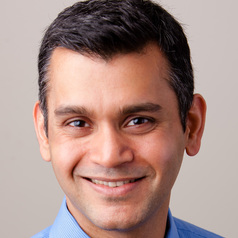
Dr. Vishwanath studies the “people problem” of cyber security. His research focuses on improving individual, organizational, and national resilience to cyber attacks by focusing on the weakest links in cyber security—all of us Internet users. His particular interest is in understanding why organizational insiders willingly exfiltrate sensitive organizational data; why people become unintentional insiders by falling prey to social engineering attacks that come-in through email and social media; and on ways we can harness this understanding to secure cyber space. He also examines how various groups–-criminal syndicates, terrorist networks, hacktivists–-utilize cyber space to commit crime, spread mis-information, recruit operatives, and radicalize others. Dr. Vishwanath’s research on improving cyber resilience against online social engineering has been funded by the National Science Foundation. He has written and published over two-dozen articles on technology users and cyber security issues and my research has been presented to principals at national security and law enforcement agencies around the world. His research has also been featured on CNN, USA Today, Bloomberg Business Week, Consumer Reports and hundreds of other national and international news outlets.
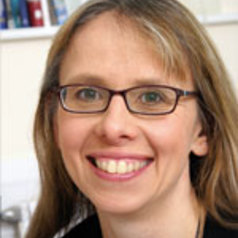
As Senior Lecturer in Digital Marketing, I have a particular interest in digital culture, and how this affects the third sector, especially faith organisations, voluntary organisations, and government behavioural campaigns. I moved to this position after five years involved with the CODEC Centre for Digital Theology, St John’s College, Durham University. At CODEC, I researched discipleship in a digital age, drawing upon over 130 voices from ‘the pew, the pulpit and the academy’ on the website http://bigbible.org.uk. My work included highlighting to the church the importance of engaging with digital technologies. Previous roles in academia include ‘Senior Fellow in Technology Enhanced Learning’ alongside temporary lectureships, web editorial work, and research projects (including into web accessibility and usability) at the University of Winchester and Interdisciplinary Research Officer at the University of Manchester. I have been Director of social media consultancy Digital Fingerprint since 2001, whose clients have included third sector organisations such as Girlguiding, The National Archives and NCVO (via another agency), Christian organisations including The Church of England, The Methodist Church, and United Reformed Church, publishers including Lion Hudson and CPO, universities including ‘Organisational Development in Higher Education Group’ and The University of Limerick, and a range of small businesses, including anti-diet cause ‘Beyond Chocolate’, and involvement in the social media startup Super Fun Days Out. I am regularly asked to write for a range of publications for a wide range of audiences, and often provide expert comment to the media. The Financial Times described my 2014 book Raising Children in a Digital Age as ‘sensible’ in a sea of scare texts around the topic of children and the internet. I have been on flagship shows such as The One Show (BBC One), Steve Wright in the Afternoon (BBC Radio 2) and BBC News, whilst local and specialist media frequently asks for comment or opinion pieces on aspects related to digital culture.
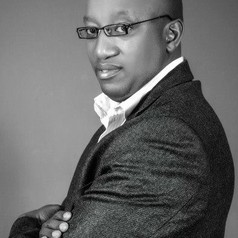
Sandile Swana is an ICT entrepreneur and part-time lecturer at the Wits Business School Municipal Finance Programme. He completed a BComm at Wits in Economics and Business Information Systems, a BComm Hons Logistics at UNISA, and holds an MBA from the University of Pretoria. He has also completed BTh and BTh Hons in Christian Ethics and Leadership through UNISA. He is a member of Institute of Information Technology Professionals of South Africa and also the Institute of Risk Management of South Africa. Areas of interest: African Development Economics; Entrepreneurship; Risk Management; Strategy; African Leadership; African Ethics; African Technology Development; ICT; African Logistics; Cost Management; Local Government.
I am Danushka Bollegala, a Senior Lecturer (Associate Professor) at the Department of Computer Science, The University of Liverpool, United Kingdom. See my short vita. I am also a member of the Institute for Risk and Uncertainty of the University of Liverpool, and Global Research Center for Big Data Mathematics National Institute of Informatics (NII). My research interests are Artificial Intelligence, Computational Linguistic and Web Mining. I have worked on various topics related to above fields such as measuring semantic and relational similarity from Web data, domain adaptation, sentiment analysis, social media, personal name disambiguation, name alias extraction, and information ordering in multi-document text summarization. I have published my work in various conferences in Web, AI and NLP fields. See my list of publications. I teach Data Mining in the graduate school.
I studied at Glasgow and Sheffield, and held academic posts at Durham, Manchester and Nottingham Law Schools, before joining Sheffield in 2007. My main research interests are in the field of European Union social and constitutional law, in particular its application in health fields, social security and welfare, and non-discrimination. I have published on the European Union's competence in social fields, especially health law; on the regulation of tobacco in the EU context; on European public health law and policy; on the governance of stem cell research in the EU; on EU non-discrimination law and minority rights; and on the 'right to health' in European contexts. I am interested in socio-legal theory and method, in particular as applied to the law of the European Union. I am currently working on two projects. One is an interdisciplinary project on the European Union's governance of health. This includes public health policies, such as anti-tobacco policy; the regulation of research, particularly in respect of new technologies; the design of healthcare systems; and the implications of the 'single European market' for healthcare. It also includes work on human rights. I am collaborating with scholars and policy-makers in the UK, on continental Europe and in the USA, from disciplines including law, health policy, sociology and political science. I am also beginning a project on global and comparative health law. The other project is about equality and diversity in legal education and the legal profession.