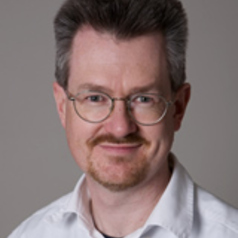
Rob's role at NTU embraces the full range of academic activities. His main teaching is on the Economics of European Union but, in most years, he contributes to a range of undergraduate and postgraduate modules on international and applied economics. He has also taught introductory level Economics and Industrial Economics. Rob places a great emphasis on research-informed teaching. Within the Division of Economics Rob is currently Module Leader for the Level 3 module Jean Monnet Europe and the World Economy, and Module Leader for the Level 3 Research Project in Economics. He is also the Division's Placement co-ordinator. He is a member of the NBS Research Policy Group. He chairs the NBS School Research Ethics Committee and is a member of the College Research Ethics Committee. Rob's teaching on the Economics of the EU has received financial support from the European Commission. In 2004 he was awarded 'Jean Monnet' funding to support the creation and initial years' teaching of his module Europe and the World Economy. In 2010 he was awarded a Jean Monnet Chair in European Economic Studies, again with funding which supports his teaching and his teaching-related research activities. In 2012 Rob was awarded Nottingham Trent Students Union's Outstanding Teaching Award, 2012, for NBS. In 2013 Rob was one of only two academics at NTU to receive the inaugural Vice Chancellor's Teaching Award. Rob's research is in applied economics and public policy analysis. He has particular expertise in EU policies, the WTO and agricultural trade policies, and biofuels policies.
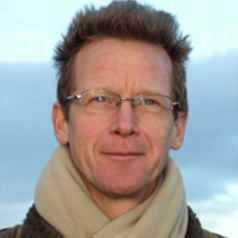
I joined the Department of Politics and IR in 2007; previously I worked at the University of Sheffield. I gained my PhD in 2005 from the University of Limerick. Currently I am a Reader in International Relations and Director of the Security and International Relations Programme. My research interests include humanitarian intervention, the responsibility to protect and international human rights law. I have published a number of books, articles and book chapters on issues related to humanitarian intervention. I am part of a group which was awarded a grant by the ESRC for a two year project on “The Responsibility to Protect and Prosecute: The Political Sustainability of Liberal Norms in an Age of Shifting Power balances”. I am also Co-Convenor of the BISA Working Group on Intervention and the Responsibility to Protect. I have regularly contributed to current affairs debates through newspapers, blogs, radio and television. Currently I am supervising three PhD students and I am a member of BISA, the ISA and the PSAI.
Jody Agius Vallejo is Associate Professor of Sociology at the University of Southern California. She will be associate director of the Center for the Study of Immigrant Integration in Fall 2016. Her research concentrates on the Latino middle class, Latino elites, and patterns of wealth accumulation among Latinos and Chinese Americans . Her book, Barrios to Burbs: The Making of the Mexican American Middle Class (Stanford University Press, 2012) examines mobility mechanisms, socioeconomic incorporation, racial/ethnic and class identities, patterns of giving back to kin and community, and civic engagement among middle-class Mexican Americans. Her second book, in progress, investigates the rise of the contemporary Latino elite. Her research has been funded by The National Science Foundation, The American Association of University Women, The Lusk Center for Real Estate, the American Sociological Association’s Fund for the Advancement of the Discipline, the John Randolph and Dora Haynes Foundation, the UC Davis Center for Poverty Research, and the USC Office of the Provost. She has published in peer-reviewed journals such as Social Forces, Ethnic and Racial Studies, Latino Studies, Social Science Research, City & Community, and Sociological Forum. Her research has received coverage in print, radio, and television including the New York Times, Los Angeles Times, NBC Latino, La Opinión, BBC World News, BBC Mundo, Agencia EFE, ABC’s Vista LA, OC Weekly, NPR, KCRW and KCPP.
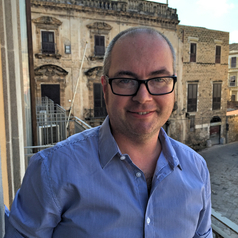
Bert Scholtens is Professor of Banking and Finance at the University of St Andrews School of Management. He also holds the position of Professor at the Faculty of Economics and Business at the University of Groningen, The Netherlands. Bert Scholtens earned his Masters in Economics at the University of Groningen. After his graduation, he worked with the Postbank in Amsterdam. He completed his PhD on international financial intermediation at the University of Amsterdam in 1994. He became assistant professor at the University of Amsterdam before he was an associate professor at the University of Groningen. In 2004, he became a professor in Groningen. In 2012, he was appointed professor in St Andrews. Bert Scholtens' research is directed at international financial intermediation and environmental finance and economics. He focuses on finance, responsible investment and energy and publishes in international academic journals. He currently teaches about portfolio management, corporate governance, and credit risk analysis and coaches both Bachelor and Masters students in completing their thesis. He also supervises several PhD students, both in Groningen and St Andrews. His research interests include Corporate Social Responsibility, Socially Responsible Investing, Energy Finance, Financial institutions (banks, pension funds, insurance companies, mutual funds, etc.), International finance, Financial intermediation, Financial systems and Environmental economics.
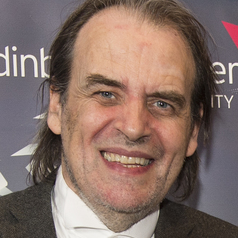
Bill Buchanan is a Professor in the School of Computing at Edinburgh Napier University, and a Fellow of the BCS and the IET. He currently leads the Centre for Distributed Computing, Networks, and Security and The Cyber Academy, and works in the areas of security, Cloud Security, Web-based infrastructures, e-Crime, cryptography, triage, intrusion detection systems, digital forensics, mobile computing, agent-based systems, and security risk. Bill has one of the most extensive academic sites in the World, and is involved in many areas of novel research and teaching in computing. He has published over 27 academic books, and over 200 academic research papers, along with several awards for excellence in knowledge transfer, and for teaching, such as winning at the I ♥ my Tutor Awards (Student voted), Edinburgh Napier University, 2011, 2014 and 2015, and has supervised many award winning student projects. He was named as one of the Top 100 people for Technology in Scotland for 2012, 2013, 2014 and 2015. In Feb 2016, he was also included in the FutureScot "Top 50 Scottish Tech People Who Are Changing The World". He has been an external examiner at many universities, and is currently an external examiner at Royal Holloway (University of London). Also with this he has been involved in many PhD completions and many external PhD examinations (including recent ones in Newcastle, Liverpool, and Dublin). He is part of many editorial boards for conferences and reviews in a wide range of journals. Bill regularly appears on TV and radio related to computer, and has given evidence to the Justice Committee at the Scottish Parliament, along with being part of the BBC Scottish Independence Team of Experts (specialty: Cyber Security). This includes appearances on Newsnight Scotland, Good Morning Scotland, and Radio 5 Newsdrive, and was named as one of the Top 100 people for Technology in Scotland for the last two years. Along with this he gives many keynote/endnote talks at conferences, including at NISC 2014 on Heartbleed. He has led many innovations in teaching related to Cyber Security, including with the DFET Cloud Training project and leads the Scottish EU Centre of Excellence for Law Enforcement Training within the 2Center Network, along with being part of the setup of SIPR (Scottish Institute for Police Research). He currently leads on a range of training projects with Police Scotland and a range of industry partners. Presently he is working with a range of industrial/domain partners, including with the Scottish Police, the finance sector, and many large and small companies. He has a long track record in commercialisation activities, including being a co-founder of Zonefox and safi.re, which of which progressed from PhD work to a university spin-out, though the Scottish Enterprise funded Proof-of-Concept scheme. Over the past three years he has received direct funding of over £2million related to computer security, which has had a major impact on an international basis. Both spin-outs build on patented technology, including one which has patenting protection over three territories around the World. His current work includes a €500,000 project which aims to build an advanced training infrastructure for Cyber Security and Digital Forensics. Previous projects have included collaboration of TSB Grants with Microsoft plc on a £2million project which aimed to improve the care of the elderly using Trusted Cloud-based services, and with Chelsea and Westminster Hospital on a next generation Health Care platform. This also matches up with other funded projects with the FSA and the Scottish Police. He has created many innovations in teaching related to computer security, including being sole author on http://networksims.com (Cisco Simulators), and http://asecuritysite.com (one of the most extensive computer security site for academic material in the World) and in creating DFET (an innovative Cloud training infrastructure for security and digital forensics training). His lectures are online at http://youtube.com/billatnapier, with over 500 on-line lectures, and has over 1,500 subscribers, with more than 1million minutes watched. He regularly appears on the BBC radio and TV talking about Cybercrime (see http://youtube.com/billatnapier). Bill is also a member of the ICT in Education Excellence Group, which has been setup by the Scottish Government in 2012, and innovated the Christmas Cyber lecture for Schools in Scotland (attended by over 3,000 pupils in Dec 2013). He has done extensive work with Schools in promoting ICT, especially focused on computer security, and created the Bright Red Digital Zone, which now includes most of the subjects with the N5 (CfE) subjects in Scotland (brightredbooks.net), and which has extensive coverage of areas such as computer security.
Prof. James A. Sweeney's research is about the after-effects of conflict: principally human rights in transitional democracies, and the rights of refugees. His monograph, 'The European Court of Human Rights in the post-Cold War Era: Universality in Transition' was published in hardback by Routledge in November 2012, and in paperback in 2014. His work on the human rights of failed asylum seekers was cited by the House of Lords in the case of R (on the application of M) v Slough BC [2008] UKHL 52, by the Court of Appeal in R. (on the application of SL) v Westminster City Council [2011] EWCA Civ 954, and most recently in R. (on the application of Refugee Action) v Secretary of State for the Home Department [2014] EWHC 1033 (Admin). In the latter case Home Secretary Theresa May was found to have acted irrationally by freezing the level of cash support to be provided to asylum seekers to meet their essential living needs, for the financial year 2013/14, at the rates which had applied since 2011. Prof. Sweeney has acted as an expert advisor to the Council of Europe in relation to freedom of assembly projects in Armenia, Azerbaijan (with the Venice Commission), Georgia, and Kosovo. In March 2011 he delivered human rights legal training to judges of the Ukrainian Supreme Court as part of a UK Foreign and Commonwealth Office project. Likewise in 2013 and 2014 he convened a series of workshops on human rights and judicial interpretation for the Constitutional and Supreme Courts of Kosovo, on behalf of the FCO. Throughout 2009 he acted as an expert advisor to the EU's Committee of the Regions as it prepared its Opinion on reforms to the Common European Asylum System. Prof. Sweeney joined Lancaster University Law School in 2013. Prior to that, he has worked at Durham, Newcastle and Hull. From 2011-2013 he was Deputy Director of Durham Global Security Institute.