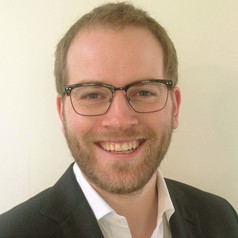
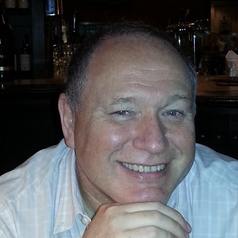
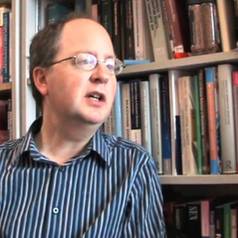
PhD Candidate, University of Melbourne I am a PhD Candidate at the University of Melbourne, researching lobbying activities and the effectiveness of advocacy advertising campaigns in Australia and the United States. My research expertise includes economic philosophy, lobbying, political and advocacy advertising, and the political economy of gun-control. I currently tutor and lecture in political science and political economy at the University of Melbourne. I am also the course coordinator and lecturer in environmental economics at RMIT University. I have undergraduate and masters degrees majoring in politics and economics.
Richard Faragher is Professor of Biogerontology at the University of Brighton and is past Chair of both the British Society for Research on Ageing and the International Association of Biomedical Gerontology. He read Biochemistry at Imperial College, London and undertook doctoral studies at the University of Sussex. His primary research interest is the relationship between cellular senescence and organismal ageing. In 2002 his work on the accelerated ageing disease Werner’s syndrome led to the award of the Royal Pharmaceutical Society Conference Science Medal for outstanding scientific achievement. In 2005 he became the first ever scientist to receive a Help the Aged award for his championship of older people and the use of research for their benefit. In 2010, he became the first ever British recipient of the Paul F Glenn Award for research into the biological mechanisms of the ageing process. He is a visiting Professor at the Moscow Institute of Physics and Technology and serves on the Editorial Boards of "Age" and "Mechanisms of aging and development". Professor Faragher has served as a member of the Research Advisory Council of the Charity Research into Ageing and on strategy and funding panels for the BBSRC, the US National Institutes on Ageing and the European Union. From 2005-2008 he was Co-director of the BBSRC-EPSRC SPARC programme, a research network designed to build national capacity to conduct inter-disciplinary ageing research. He is currently Chair of the Scientific Advisory Board of the British Society for Research on Ageing and a member of the Board of Directors of the American Aging Association. In 2015 he became president-elect of the latter society and the first British citizen to be elected to the Board of Directors of the American Federation for Aging Research, the leading US non-profit organization supporting and advancing healthy aging through biomedical research.
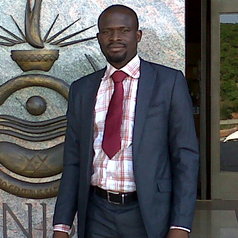
Dr Oludayo Tade teaches Sociology of Deviant behaviour and Social problems at the Department of Sociology, University of Ibadan. He holds a PhD in Criminology. His research interests include crime, Media Studies, child labour, child trafficking, Family Studies, transactional sex and cybercrime. He is an associate member of the Nigerian Institute of Public Relations (NIPR). Dr Tade was a recipient of the University of Ibadan Postgraduate School Scholar Award in 2008-2010. He was a grantee of the Institute for Money, Technology and Financial Inclusion (IMTFI), University of California, Irvine, United States of America in 2013. He is currently a 2015 grantee and the principal investigator on "Dimensions of Electronic Fraud and Governance of Trust in Nigeria's cashless ecosystem, being funded by IMTFI.
Professor Liam Kennedy is Director of the Clinton Institute for American Studies at University College Dublin. He has diverse research interests and teaching experiences, spanning the fields of American cultural and media studies, globalisation and Irish-US relations. He is the author of Susan Sontag: Mind as Passion (1995) Race and Urban Space in American Culture (2000) and Afterimages: Photography and US Foreign Policy (2016). He is co-editor of Urban Space and Representation (1999) City Sites: An Electronic Book (2000), The Wire: Race, Class and Genre (2013) and The Violence of the Image (2014), and editor of Remaking Birmingham: The Visual Culture of Urban Regeneration (2004). Professor Kennedy's work is interdisciplinary, blending cultural and political modes of scholarly analysis, and represents American Studies as a valuable framework to study both American domestic and international affairs. He is currently researching a monograph on globalization and American culture, and preparing two edited books - on neoliberalism and American literature and on diaspora and diplomacy.
I am a Professor of Computer Science at the University of Nottingham (UK). I am currently the Vice-Provost (Research and Knowledge Transfer) at our campus in Malaysia. I am also CEO of a commercialisation company (MyResearch Sdn Bhd). Prior to entering academic , I worked in industry for almost 20 years. I am Editor-in-chief of the IEEE Transactions of Computational Intelligence and AI in Games, as well as an Associate Editor of nine other journals. My research interests include: Operational Research Evolutionary Computing Scheduling Games
John's main areas of research focus on macroeconomics, political economy and methodology, with a specific interest in the processes of economic globalisation and their policy consequences. He obtained a PhD in Economics from the University of Nottingham in 1993 and has been a senior lecturer at the University of Sheffield since 2006. Jonathan graduated from the University of Cambridge in 1985 and obtained a PhD in Economics from the University of Nottingham in 1993. He was then an Economics Research Officer at the Open University on the Globalisation and the Advanced Industrial State project from 1993 to 1995. He was appointed as Baring Fellow in Political Economy at the University of Sheffield in 1995 and then as a Lecturer in Economics since 1999. He was promoted to Senior Lecturer in 2006. Jonathan is convenor of the Post-Keynesian Economics Study Group, a member of the College of Reviewers for the Canada Research Chairs Program and a member of the Stirling Centre for Economic Methodology. Previously he was also Deputy Director of the Political Economy Research Centre at the University of Sheffield.