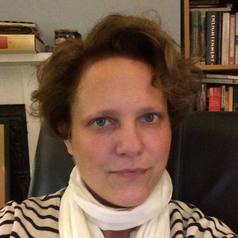
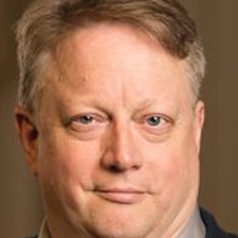
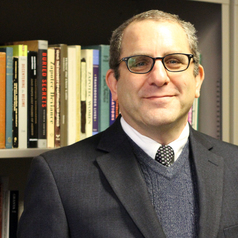
Marieke Riethof has a PhD in Political Science and International Relations from the University of Amsterdam and is a lecturer in Latin American Politics at the University of Liverpool. Her past research and publications focused on political strategies of the labour movement in Brazil, including the Latin American regional context. She is currently finishing a book on the trajectory and political strategies of the Brazilian labour movement. Her new research projects focus on Brazilian foreign policy in the context of international relations in Latin America. The project examines traditional as well as non-traditional areas of foreign policy, including environmental politics and human rights. In May 2011, she was an expert witness at the House of Commons Foreign Affairs Committee on UK-Brazil relations and Brazil's emerging global role. A second project deals with the role of transnational solidarity movements and exile in the opposition to military dictatorship in Chile with an initial focus on the UK.
Steven is an associate lecturer of criminology and sociology at the University of York. He attained his BA in Political Science at UCLA in 2007. Following the completion of an MA in Comparative Politics at the University of York in 2009, he received his PhD in Politics from the University of York in 2016. His research interests include UK asylum housing, EU and non-EU migration and state responses to immigration trends.
His research focuses on the psychology underlying human misbelief. In his most widely-cited work, he showed that people tend to hold flattering opinions of their competence, character, and prospects that cannot be justified from objective evidence—a phenomenon that carries many implications for health, education, the workplace, and economic exchange. He also examines how many of these same processes also injure judgments made by groups. Dunning’s other research focuses on decision-making in various settings. In work on economic games, he explores how choices commonly presumed to be economic in nature actually hinge more on psychological factors, such as social norms and emotion. In particular, he documents that people trust complete strangers in situations in which the economic analysis would suggest no trust whatsoever. Finally, Dunning explores how people’s preferences and wishes distort their judgements and conclusions. In past work, he has shown how the influence of motivated reasoning extends even down to shape perceptual experience, such as vision and hearing.
I am interested in how political parties and voters adapt to new situations, in particular how parties and voters have responded to devolution in the UK and beyond. I have conducted research on party organisational changes in Spain and Britain, investigating and codifying the relationship between the central level of statewide parties and their ‘regional’ branches. In the context of devolution, I am increasingly interested in the issue of citizens’ response to devolution and citizens’ understanding of devolution, and what they mean for democratic accountability. In addition, I have recently developed an interest in ‘unusual’ voting situations such as external voting (expatriate vote in national elections) and the vote of non-national EU citizens in the local, devolved and European elections (EU citizens voting in a country other than their own). Finally, I remain interested in French politics. I have become country co-ordinator (France) for the Political Party Database Working Group, a research network that studies and gathers comparative quantitative data on the organisation of political parties across 19 countries. I am the co-convenor of the ECPR Standing Group on Federalism and Regionalism and book review editor for Regional and Federal Studies. I am also on the editorial board of the journal Fédéralisme et Régionalisme.
I graduated from UWA in 1985 with a Bachelor of Science (Honours) in Psychology, followed by a PhD in Psychology from UWA in 1992. In both degrees I completed research projects in Cognitive Psychology, the study of processes underlying thought. The focus of my PhD project was cognitive skill acquisition, which is my main area of expertise today.
I am a cultural anthropologist and my research focuses on several themes including: Migration and Refugees, Economics and Development, Nutrition, and Methodology. Since the early 1990s I have studied migration from communities in Oaxaca, Mexico to the US with support from the National Science Foundation. I also conduct comparative research on Mexican, Dominican and Turkish migration. My work on food and eating insects in Mexico was supported by the National Geographic Society. I have served as an expert witness on several criminal and immigration/refugee cases and consulted on marketing and cultural issues with Fortune 500 companies. In my latest book, EATING SOUP WITHOUT A SPOON: ANTHROPOLOGICAL THEORY AND METHOD IN THE REAL WORLD, I explore how to conduct research. You can learn more at: http://utpress.utexas.edu/index.php/books/cohen-eating-soup-without-a-spoon