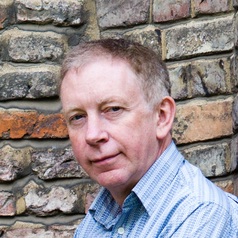
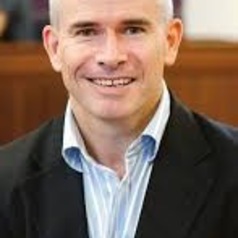
For more than three decades Rob Livingstone has amassed senior managerial experience, substantially as CIO in multinational corporations. He is also an author, columnist, speaker and regular news media commentator on the implications of new and disruptive technologies. As a Fellow of the University of Technology, Sydney’s Faculty of Engineering and IT, Rob lectures to higher‐degree students on leadership, strategy and innovation. He is also a Research Associate at UTS's Communications Law Centre, an independent non‐profit, public interest centre specialising in communications, media and online law and policy. Since 2010, Rob has been running his advisory practice, Rob Livingstone Advisory Pty Ltd, and is now a sought‐after mentor, consultant and industry advisor. Rob’s latest book 'Direction through Disruption', deals with one of the most serious career challenges facing us today – how to plan and pursue a successful knowledge intensive career in the age of globalisation and disruptive digital technologies. His earlier book, 'Navigating through the Cloud', has provided invaluable insight to a wide range of corporations weighing up the risks and rewards that so many new technologies embody.
Allison M. Macfarlane is Professor of Science and Technology Policy at George Washington University and Director of the Center for International Science and Technology Policy at the University’s Elliott School of International Affairs. She recently served as Chairman of the U.S. Nuclear Regulatory Commission from July, 2012 until December, 2014. As Chairman, Dr. Macfarlane had ultimate responsibility for the safety of all U.S. commercial nuclear reactors, for the regulation of medical radiation and nuclear waste in the U.S., and for representing the U.S. in negotiations with international nuclear regulators. She was nominated by President Obama and confirmed by the Senate. She was the agency’s 15th Chairman, its 3rd woman chair, and the only person with a background in geology to serve on the Commission. Dr. Macfarlane holds a doctorate in geology from the Massachusetts Institute of Technology and a bachelor's of science degree in geology from the University of Rochester. During her academic career, she held fellowships at Radcliffe College, MIT, Stanford, and Harvard Universities. She has been on the faculty at Georgia Tech in Earth Science and International Affairs and at George Mason University in Environmental Science and Policy. From 2010 to 2012 she served on the Blue Ribbon Commission on America's Nuclear Future, created by the Obama Administration to make recommendations about a national strategy for dealing with the nation's high-level nuclear waste. She has served on National Academy of Sciences panels on nuclear energy and nuclear weapons issues. Dr. Macfarlane has also chaired the Science and Security Board of the Bulletin of Atomic Scientists, the folks who set the “doomsday clock.” Her research has focused on environmental policy and international security issues associated with nuclear energy. Her expertise is in nuclear waste disposal, nuclear energy, regulatory issues, and science and technology policy. As Chairman of the Nuclear Regulatory Commission, she pushed for a more open dialogue with the public, for greater engagement with international nuclear regulators and, following the Fukushima accident, for stricter safety protocols at U.S. nuclear reactors. She also advocated for a more family-friendly workplace. She has spoken on a wide range of topics, from women and science to nuclear policy and regulatory politics. In 2006, MIT Press published a book she co-edited, Uncertainty Underground: Yucca Mountain and the Nation's High-Level Nuclear Waste, which explored technical issues at the proposed waste disposal facility at Yucca Mountain, Nevada. Dr. Macfarlane has published extensively in academia and her work has appeared in Science, Nature, American Scientist, The Bulletin of Atomic Scientists, and Environment Magazine.
Melissa J. Ferguson (melissaferguson[at]cornell.edu) is an experimental social psychologist. She received her doctorate in social psychology from New York University in 2002 and then joined the psychology department at Cornell University. Her research focuses on the implicit and non-conscious cognitive processes that enable evaluation, goal-pursuit, self-control, and social behavior. Three recent topics of research in the lab are self-control (what predicts success?), first impressions (how do they form, change, and influence behavior?), and ideology (how do ideological symbols affect us?). Her research has appeared in outlets such as the Journal of Personality and Social Psychology, Psychological Science, Trends in Cognitive Sciences, Journal of Experimental Psychology: General, and the Proceedings of the National Academy of Sciences and her work has been funded by the National Science Foundation and the National Institutes of Health. She is also currently a Public Voices Fellow of The OpEd Project.
John Quiggin is an Australian economist, a Professor and an Australian Research Council Federation Fellow and a Laureate Fellow at the University of Queensland, and a member of the Board of the Climate Change Authority of the Australian Government. He was awarded the Australian Social Science Academy Medal in 1993 and a Fellowship in 1996, received the 1997 and 2000 Sam Richardson of the Institute of Public Administration, Australia, received the 2001 Editors Prize of the Australian Journal of Agricultural Economics, a Fellowship of the Australian Institute of Company Directors in 2002, and a Distinguished Fellowship of the Australian Agricultural and Resource Economics Society in 2004. He is a Fellow of the Econometric Society and in 2011 received the Distinguished Fellow Award of the Economic Society of Australia. A prolific author and blogger, Professor Quiggin's most recent book, Zombie Economics: How Dead Ideas Still Walk among Us, was published in October 2010 from Princeton University Press.
Dr Hugh Hunt is a Reader in Cambridge University's Engineering Department and recipient of the Royal Academy of Engineering Rooke Award for the public promotion of engineering. His research interests include railway noise and vibration, gyroscopes and boomerangs, wave power, vibration of bell towers, and renewable energy. He is Keeper of the Clock at Trinity College Cambridge. His television documentaries on Channel 4 (UK), PBS Nova (USA), Discovery, History Channel, SBS (Australia) include: 2011 Dambusters, building the Bouncing bomb (Bombing Hitler's Dams) 2012 Escape from Colditz (Escape from Nazi Alcatraz) 2012 Digging the Great Escape 2013 Zeppelin Terror Attack 2014 D-day 360 2015 Building Hitler's Supergun: The Plot to Destroy London.
Luke McNamara is a Professor in the Faculty of Law at UNSW. His primary research fields are criminal law and criminal justice, and human rights law. He is currently researching the impact of criminal law, policing and local government laws on the use of public spaces, focusing on the history and operation of laws concerned with offensive language/behaviour, public intoxication, consorting and busking. He recently completed (in collaboration with Professor Kath Gelber, School of Political Science and International Studies, University of Queensland) an ARC Discovery Project funded study of the impact of hate speech laws on public discourse in Australia.