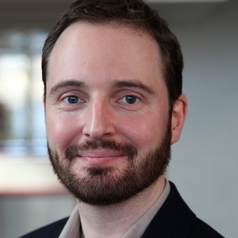
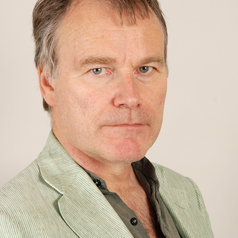
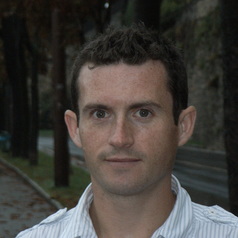
Education M.A., Philosophy, University of Vienna M.S., Formal Logic, University of Vienna M.Sc.E., Computer Engineering, Vienna University of Technology Ph.D., Philosophy, University of Vienna M.A., Computer Science, Indiana University Ph.D., Jointly Cognitive and Computer Science, Indiana University Research Artificial Intelligence Artificial Life Cognitive Modeling Complex Systems Foundations of Cognitive Science Human-Robot Interaction Multi-scale Agent-based Models Natural Language Processing
I am a Lecturer in Spanish at Aston University. My research focuses primarily on Spanish and Latin American (particularly Mexican) politics and social movements. Before moving to Aston, I was a Teaching Fellow in Spanish and European Studies at the Department of European and International Studies of King’s College London; I have also held academic positions in the Department of Political Economy at King’s College London and in the Politics and International Relations section at the New College of the Humanities. I completed a PhD in Spanish and Mexican Politics at King’s College London in 2014, and I also hold an MSc in European Identities from the London School of Economics, and a BA in International Relations from ITESO University. Pablo has also held research positions at the Center for Advanced Study in the Social Sciences at the Juan March Institute in Madrid, and at the Department of International Relations at ITESO University. He has presented his research internationally, and has commented on Spanish, Latin American and European politics for the BBC, BBC World, CNBC, CNN, Canadian Television, The Independent, Monocle Radio, Voice of Russia, Share Radio and many other media outlets.
Senior Lecturer in International Politics at the Dept of Political Science and Interational Studies and the Institute for Conflict, Cooperation and Security, University of Birmingham. Leader of an ESRC seminar series on The Future of American Power, running 2013-14. Former convenor of the US Foreign Policy group of the British International Studies Association, 2008-12. I blog at www.beingrealistic.com, and you can follow me on Twitter @adamjamesquinn or Facebook, https://www.facebook.com/#!/adam.quinn.161 My work profile is at: http://www.birmingham.ac.uk/staff/profiles/government-society/quinn-adam.aspx
I lecture on International Political Economy (IPE) and international business. I joined TYMS full time in January 2011, moving from Sheffield Hallam University where I was Senior Lecturer in International Business and Governance. Before that I was Head of MA International Studies at York St John University. I’ve a long association with York, being a graduate (MA Linguistics and ELT, 1990) and working as an Associate Lecturer in three departments over several years. In 2006 I won a National Teaching Fellowship from the Higher Education Academy. I have always had a multidisciplinary approach to my work, having taught politics and International Relations, management, teacher training, English Language Teaching, modern foreign languages, European studies, and educational studies. In 2006 I was appointed as one of 15 UK Socrates Erasmus Bologna Experts sponsored by the European Commission and the British Council. This involved promoting reform in the European Higher Education Area (EHEA). I am the author of Europe, the State and Globalisation (Longman, 2005) and numerous books in the field of English Language Teaching and Business Communication. I am Director of Postgraduate Programmes in York Management School. I occasionally run half marathons and like listening to the music of Frank Zappa, Miles Davis, and Radiohead.
David R. Keith is an Assistant Professor of System Dynamics at the MIT Sloan School of Management. David uses simulation modelling to examine the diffusion of new technologies in the automotive industry. His research examines corporate strategy and public policy issues including spatial patterns of technology adoption, supply constraints in production, competition between existing platforms and emerging alternative fuel vehicles, and the impact of new technologies on energy consumption and environmental impacts. David has received several awards for his research, including a Fulbright scholarship, an Alcoa Foundation Fellowship from the American-Australian Association, a Martin Family Sustainability Fellowship from the MIT Energy Initiative, and the Dana Meadows award recognizing the best student paper at the International System Dynamics Conference. David previously worked for Holden, the Australian subsidiary of General Motors, and URS Corporation, a global engineering and environmental consultancy. David holds BEng (Hons.), BCom, and MEnv degrees from the University of Melbourne (Australia) and a PhD from the MIT Engineering Systems Division.
David Eiser is a Research Fellow in Economics at the University of Stirling, and at the Centre on Constitutional Change. He specialises in the economics of constitutional change, regional economics, and labour markets. David has published extensively on the economics of devolution in the UK, particularly in regard to fiscal issues in Scotland. He co-edited work on the economics of Scottish independence published by the Scottish Economic Society, and has published a number of papers on inequality in Scotland. David has given evidence to various Scottish Parliament Committees, and published research for the Scottish Government on issues including, the integration of employment and skills services, broadband rollout, and the Commonwealth Games.