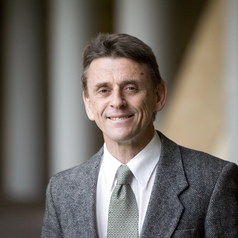
Tommaso is a chartered accountant (ICAS) employed as a lecturer in Accounting. Until July 2014, Tommaso Faccio was a Transfer Pricing Senior Manager in the Deloitte LLP International Tax team and has significant experience advising multinationals on complex international tax issues, particularly in the area of Transfer Pricing and Permanent Establishment, first at Ernst and Young LLP and then at Deloitte LLP. He is the module convenor of the following modules: Advanced Financial Reporting Business Law A Principles of Taxation Tax Compliance
Dr Martin Moore is director of the Centre for the Study of Media, Communication and Power, and a Senior Research Fellow in the Policy Institute at King’s College London. He was previously founding director of the Media Standards Trust (2006-2015) where he directed the Election Unspun project and wrote extensively on the news media and public policy. Recent research publications include: Election Unspun: Political Parties, the press, and Twitter during the 2015 election campaign (2015); Who was hacked? An investigation into phone hacking and its victims (2015); Addressing the Democratic Deficit in Local News through Positive Plurality (2014) and IPSO: An Assessment (2013). He is author of The Origins of Modern Spin (Palgrave Macmillan 2006) and ‘Plurality and Local Media’ in Media Power and Plurality, ed Steven Barnett and Judith Townend (Palgrave Macmillan, 2015).
Professor C John Taylor is Head of the Australian School of Taxation and Business Law (Atax) in the UNSW Australia, Business School. He received a BA, an LL B and an LL M(Hons) from the University of Sydney and a Grad Cert in Higher Education from UNSW. Professor Taylor’s main areas of research have been: capital gains tax; corporate – shareholder taxation; taxation treaties; and tax simplification. He has been a contributing author to all editions of Understanding Taxation Law (Lexis Nexis, 2002, 2004, 2009, 2010, 2011, 2012, 2013, 2014 and 2015). The journals he has published in include: Melbourne University Law Review, British Tax Review, Canadian Tax Journal, Bulletin For International Fiscal Documentation, Australian Tax Forum, E-Journal of Tax Research and Australian Tax Review. John was the Inaugural Honorary Research Fellow of the Taxation Institute of Australia and in that capacity was the principal author of Beyond 4100: A report on measures to combat rising compliance costs through reducing tax law complexity, Taxation Institute of Australia, 2006. From 2006 to 2007 John conducted contract research for the Commonwealth Department of the Treasury on anti avoidance provisions in the income tax. John has been a Visiting Professor/Visiting Scholar at Harvard University, The University of Cambridge, Leiden University, The International Bureau of Fiscal Documentation, The University of British Columbia, The University of Western Ontario and the Plunkett Centre For Co-operative Studies.
I am a partner with aviation and aerospace law firm HodgkinsonJohnston. I am also an associate professor in the Law School at the University of Western Australia, and executive director of EcoCarbon (a UNFCCC-accredited NGO) Displacement. My areas of research are aviation law and climate change. In terms of aviation, I was formerly Director of Legal Services at IATA (the organisation of the world's airlines) in Montreal, and edited the book 'Essential Documents on International Air Carrier Liability.' In terms of climate change, I led an international project team which drafted the Peninsula Principles on Climate Displacement. I am also the coauthor of the leading text on climate change law in Australia, 'Global Climate Change: Australian Law and Policy' (LexisNexis), and was the general editor of the looseleaf service, also published by LexisNexis, 'Climate Change Law and Policy in Australia.'
James Morley is a Professor of Economics and the Associate Dean (Research) of the Business School at the University of New South Wales. He received his PhD from the University of Washington in 1999. Before moving to Australia in 2010, he was a faculty member at Washington University in St. Louis (1999-2010) and a Research Fellow at the Federal Reserve Bank of St. Louis (2004-2010). He has worked regularly with the forecasting firm Macroeconomic Advisers and has held a number of visiting positions, including at the Bank of Canada, Bank Negara Malaysia, and the Bank for International Settlements Asian Office in Hong Kong. He recently served as the President of the Society for Nonlinear Dynamics and Econometrics (2011-2014) and is a founding member of the Shadow RBA Board (2011-), an Academic Fellow at the Reserve Bank of New Zealand (2014-), and Co-Editor of The Economic Record (2015-). His research has been published in many top academic journals and focuses on the empirical analysis of business cycles, stabilization policy, and sources of persistent changes in macroeconomic and financial variables.
Dr David Jones has a PhD in Meteorology/Climate, A BSc majoring in meteorology, chemisty and mathematics, and a Graduate Dipolma in Forecasting. David Jones received his PhD from the Earth of School Science at Melbourne University. His research has covered numerous aspects of climate including seasonal prediction, spatial analysis, climate change monitoring and climate change detection. Dr David Jones is Manager of Climate Monitoring and Prediction at the Australian Bureau of Meteorology. The Climate Monitoring and Prediction Sections of the Bureau are responsible for monitoring Australian climate variability and change, and the prediction of Australian climate on intraseasonal (a few weeks) to interannual timescales. The Bureau presently operates under the authority of the Meteorology Act 1955, which requires it to report on the state of the atmosphere and oceans in support of Australia's social, economic, cultural and environmental goals. David Jones does not consult to, own shares in or receive funding from any company or organisation that would benefit from this article, and has no relevant affiliations.