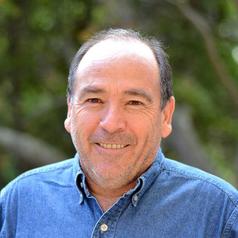
Our research group uses the concepts of agroecology to obtain a deep understanding of the nature of agroecosystems and the principles by which they function. Throughout our research and writings we have aided in the emergence of agroecology as the discipline that provides the basic ecological principles for how to study, design, and manage sustainable agroecosystems that are both productive and natural resource conserving, and that are also culturally-sensitive, socially-just and economically viable. In particular, our research has focused on the ways in which biodiversity can contribute to the design of pest-stable agroecosystems. Several of our studies concentrate on elucidating the effects of intercropping, covercropping, weed management, and crop-field border vegetation manipulation on pest population density and damage and on the mechanisms enhancing biological control in diversified systems. Our research has also extended into Latin America where the enhancement of biodiversity in agriculture can help the great mass of resource-poor farmers to achieve year-round food self-sufficiency, reduce their reliance on chemical inputs and develop agroecosystems that rebuild the production capacities of their small land holdings. Our approach has consisted of devising integrated farming systems emphasizing soil and water conservation, natural crop protection, and achievement of soil fertility and stable yields through integration of trees, animals, and crops. Much of this work is conducted through inter-institutional partnerships with NGOs, International Research Centers and Universities including networks such as SANE, ANGOC and CLADES, as well as international organizations such as UNDP and the CGIAR.
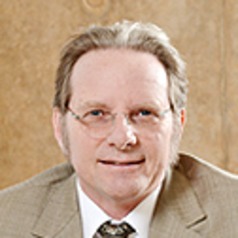
Georges Van Den Abbeele is Dean of the School of Humanities at the University of California at Irvine. He has previously served as dean at Northeastern University in Boston and at the University of California, Santa Cruz. He has also taught at Berkeley, Davis, Miami and Harvard universities. A native of Belgium, he earned a bachelor's degree from Reed College and the Ph.D. from Cornell University. He is the author of Travel as Metaphor, co-editor of Community at Loose Ends, A World of Fables and French Civilization and its Discontents. He has also published over fifty articles on travel narrative, critical theory, and Renaissance literature. He is a member of the European Academy of Sciences and recipient of the Blaise Pascal medal.
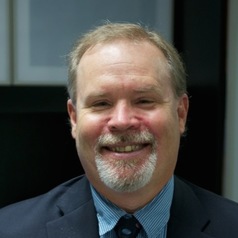
Dr. Weigold’s research interests are consumer behavior, health campaigns and warning labels. He has conducted research in advertising and impression management, information seeking, and political communication.
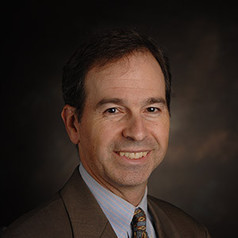
Russell Covey, professor of law, focuses his research on criminal law and procedure. He is the author of numerous articles on topics including the death penalty, police interrogation, crime and popular culture, jury selection, and plea bargaining. As a member of the National Association of Criminal Defense Lawyers, Covey has filed amicus briefs and represented pro bono clients in criminal appeals in the U.S. Court of Appeals for the 9th Circuit and the U.S. Supreme Court. Prior to joining the College of Law, he clerked for Judge Allyne R. Ross of the U.S. District Court, E.D.N.Y., practiced law specializing in criminal and civil litigation at Williams & Connolly in Washington, D.C., and taught law at Whittier Law School in Southern California. Covey teaches courses in domestic and international criminal law and criminal procedure. He received his J.D. at Yale Law School, M.A. at Princeton University and A.B at Amherst College.
I am an American living in Europe taking advantage of the "outsider" perspective in order to understand my country's political system and how members of society interact within the United States. I received my BA in History from Bates College in Lewiston, Maine in 2002 and my MA in Political Science from Northeastern University in Boston, Massachusetts in 2004. Afterwards, I worked in international education in London, specifically helping American students adjust to life in the UK, and in the finance industry in Luxembourg. My research focuses on three essential questions: what is "populism," how does one define the Tea Party and Occupy organisations, and how are they all related? Concerning "populism," I argue that a dichotomy exists regarding how this label is conceived today that appeared after the emergence of the Populist Movement of the late nineteenth century. For the Tea Party and Occupy organisations, I maintain that they are more complex than many originally imagined and do not conform to the general anti-government and anti-capitalist activism respectively applied to them. To conclude, I postulate that the elements within the Tea Party and Occupy organizations have inherited the role of the Populist Movement and are developing a new way to view populism in America.