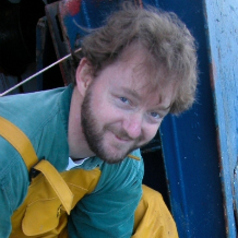
Bryce is a marine ecologist and fisheries biologist whose work has ranged from temperate estuaries to tropical coral reefs and the deep-sea. The central thread in his research has been to gain an increased understanding of the factors regulating marine populations and communities so as to ensure their sustainable utilisation. His work on deep-sea fishes was among the first to demonstrate their extreme longevity, and on coral reefs he provided new evidence for mechanisms of community regulation of prey fish by predators. More recently his focus has been on how to improve the management of fisheries through the use of predictive recruitment models, marine protected areas and stock enhancement. Bryce has also been especially active in promoting the sale and consumption of sustainable seafood by working with everyone from government ministers to fishermen, restaurants and supermarket chains.
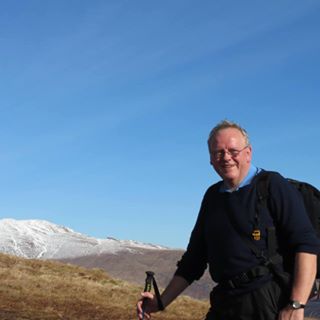
I’ve enjoyed a varied career ranging from early days in pure science (principally geology), through water resources and environmental engineering (especially groundwater engineering), on through mining environmental engineering to energy engineering. There are several persistent threads running through all of these experiences, mainly to do with quantitative geoscience, numerical modelling of fluid flow and reactive mass transfer, and the translation of high-level conceptual principles into hands-on engineering solutions, invariably for purposes which I believe are socially and environmentally benign. I owe my formal education to two universities: Newcastle University in the UK (BSc and PhD), and Oklahoma State University in the USA (MS), where I spent two very happy years as a Harkness Fellow (1984-86), taking advantage of burgeoning activities in the then-National Centre for Groundwater Research and the EPA’s RSKERL Lab in Ada. My education was extended – and continues to be – by industrial experience, with Yorkshire Water, the National Rivers Authority, Centro Yunta (La Paz, Bolivia), NIREX, Northumbrian Water, Project Dewatering Ltd, Cluff Geothermal Ltd, Five-Quarter Energy Ltd and various consultancy missions worldwide. I spent just under 20 years at Newcastle University, where I: taught water and environmental engineering; founded and led the HERO research group (which won the University the Queen’s Anniversary Prize for the first time in 2005); established what is now the Sir Joseph Swan Centre for Energy Research; founded and Directed the Newcastle Institute for Research on Sustainability; served as the University’s Public Orator; and was the UK's first-ever Pro-Vice-Chancellor for Engagement. I joined Glasgow University in August 2012. I currently serve as Chair of the Global Scientific Committee of the Plant Earth Institute, an intermational NGO (of which I am also a Trustee) which aims to promote South-South collaboration in science-based projects that further the cause of 'scientific independence for Africa'. I am also a Trustee of Arran Community Energy, which is striving to implement renewables in a manner compatible with the important tourist industry of that beautiful Scottish island. My current research is entirely focused in the energy sector, and besides engaging with the broad challenges of keeping the lights on and homes and businesses warm whilst decarbonising our energy systems, I focus specifically on three areas in which my particular skills and experience can be put to best use: geothermal energy, underground coal gasification tightly coupled to carbon capture and storage, and hydropower.
Dr Sharron O'Neill joined Macquarie University in July 2011 as a Research Fellow in the International Governance and Performance (IGAP) Research Centre. Sharron came to academia from an established career as a financial accountant, primarily in healthcare and multi-national manufacturing firms where her responsibilities included financial accounting, treasury and the oversight of human resource and accounts payable and receivables departments. Sharron's current research focuses on corporate governance and accountability, particularly corporate social and non-financial performance. Her niche area of expertise is work health and safety (WHS) risk and performance measurement, both financial and non-financial. Sharron's WHS research has examined the measurement, reporting and analysis of WHS inputs, processes and outcomes using both traditional and contemporary performance indicators and has employed a variety of research methods. She has also undertaken and published research in the areas of environmental risk management, financial accounting, management accounting and professions. Sharron is a member of CPA Australia, the Safety Institute of Australia and the National Safety Council of Australia. She actively engages with industry, presenting her research, and providing advice on WHS performance measurement and reporting to members of the accounting, financial services, safety and legal professions as well as sustainability assurers and ASX100 firms. Sharron is currently leading a number of WHS projects that bring together the accounting profession, safety profession and Federal Government with a view to improving WHS governance and the reliability and decision-relevance of WHS performance information. Prior to her appointment to IGAP in 2011, Sharron held academic positions at the University of Sydney and at the University of Western Sydney where she was also Head of Postgraduate Programs. She has developed, coordinated and delivered undergraduate and postgraduate subjects in financial accounting, management accounting, accounting theory, social and environmental accounting and accounting for corporate social responsibility.
My research and publications have been driven by a number of overlapping interests in European history from roughly the 1930s to the 1960s. One central element of that interest has been the history of Belgium, which has been much overlooked in the historiography of the twentieth century, but which provides a fascinating example of the interplay of factors of class, of ideology and of linguistic identity. I have published two books on Belgium, most recently (in 2012) The Sorrows of Belgium, and am continuing with research on its post-1945 history, most notably the so-called question royale and the history of the working class. My other interests are broader and more comparative. I have been the editor of a number of collaborative volumes, including ones on political exiles during the Second World War, on Catholic politics, on political legitimacy in mid-twentieth century Europe, on democracy, on Europeanisation, and on violence. All of these, though diverse in subject manner, have been primarily concerned with the interface between the social and the political. In particular, I have been concerned to explore what made (and un-made) political stability in Europe across the upheavals of the 1930s and 1940s and into the post-war period, and I am currentlky writing a book about how democracy was understood and practised in Western Europe from the Second World War to the end of the 1960s. I am also involved in a number of collaborative research projects, involving historians across Europe, and am the editor of The English Historical Review. I teach widely on the history of this period, and have supervised a number of doctorates: on religion in France, on inter-war socialism, on aspects of Belgian history, on Catholic politics and intellectual trends. I should be happy to hear from prospective graduate students interested in working in fields relevant to my interests.
Jenny Adams, Associate Professor, holds a Ph.D. and an A.M. in English Literature from the University of Chicago, and a B.A. in English Literature and French Language and Literature from UCLA. She specializes in later medieval literature, and her current research focuses on medieval student debt and university life in England. She is at work on a monograph provisionally titled “Unlocking St. Frideswide’s Chest: Student Debt and University Life in Medieval Oxford.” With Nancy Bradbury (Smith College) she is also editing an essay collection titled “Objects of Medieval Women.” Her past research has been on chess and political organization in the late Middle Ages, and she has articles on this and other subjects in Studies in the Age of Chaucer, the Journal of English Germanic Philology, Essays in Medieval Studies, The Chaucer Review, Studies in Medieval and Renaissance Teaching, and the Journal of Popular Culture. Her book, Power Play: The Literature and Politics of Chess in the Late Middle Ages (University of Pennsylvania Press) appeared in 2006, and her edition of William Caxton's The Game and Playe of the Chesse (TEAMS Middle English Texts series) came out in 2009. She has received fellowships from the NEH, the ACLS, and the Newberry Library.