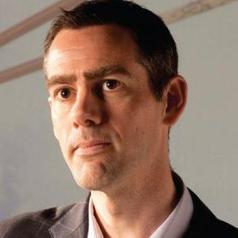
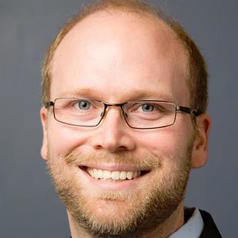
Jim Watson is Professor of Energy Policy at SPRU, University of Sussex, and joined UKERC as Research Director in February 2013. He was previously Director of the Sussex Energy Group at the University of Sussex from Dec 2008 to Jan 2013. Jim trained as an engineer at Imperial College London and has a PhD in science and technology policy from Sussex. He has 20 years’ research experience on a range of energy, climate change and innovation policy issues. His most recent research has focused on the uncertainties facing carbon capture and storage technologies, low carbon innovation in China, community energy in the UK, and the governance implications of sustainable infrastructure systems. He frequently advises UK government departments and other organisations. He was a lead expert with the UK Foresight project on Sustainable Energy Management and the Built Environment (2007-08), and has been a Specialist Adviser with House of Commons Committees on Environment, Food and Rural Affairs (2006-09) and Energy and Climate Change (2010-11). Jim has extensive international experience, including over ten years working on energy scenarios and energy innovation policies in China and India. In 2008, he spent three months as a Visiting Scholar at the Kennedy School of Government, Harvard University. Jim is a council member of the British Institute for Energy Economics, and was its chair in 2011. He is also a member of DECC and Defra’s social science expert panel.
David Cobham is Professor of Economics. His main research area has been UK monetary policy, but he also has substantial research interests in European monetary integration, central bank independence, financial systems and Middle Eastern economies. Most recently he has worked on the issue of monetary policy and asset prices, on the Bank of England's reaction function, on quantitative easing and on the classification of monetary policy frameworks. He is an active member of the committee of the Money, Macro and Finance Research Group, and Associate Editor of the Review of Middle East Economics and Finance. He has been Houblon-Norman Research Fellow at the Bank of England in 1987, and again in 2001. He was a member of the organising committee of a Norges Bank conference on Inflation Targeting Twenty Years On (June 2009), and member of the organising committee of a conference on 'The Euro Area and the Financial Crisis' , hosted by the National Bank of Slovakia (September 2010). He organised a conference on 'Monetary policy before, during and after the crisis', sponsored by SIRE and the MMF, at Heriot-Watt University in September 2011. Papers from the conference were published in a special issue of Oxford Economic Papers (April 2013). He co-edited, with Chris Adam and Ken Mayhew, an issue of the Oxford Review of Economic Policy (spring 2013) on 'The economic record of the Labour government, 1997-2010'. He organised a conference on 'Monetary analysis and monetary policy frameworks' in Edinburgh in April 2014, papers from which appeared in a special issue of The Manchester School, May 2015. He organised with Geore Bratsiotis a seminar on 'German macro: how it's different and why that matters' in Heriot-Watt, December 2015 (papers to be published shortly).
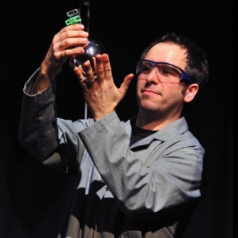
Dr Mark Lorch is a senior lecturer in biological chemistry at the University of Hull. He trained as a protein chemist, studying protein folding and function. His research now focuses on the chemistry of a broad range of biological systems including lipids, proteins and even plant spores. Mark is also a dedicated science communicator, he blogs at www.chemistry-blog.com and occasionally for the Guardian. He gives regular talks to schools, the public and conferences (sometimes all at once, at science festivals or TEDx) and he occasionally pops up on the radio and TV explaining science and technology to a public audience.
Research project: The suitability of global trade models for climate change mitigation strategy 2015 PhD in Environmental Science 2003 MSc in Geographical Information Science 2000 BSc in Geography and Mathematics
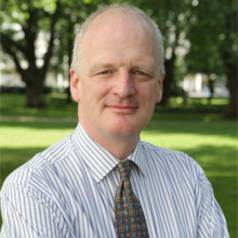
Andrew George was appointed Deputy Vice-Chancellor (Education and International) on 1 October 2013. He joined Brunel from Imperial College London where he was Professor of Molecular Immunology and Director of the Graduate School and the School of Professional Development. Andrew George did his first degree at the University of Cambridge, before going on to the Tenovus Laboratories in the University of Southampton to do his PhD with Professor Freda Stevenson, developing a vaccine for B cell lymphoma. He was awarded a Beit Memorial Fellowship and stayed in Southampton for his first postdoctoral period, before going to Dr David Segal’s laboratory in the National Institutes of Health (NIH), Bethesda, USA, where he used recombinant techniques to generate novel antibody molecules. In 1992 he returned to the UK as a lecturer at the Royal Postgraduate Medical School, Hammersmith Hospital, which merged with Imperial College in 1997. Andrew’s research has sought to understand and manipulate the immune system in order to treat disease, in particular to prevent the rejection of transplanted organs. He has also used mathematical models to understand how the immune system functions. In addition to his research, he has been involved in the ethical conduct and regulation of research. He is currently Chair of the UK’s National Research Ethics Advisors’ Panel and is on the Clinical Trials, Biologicals and Vaccines Expert Advisory Group for the Commission of Human Medicines/MHRA. He is a Governor of Richmond Adult Community College and the John Hampden School.
Prof. Vandervelde has two B.S. degrees in both Astronomy and Physics from the University of Massachusetts Amherst and an M.A. and Ph.D in Physics from the University of Virginia. Tom has extensive research experience in optoelectronics and photonics. His research group, The Renewable Energy and Applied Photonics (REAP) Labs, at Tufts University works on developing new optolectronic materials and devices to garner a better understanding of how light and matter interact while creating a better future for us all. Tom is an Associate Professor of Electrical and Computer Engineering, Adjunct Professor of Mechanical Engineering, and Adjunct Professor of Physics at Tufts University. His research group is the Renewable Energy and Applied Photonics Laboratories (REAP Labs) at Tufts. He is also the Director of the Tufts Epitaxial Core Facility, which is a user facility dedicated to providing semiconductor epitaxial services to the local, national, and international community for most semiconductor materials systems.